Taiwanese American-Founded AOI Closes in on U.S. Laser Trio
Source:AOI
As AI drives demand for faster data transmission, high-performance lasers have become a critical technology for next-generation data centers. This article explores how Taiwanese American-founded Applied Optoelectronics (AOI) overcame repeated crises to become one of the few companies capable of mass-producing advanced lasers, positioning itself alongside industry leaders in the silicon photonics era.
Views
Taiwanese American-Founded AOI Closes in on U.S. Laser Trio
By Elaine I-yun HuangCommonWealth Magazine
What AI data centers need most as we enter the era of silicon photonics are not microchips but lasers.
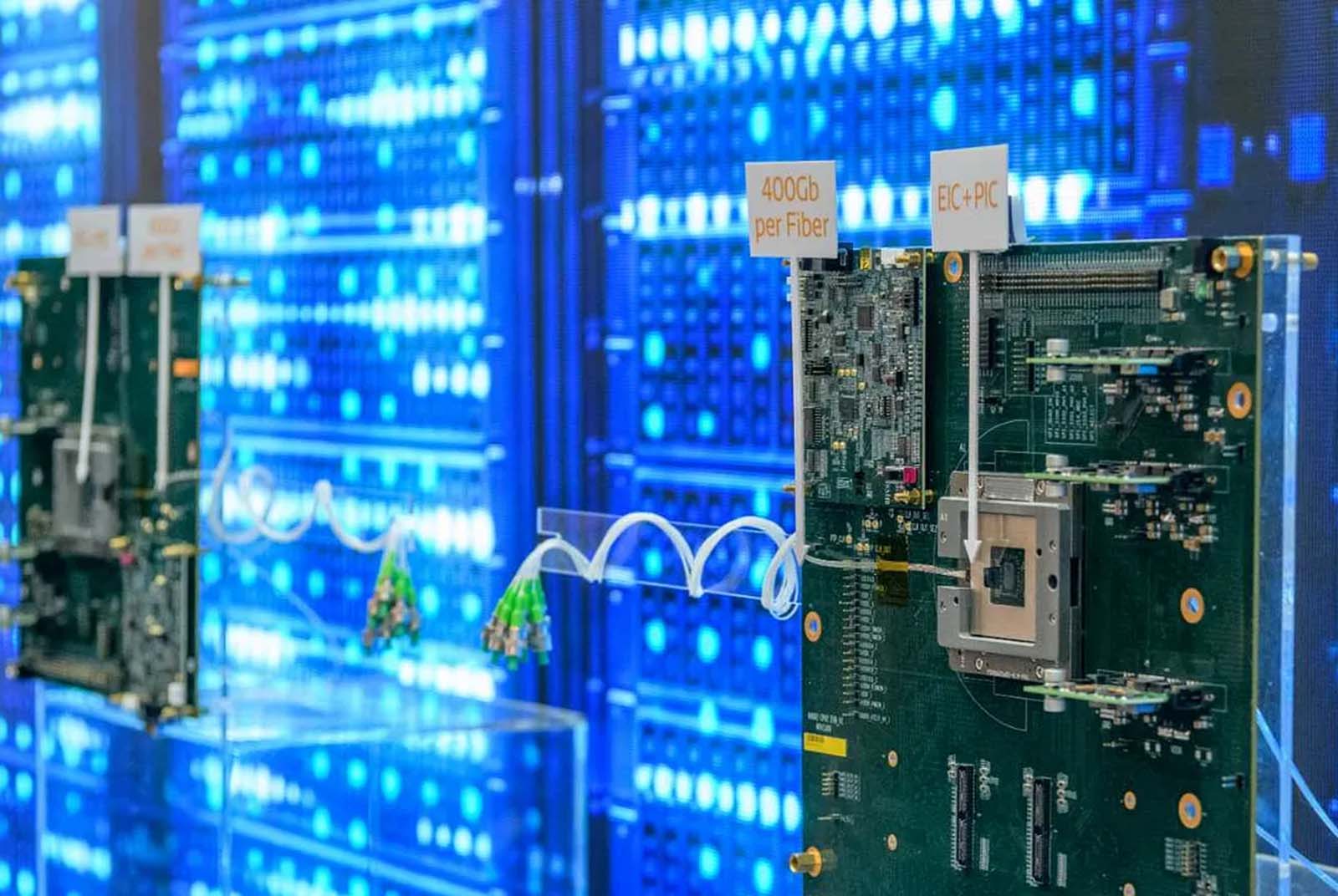
As more and more GPUs are crammed into data center racks, traditional copper traces, which reach their limits in high-speed data transmission, are being replaced by fiber optic cables. Their light source is a laser die, thinner than a mechanical pencil lead.
Lasers are rated based on their power output. The higher the speed, the more power is needed. For an 800G pluggable module 70mW is enough, whereas a next-generation CPO (co-packaged optics) module requires 300mW.
Worldwide only a handful of companies are able to reliably mass produce high-performance lasers of that caliber, including Lumentum Holdings and Coherent Corp., where Nvidia has invested, and Applied Optoelectronics Inc. (AOI), which was founded by Taiwanese American Thompson Lin (林誌祥) in Texas. In the first half of this year AOI posted US$340 million in revenue,up 36% from for the entire year two years ago.
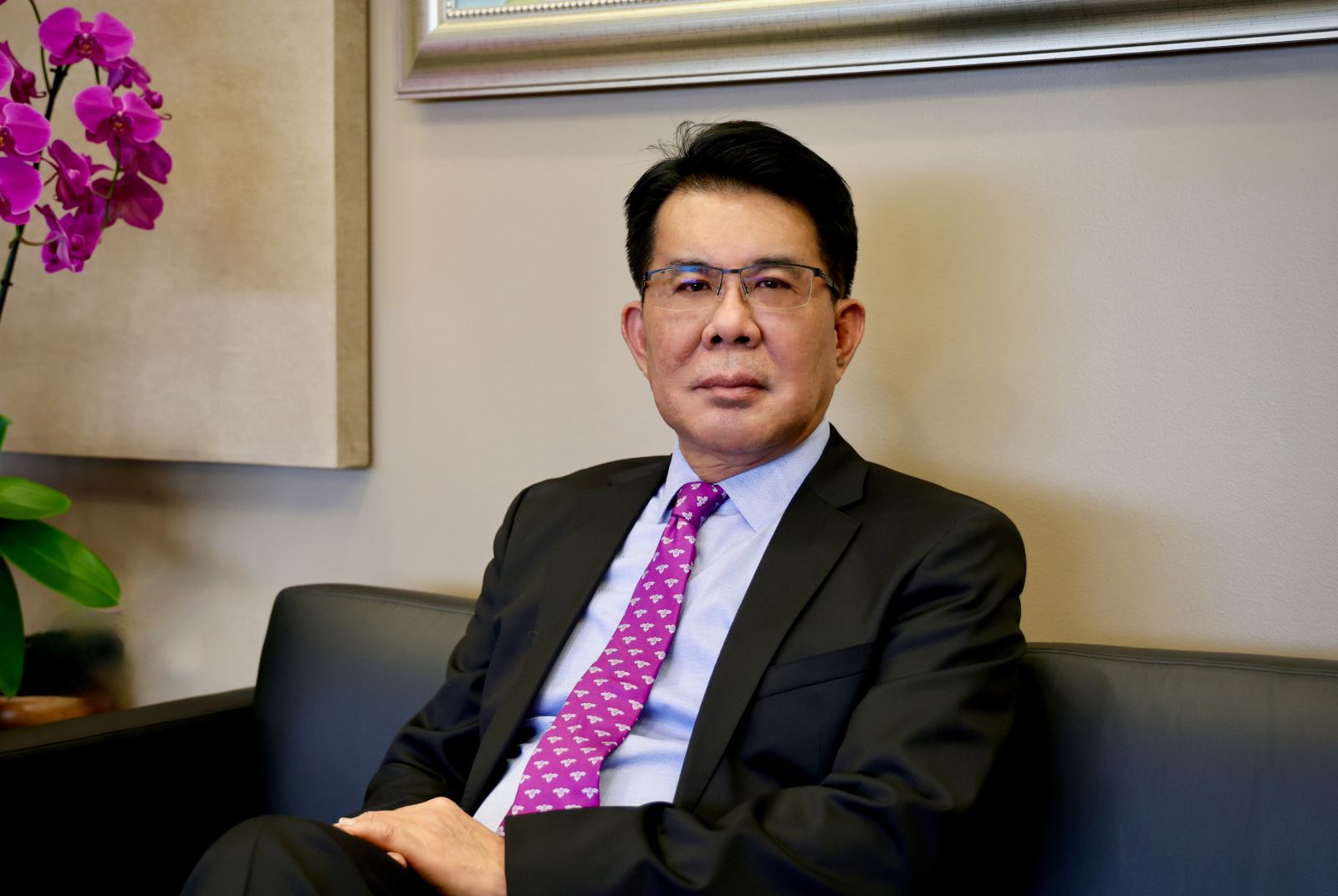
Lin, founder of AOI, went to the United States for an advanced degree after graduating from National Tsing Hua University with a Bachelor of Science in nuclear engineering. He earned a Ph.D. from the University of Missouri with research on compound semiconductor lasers. Having founded AOI in 1997, Lin lost half of the company's customers when the dot.com bubble burst at the turn of the century.
He personally acted as guarantor for a loan of more than US$7 million to keep the company afloat. During the worst time in 2003, not even US$10,000 were left in the bank so that he had to borrow money left and right every month to pay salaries.
At the time, he judged there was still demand for cable-TV analog lasers, telling his staff that he would close shop if the company did not manage to develop a product within a year. As a result, the product came out after nine months, and AOI also landed orders from abroad.
The second crisis hit with the financial tsunami when Lin's personal stake in the company shrunk to less than 2 percent as his loan guarantee increased to more than US$20 million. The third crisis, which was triggered in 2018 over quality issues in laser parts, should prove the longest, as the company kept making losses for seven consecutive years.
"You can't think about retreating, you can only walk ahead. If the chairman had thought about retreating, we wouldn't be where we are today," says Joshua Yeh (葉書華), AOI Senior Vice President and Asia General Manager, who has worked alongside Lin for more than two decades.
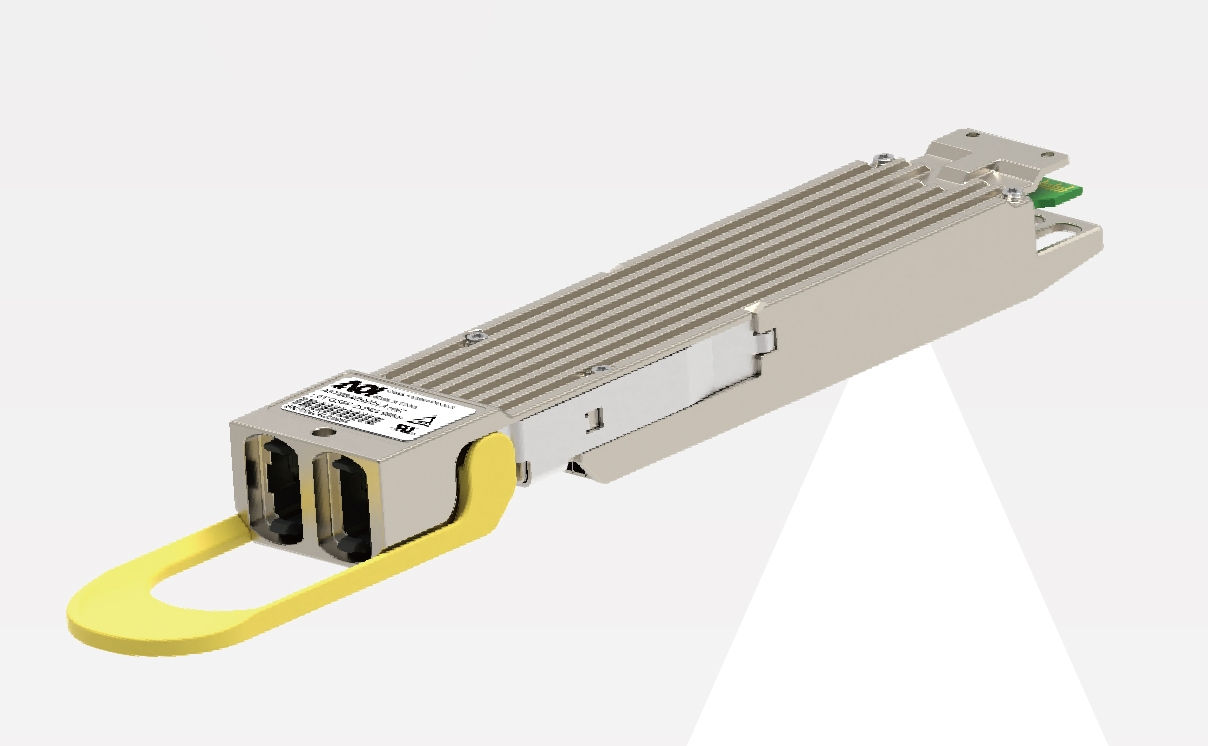 The yield rate of AOI's optical transceiver modules reaches 95%. (Photo: Applied Optoelectronics Inc.)
AOI stands out for its integration of upstream and downstream processes. These range from epitaxy, laser design and fabrication to packaging and assembly, which are then installed into their own optical transceiver modules for shipment. In the annual report, the laser fabricating processes used at the factory in Sugar Land, Texas, are called "unique in our industry". Advanced laser epitaxy requires four growth cycles and four process steps. AOI came up with its vertically integrated model since back then they could not find anyone else providing such processes. However, before demand for AI went through the roof, their business model was a burden, since the entire capital was tied up in facilities and machinery, making it impossible to adjust, if there was a sudden market change.
Today, yield rate is crucial. In a 1.6T pluggable optical transceiver, for instance, the four lasers account only for 6 percent of total cost. But if just one of them is faulty, the entire transceiver must be scrapped. AOI pluggable optical transceivers reach a yield of 95 percent. Now that AOI is in the same league with Lumentum and Coherent, which also use vertical integration, what used to be a burden has turned into advantage.
Lin is concurrently expanding production in the United States, Taiwan and China, trying to catch the silicon photonics wave. At the Sugar Land facility laser production will be increased 20-fold within three years. He is already in contact with five potential CPO customers. In Taiwan, they bought an old factory in New Taipei City's Wugu District. Its entire clean room is crammed with packaging, optical coupler, assembly and testing equipment.
There are recent reports that the U.S. may add optical communications to its list of technologies restricted amid the tech war, prompting an analyst at Raymond James Financial Inc. to say, "optical communication might be the next rare earths."
AOI manufactures its high-performance lasers in the United States and keeps key processes in Taiwan, which means any new restrictions would work to their advantage. Lin is confident about the future: "Even if we expand at the fastest pace, our capacity will be booked up by our customers within three years".
Foreign financial analysts have voiced doubts about AOI's revenue structure, given that one major customer accounts for 42 percent of revenue. Lin says there are two sides to the situation: "If we look back at the dotcom bubble, much of the demand then was estimated. But in this wave, demand as seen from the customer side is real." Lin, who is in his sixties, is now practicing acupuncture "to survive". Having braved three major crises, he is convinced that this time AOI stands on firm ground.
Have you read?
- Why TSMC Is Letting Go of CoWoS—and Where Its Real Second Moat Lies
- As AI Chips Get Pricier, Testing and Metrology Move to Center Stage
- How Taiwan-Japan Venture Dominates Key Chip Machine Market
Translated by Susanne Ganz
Uploaded by Ian Huang
Views

Subscribe to CWE Newsletter (every Thursday)
Stay abreast of what's happening in Taiwan with our weekly digest.
Keywords: