How TSMC Lagged in Silicon Photonics But Won Over Nvidia and Broadcom
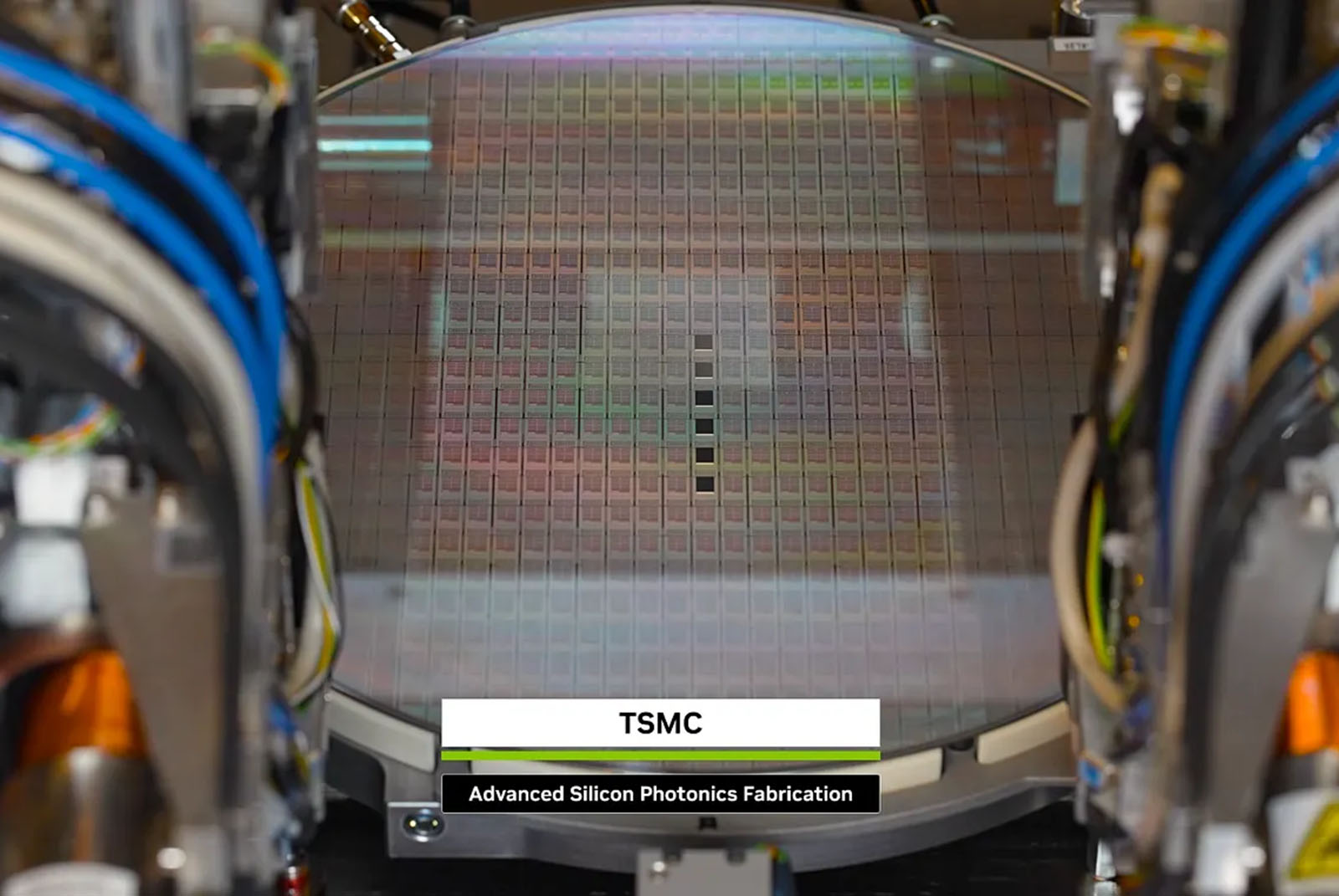
Source:Nvidia
Silicon photonics is finally moving from decades of research into commercial reality, driven by the AI boom and the need for faster data transfer. Despite entering the field later than its rivals, TSMC has emerged as a key partner for Nvidia and Broadcom. How did the world's largest chipmaker turn a late start into a winning strategy?
Views
How TSMC Lagged in Silicon Photonics But Won Over Nvidia and Broadcom
By Liang-rong Chenweb only
Located in Hsinchu’s Tai Yuen Hi-Tech Industrial Park(台元科技園區), Artilux(光程研創) is one of Taiwan’s rare deep-tech startups.
In 2024, the company’s highly sensitive germanium-silicon sensor technology, developed over many years, was published in Nature, one of the world’s most prestigious scientific journals, thrusting the low-profile company into the spotlight.
Few people know that Artilux’s core team actually came out of Intel’s R&D organization—and that the field they worked on was silicon photonics, now one of the hottest technologies in the industry.

Artilux co-founder and CEO Erik Chen(陳書履) joined Intel to work on silicon photonics after earning his Ph.D. in electrical engineering from Stanford in 2010. His advisor, Jim Plummer, was an Intel board member at the time.
Intel was a pioneer in silicon photonics research. Chen recalls that Intel, then still at the height of its powers, wanted to prepare for the inevitable bandwidth ceiling between CPUs and memory—the problem now widely known across the industry as the “memory wall.”
The solution was to find a way to put optical communications onto chips, replacing copper interconnects.
When Will Optics Replace Copper?
In other words, Chen, then not yet 30, had already joined the battle over the “shift from copper to optics” that has become one of the hottest fronts in today’s global AI industry.
When would silicon photonics replace copper on computer motherboards?
“Back then, everyone thought it would happen in three years,” Chen said. Instead, “the crossover point just kept getting pushed back.”
That was because copper transmission technology kept improving as well. The industry even developed the active copper cable technology now widely used in AI data centers, placing retimer chips at both ends of copper cables to address signal degradation and extend transmission distances.
“But now, it looks like the transition really is about to happen,” Chen said.
The Turning Point: Nvidia Adopts TSMC’s COUPE Optical Engine
The silicon photonics industry is now reaching a major inflection point.
A few days ago, Nvidia released a video formally announcing that its first Spectrum-X switch incorporating silicon photonics and TSMC’s COUPE optical engine had entered mass production.
This marks a milestone in the shift from copper to optics. Until now, optical communications had reached, at most, the circuit board. They have finally made their way inside the chip package, onto the substrate—and are now actually shipping.
……
(To read this exclusive story in full, visit the Tech Taiwan Substack)
Have you read?
- Why TSMC Is Letting Go of CoWoS—and Where Its Real Second Moat Lies
- As AI Chips Get Pricier, Testing and Metrology Move to Center Stage
- How Taiwan-Japan Venture Dominates Key Chip Machine Market
- How Intel Could Challenge TSMC: Why MediaTek Is Making a US$5 Billion Bet
Uploaded by Ian Huang
Views

Subscribe to CWE Newsletter (every Thursday)
Stay abreast of what's happening in Taiwan with our weekly digest.
Keywords: