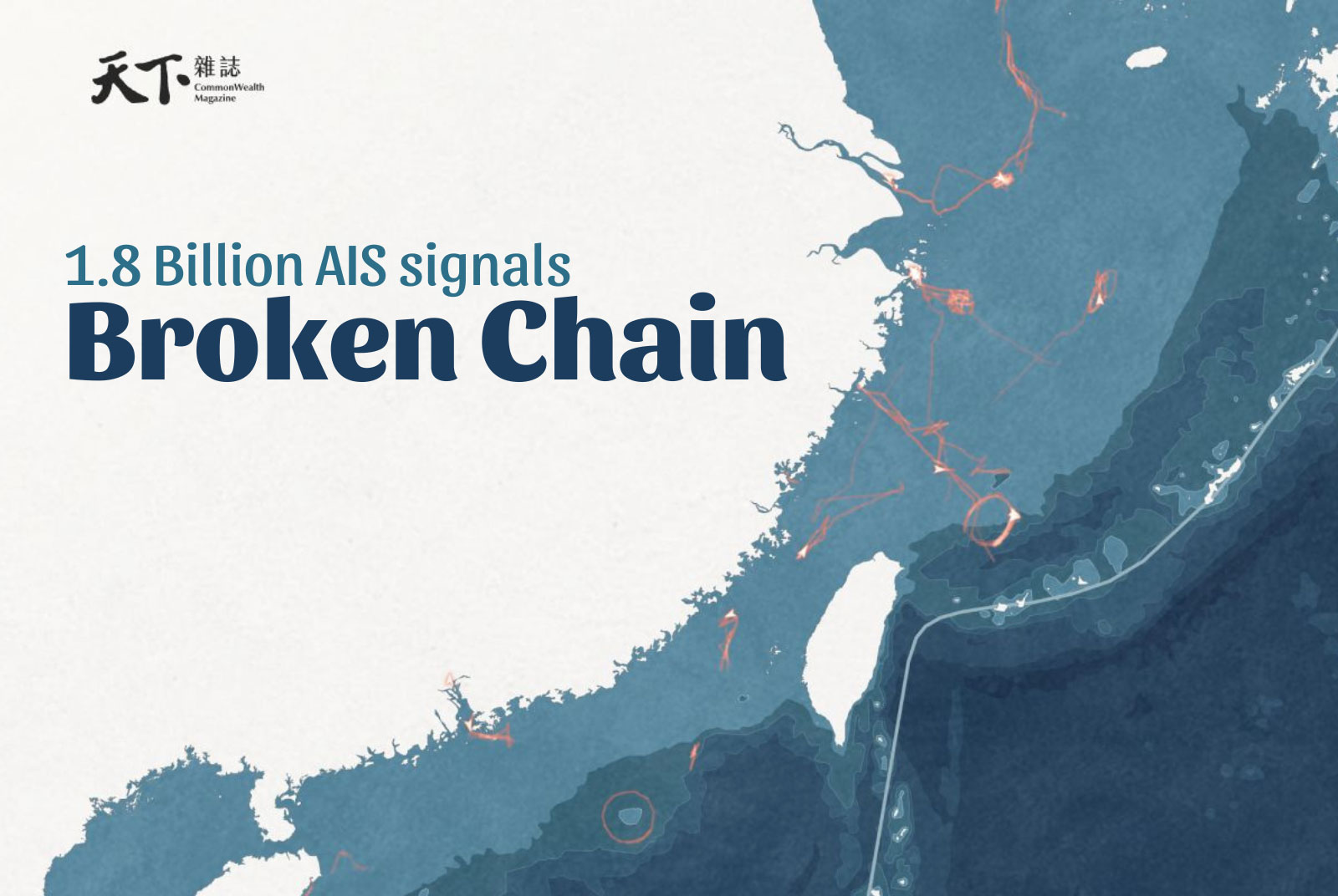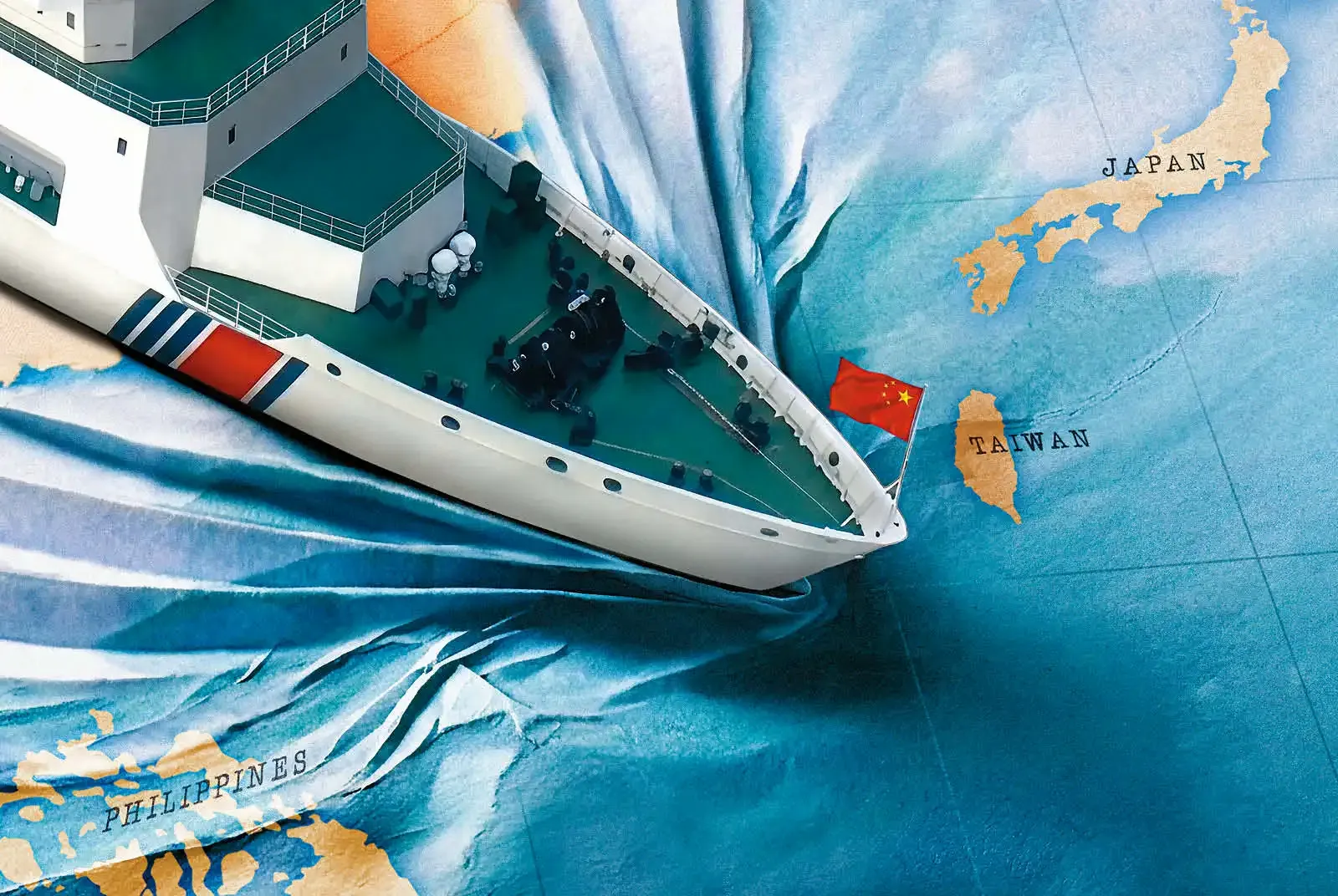
Broken Chain: How 1.8 Billion Data Points Show China's "Quarantine" of Taiwan Might be Underway
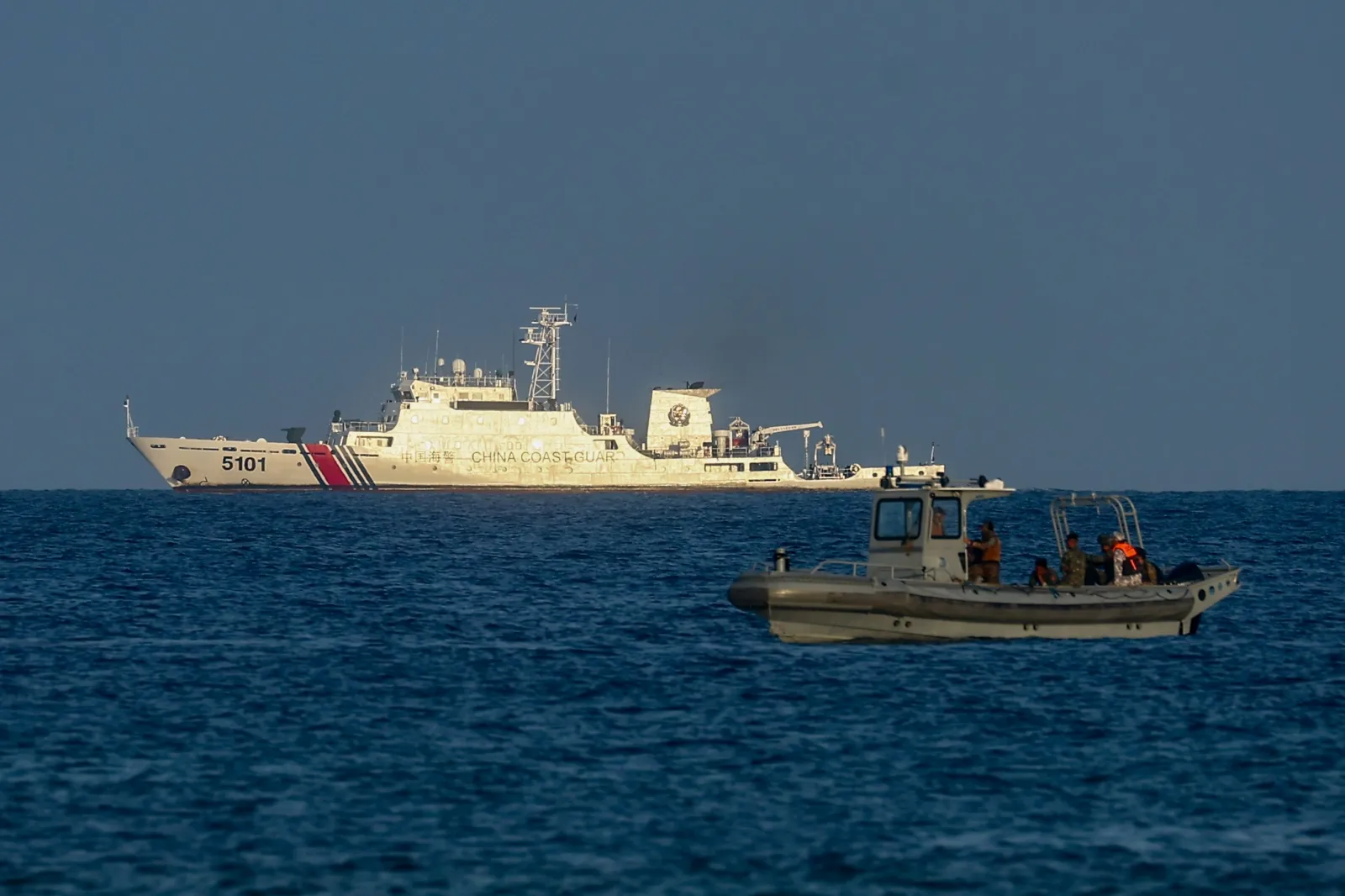
Source:Getty Images
Is China already carrying out a "quarantine" of Taiwan? In this episode of Taiwanology, the team behind CommonWealth Magazine's Broken Chain investigation explains how 1.8 billion vessel data points reveal a long-term pattern of China Coast Guard activity aimed at reshaping the maritime status quo across the first island chain.
Views
Broken Chain: How 1.8 Billion Data Points Show China's "Quarantine" of Taiwan Might be Underway
By Taiwanologyweb only
The following is the transcript of the latest episode of the Taiwanology podcast. It was produced by CommonWealth Magazine, hosted by Kwangyin Liu, and was first aired on August 26th 2026. The guests were Hazel Hsu and Steven Yeo, reporter and data scientist behind CommonWealth Magazine's "Broken Chain" investigation.
Listen to the episode: Broken Chain: 1.8B Data Points Track China's Coast Guard in 1st Island Chain【Taiwanology Ep.64】
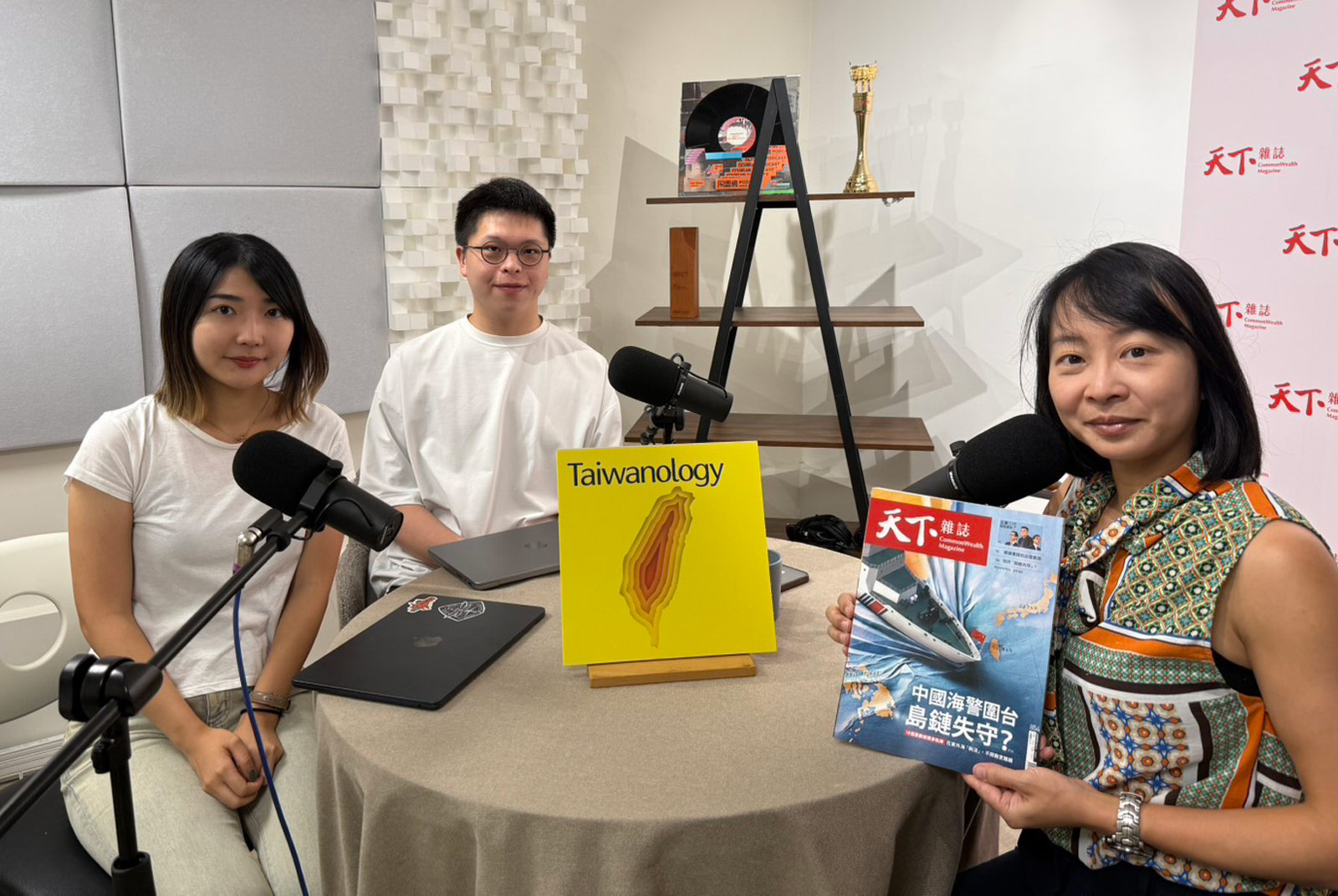 Hazel Hsu (left), Steven Yeo (middle), and Kwangyin Liu (right). (Photo: Taiwanology Podcast)
From Incident to Pattern
Kwangyin Liu (Host): "The quarantine has begun. That's the warning from Ray Powell, the retired US Air Force colonel who now runs Stanford's SeaLight project... He told CommonWealth that China's actions now show a quarantine of Taiwan is already underway. In his words, the first island chain no longer exists."
This episode marks a departure from Taiwanology's monthly schedule. The trigger: four Chinese government vessels sailed in June into waters east of Taiwan—territory the China Coast Guard had never operated in before. By July, Beijing was calling it routine. The podcast was produced alongside "Broken Chain," CommonWealth Magazine's data investigation into China's long-game encroachment across the first island chain.
When asked for their single most shocking discovery, the two guests zeroed in on opposite ends of the same reality.
Steven: "The biggest discovery was realizing that what looked like isolated incidents were actually part of the same long-term pattern across the first island chain."
Hazel: "For me, the biggest shock is that in our interview, those on the frontline told us that Chinese Coast Guard harassment is pretty much part of their daily life—from our own fishermen and Coast Guard to the Japanese and Philippine Coast Guard."
Su'ao: Taiwan's Strategic Lifeline
Host: "Su'ao port on the east coast would be maybe very crucial to a lifeline in the case of a blockade or quarantine situation."
Hazel traveled to Su'ao port on Taiwan's northeastern coast—a facility she describes as three-in-one: military, commercial, and fishing operations coexist alongside the Navy's largest destroyer and a shipyard belonging to Lung Teh, one of Taiwan's top three shipbuilders. Around 700 fishing boats operate out of the port, and during this year's Han Kuang military exercise, it served as a destination for Taiwan's first live-fire joint anti-blockade escort drill.
One young captain Hazel met aboard his boat captured the shift in atmosphere with striking precision. Having fished these waters for eight years, with the Diaoyutai Islands—known in Japan as the Senkaku Islands—about 100 nautical miles to the north, he described what normalization feels like from the deck.
Hazel: "At first, fishermen would still turn on their radar out of curiosity to look for them, but over the last two years, everyone has just completely gone numb to it."
The Diaoyutai waters, she noted, have become a pressure point in their own right. Since Japan nationalized the islands in 2012, China has sent its Coast Guard to patrol the area almost every single day. One expert described the situation there as "almost a tipping point."
1.8 Billion Data Points
Host: "I keep hearing this daunting number, 1.8 billion data points. Can you walk us through the raw materials?"
Steven described the investigation as built on two layers. The first is AIS—Automatic Identification System—which he calls "a flight radar for vessels," broadcasting each ship's location in real time. The second is public information released by governments: press releases, law enforcement records, and official announcements from Taiwan, Japan, and the Philippines, which provided the vessel lists needed to filter China Coast Guard ships from a database otherwise full of fishing boats, oil tankers, and commercial cargo.
Steven: "On one hand, we had this huge AIS database containing every kind of vessel you can imagine, all mixed together. The list of China Coast Guard vessels is the keyword we need to find in the database."
AI tools helped accelerate the compilation, but the harder work was data cleaning. AIS is imperfect: some ships turn off their transponders, and errors can make a vessel appear to jump hundreds of kilometers in minutes. In ambiguous cases—such as a Coast Guard ship appearing inside Taiwan's forbidden waters—the team cross-referenced news reports and official announcements to distinguish real incidents from data artifacts.
The investigation also marks CommonWealth's first formal research partnership with CSIS Futures Lab. Steven reached out via LinkedIn to Jose Macias, a CSIS researcher whose earlier report "The Geometry of Coercion" had tracked PLA and China Coast Guard activity using quantitative methods. The collaboration gave CommonWealth access to five years of historical AIS data that would otherwise be prohibitively expensive to obtain.
The Same Playbook, Everywhere
Host: "Does Ray Powell see this as a Taiwan problem, or does he see this encroachment as part of a broader test of the rules-based order in the Indo-Pacific?"
Hazel broke the answer into two levels. Tactically, she said, China is using the South China Sea, East China Sea, and waters around Taiwan as an "experiment lab"—what works in one location gets replicated in the next. Strategically, the ambition extends beyond the first island chain entirely.
Hazel: "China will not stop within the first island chain. They want to break through it, even to the second island chain, because their ambition is to become a maritime superpower to challenge US power within the Western Pacific and the whole Indo-Pacific."
The Philippines Coast Guard spokesperson Jay Tarriela, interviewed for the investigation, drew an explicit parallel: the same playbook visible in Philippine waters is now showing up around Taiwan. His closing message to the CommonWealth team was a warning—Taiwan needs to pay more attention to its maritime security, or what is happening in the Philippine Sea will happen to Taiwan too.
Taiwan's Coast Guard officers, meanwhile, described their daily response in procedurally calm terms. They follow a strict one-on-one escort protocol, broadcasting continuously that Taiwan is exercising its law enforcement rights in its own waters. The Ocean Affairs Council has set up an information center to keep commercial shipping updated on conditions in the Taiwan Strait.
"The Greatest Risk Is People Growing Used to It"
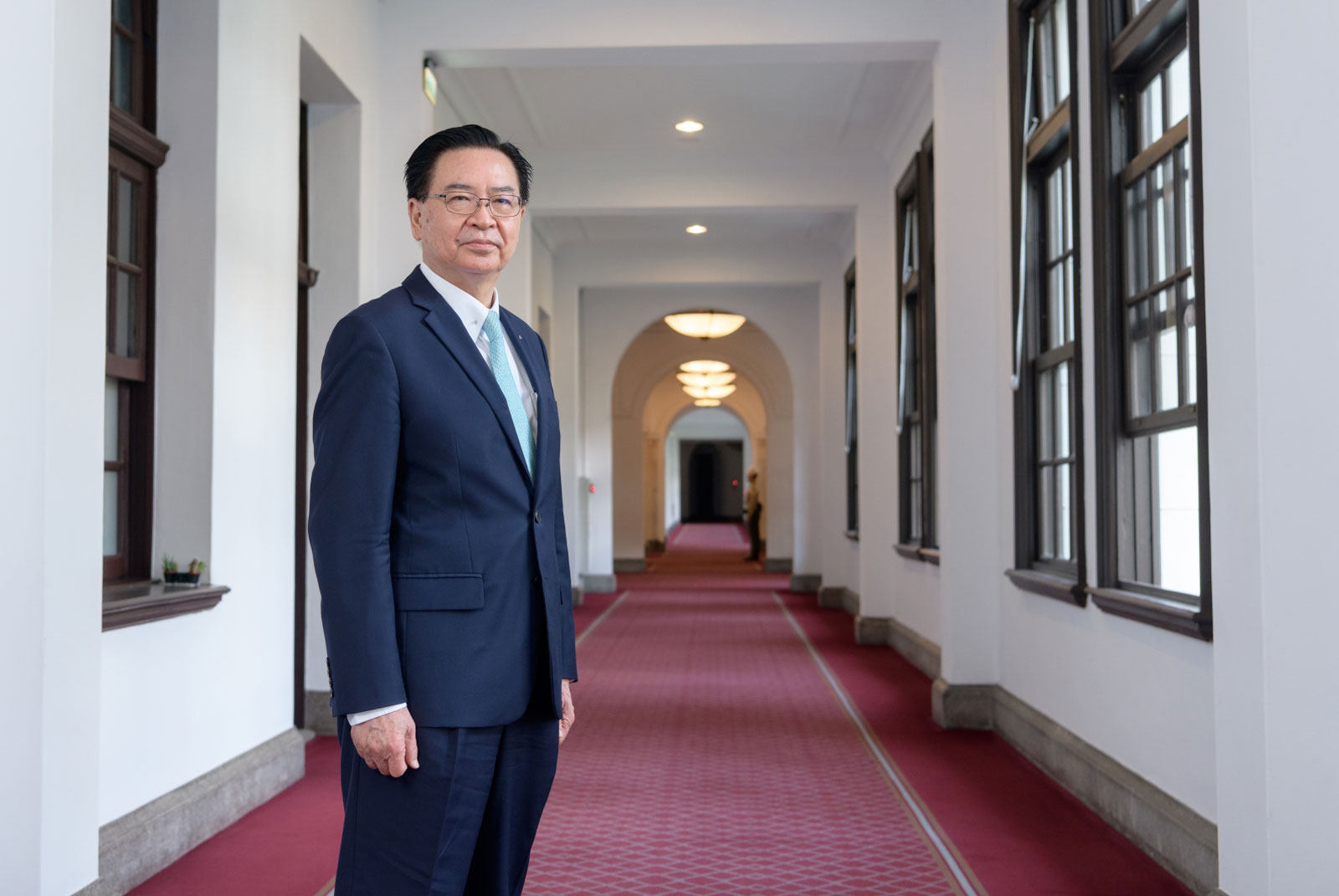
The investigation culminated in what Hazel described as a landmark moment: an exclusive interview with Joseph Wu, Secretary-General of Taiwan's National Security Council—his first with a local Taiwanese media outlet. Wu's central message aligned precisely with the investigation's thesis.
Host: "My takeaway from that interview was the grave warning by Mr. Wu—he said that the greatest risk is people growing used to it. They don't think there's anything unusual with China's actions. If people stop protesting, if people stop talking about it, then that's the greatest risk, because that means this will all be normalized."
Steven presented Wu with the investigation's first island chain heat map during the interview—a visualization that took the bulk of his time to build. Wu's verdict: the data made sense, and it was good work. He also flagged a gap: China Coast Guard activity in the western Philippine Sea, an area where open-source AIS data simply doesn't reach.
For Hazel, the keyword that encapsulates the story is transparency. Open-source data, combined with reporting from fishermen, Coast Guard officers, and officials across the region, makes it possible to shine a light on what China is doing in waters it has not yet formally claimed.
The real danger, as all three agreed, is not any single incident. It is the gradual moment when these patrols stop looking unusual—to Taiwanese, to regional allies, and to the world.
You can read the full investigation "Broken Chain: China's Coast Guard and the Long Game of Isolating Taiwan" on the CommonWealth English website under Graphics, including the interactive vessel tracking visualization produced in partnership with the CSIS Futures Lab.
Have you read?
- How Taiwan’s Semicon Became the World’s Semiconductor Beauty Pageant
- From a 1989 Exchange Trip to Canada's Taiwan Envoy: Marie-Louise Hannan's Case for Canada in Taiwan
- Can Civic AI Save Democracy Before Algorithms Destroy It?
- Will Europe Choose Taiwan as Trust in China Fades?
Uploaded by Ian Huang
Views

Subscribe to CWE Newsletter (every Thursday)
Stay abreast of what's happening in Taiwan with our weekly digest.
Keywords: