Taiwan's "Big Six" Vie for Dominance in Upcoming Quantum Computing Showdown
Source:Meng-hsuan Yang
Tech giants from Amazon to Microsoft are aggressively exploring opportunities in quantum computing. How are Taiwan's "Big Six" electronics manufacturers getting ready for the showdown?
Views
Taiwan's "Big Six" Vie for Dominance in Upcoming Quantum Computing Showdown
By Meng-hsuan Yangweb only
Quantum computing may look like a pie in the sky, but the unseen battle for market dominance has already begun. The prize: a wellspring of orders from large North American cloud service providers, who also happen to be the world's biggest buyers of AI servers.
"Quantum is the natural extension of AI infrastructure," says David Shen (沈慶堯), CTO of Wistron.
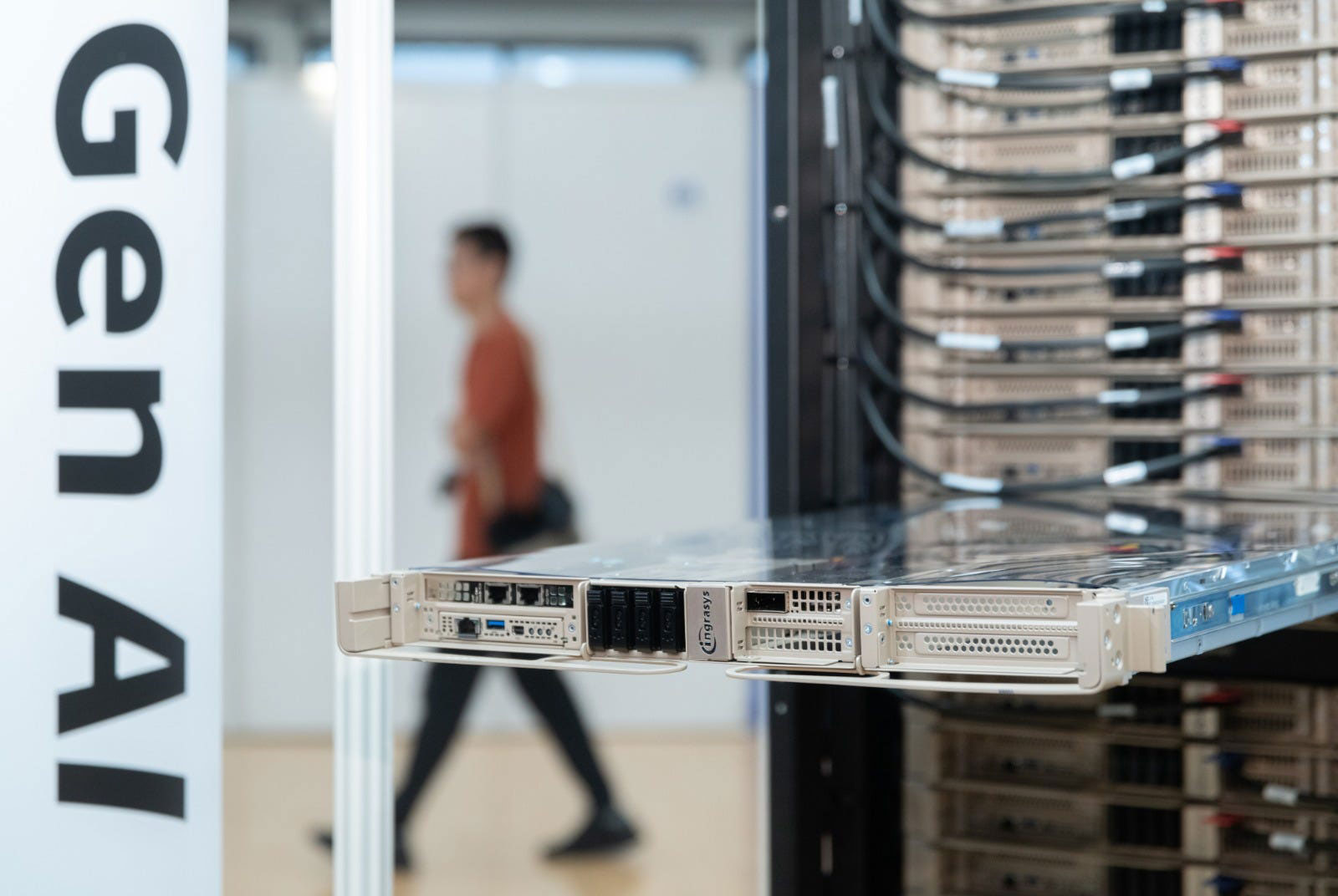
The consensus among experts is that quantum computing will achieve commercialization sometime after 2029, at the earliest. There is no agreement on what the roadmap will look like. But quantum computers seem unlikely to replace AI servers; more plausibly, they will coexist alongside CPUs and GPUs to form the foundation of next-gen high-performance computing (HPC).
Industry Consultant Po-Jung Shih (施柏榮) at Market Intelligence & Consulting Institute (MIC) says that the incorporation of different computing elements, known as heterogeneous computing, and data center infrastructure management (DCIM) tailored toward quantum computers will be the two critical factors that decide who will come out on top in the quantum age.
Quantum computers are much more sensitive to temperature than AI servers—in fact, they need to operate at minus 273 degrees Celsius. Low-temperature baseboards and substrates, wiring, controls and receptors for processing electrical signals are all components Taiwanese manufacturers need to invest in to stay ahead of the competition.
The big clients are already champing at the bit. In June, Microsoft unveiled the quantum chip Majorana 2, developed with the help of agentic AI. Last year, Amazon Web Services (AWS) introduced the quantum chip Ocelot and expanded Amazon Braket services for quantum computing.
Dr. Shih-Chieh Chang (張世杰), General Director of Electronic and Optoelectronic System Research Laboratories at ITRI, opines that the Big Six wish to replicate the success they had with AI servers, where they got in on the ground floor and are still reaping the benefits.
But the Big Six are adopting different strategies from one another. Hon Hai is the only company that's building its own quantum computers. It spent three years preparing its quantum lab in Xindian, and it's focused on the "ion trap" variant of quantum computing because the company excels at precision machining. This was the direction chosen by Chairman Young Liu (劉揚偉) in 2021.
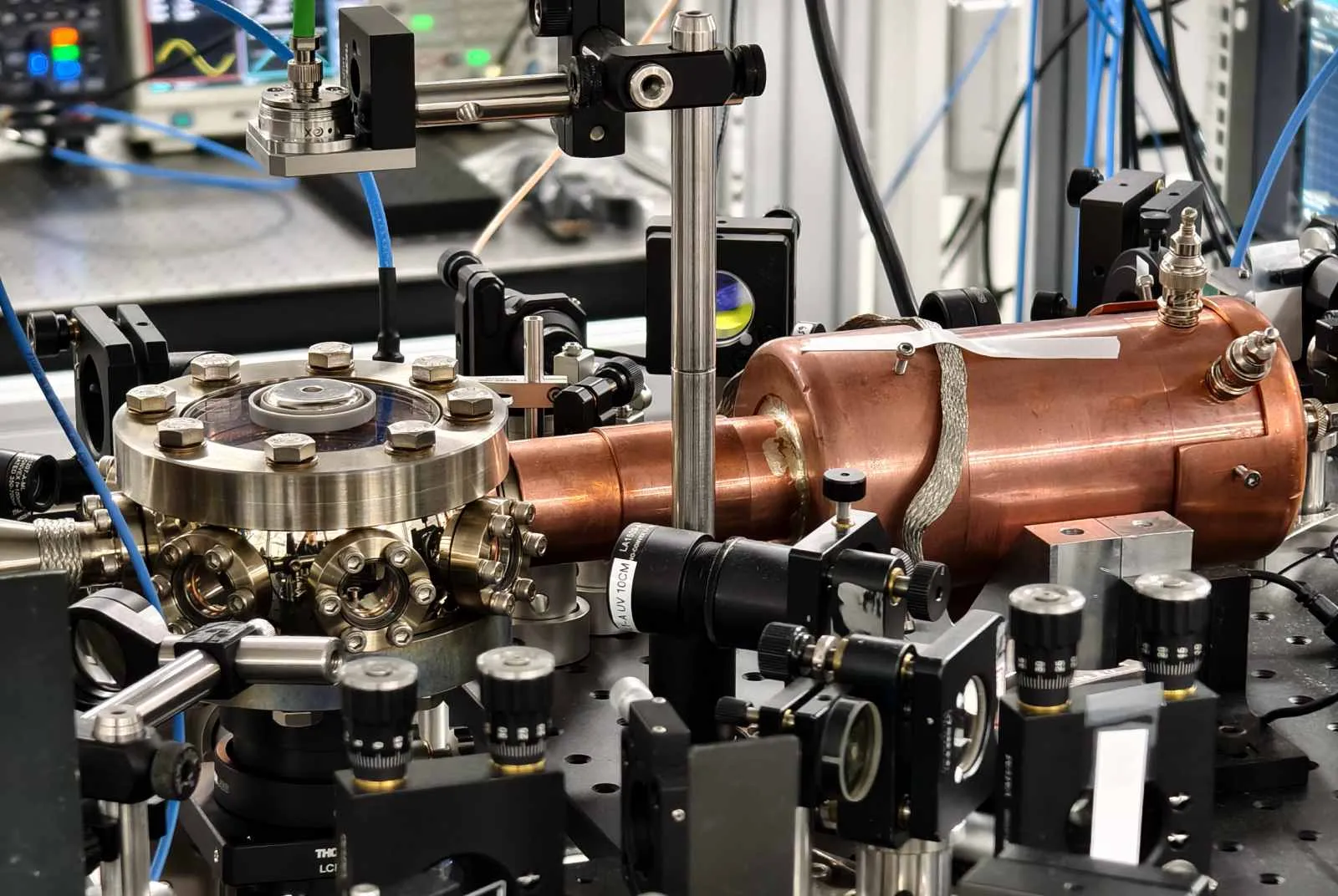
Guin-Dar Lin (林俊達), Director of the Trapped-Ion Quantum Computing Laboratory at the Hon Hai Research Institute, explains that the lab's core equipment was manufactured internally, including the vacuum chamber that needs to "bake" for two weeks to create a true vacuum. The current team of about a dozen researchers will expand to 30, and their mission will be to build a five- to ten-qubit general-purpose quantum computer by 2027. This will be Taiwan's first civilian-made trapped-ion quantum computer.
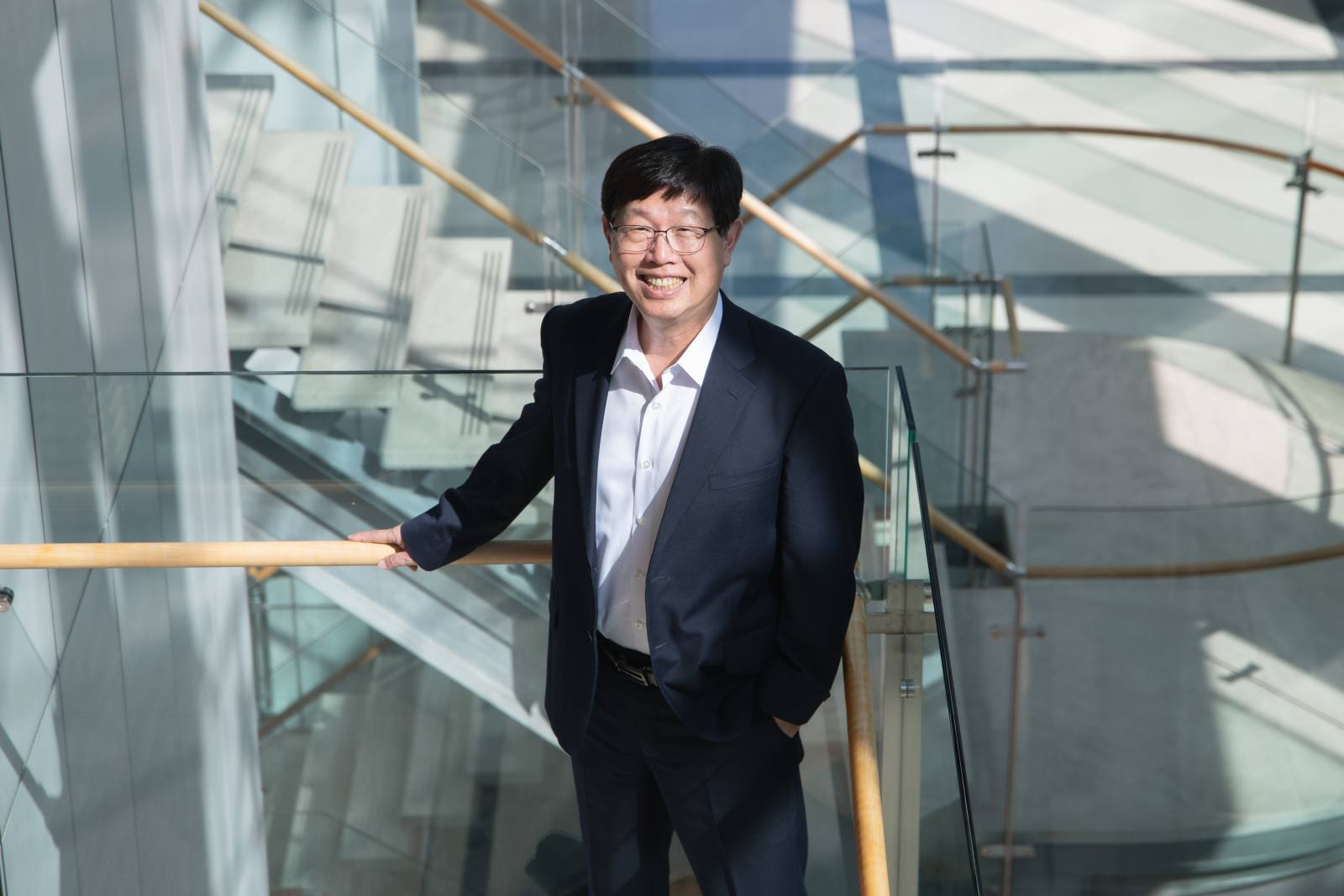 Hon Hai Chairman Young Liu spearheaded the establishment of the company's quantum computing laboratory. (Source: CommonWealth)
Quanta chose a different route—it has invested in three companies representing the three schools of thought on quantum computing: Rigetti Computing for superconducting integrated circuits (with funding from the U.S. Department of Commerce), the British-American company Quantinuum for trapped ion (with Nvidia investment), and France's Pasqal for neutral-atom quantum computing (which is the world's second largest producer of 100-qubit quantum computers, behind only IBM).
Pasqal CTO Loïc Henriet once told CommonWealth that Quanta's strategy boils down to singling out one visionary company from each of the three possible paths toward quantum success. (Further reading: https://www.cw.com.tw/article/5141729)
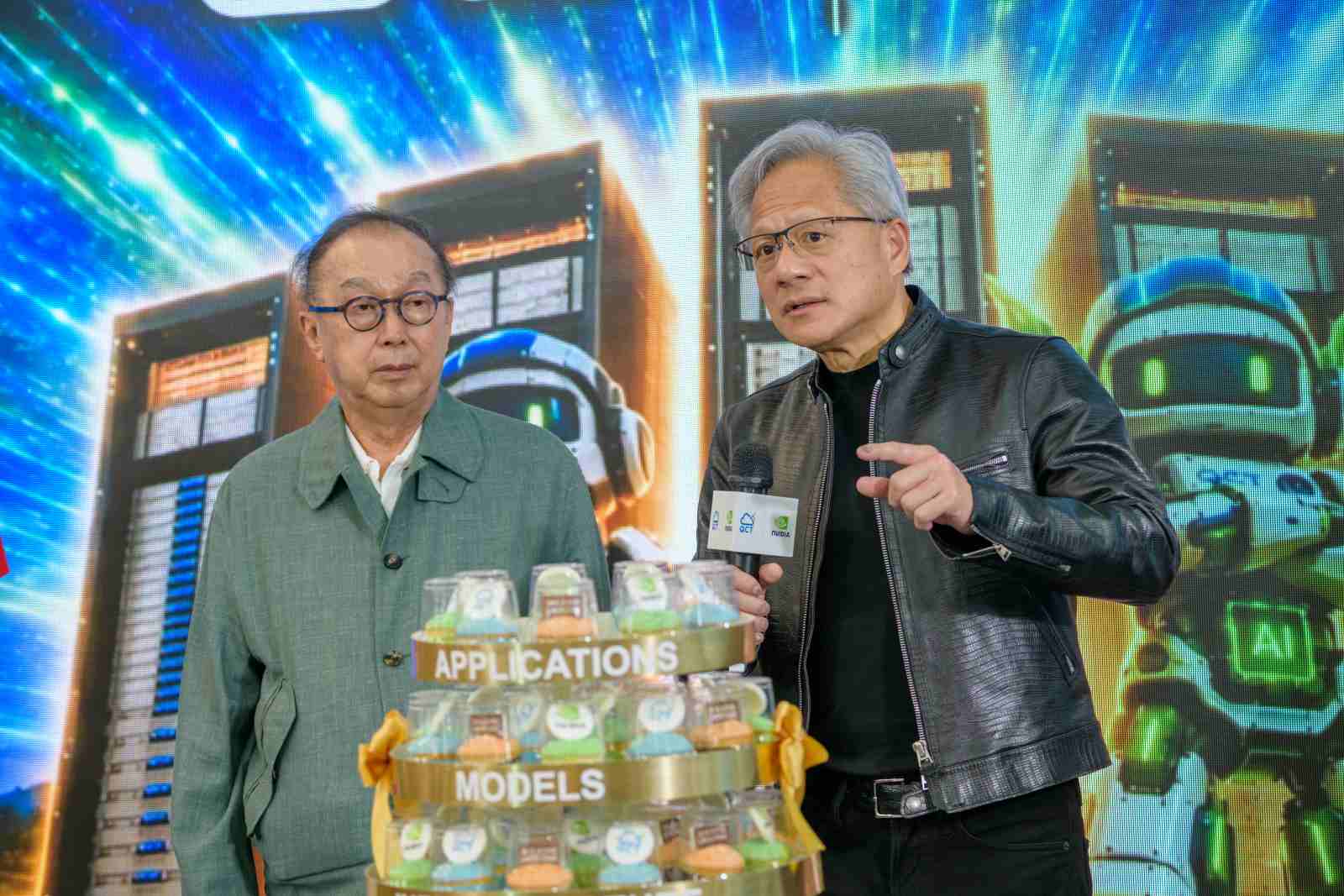 Quanta Chairman Barry Lam (left) and Nvidia CEO Jensen Huang. (Photo: Chien-Ying Chiu)
Compal is looking beyond hardware and zeroing in on application. Its team of experts on quantum computing, assembled in 2022, are delving into a computational process known as "quantum annealing", which can be used to arrive at optimal solutions in such diverse fields as pharmaceuticals, logistics, and finance. Currently, Compal is not yet using quantum computers; rather, it relies on GPU-based computing that simulates quantum computing, as well as self-developed algorithms based on Nvidia's CUDA-Q platform. When used to simulate macromolecular docking in drug development, this solution can complete the process 3,500 times faster.
Kinpo, part of the same group as Compal, has put US$10 million into Nvidia-funded superconducting-based quantum computing startup SEEQC, with the end goal being to invent temperature control devices that will help to develop control chips. SEEQC's ultralow-temperature control chips were also engineered with ITRI's 8-inch wafer fab.
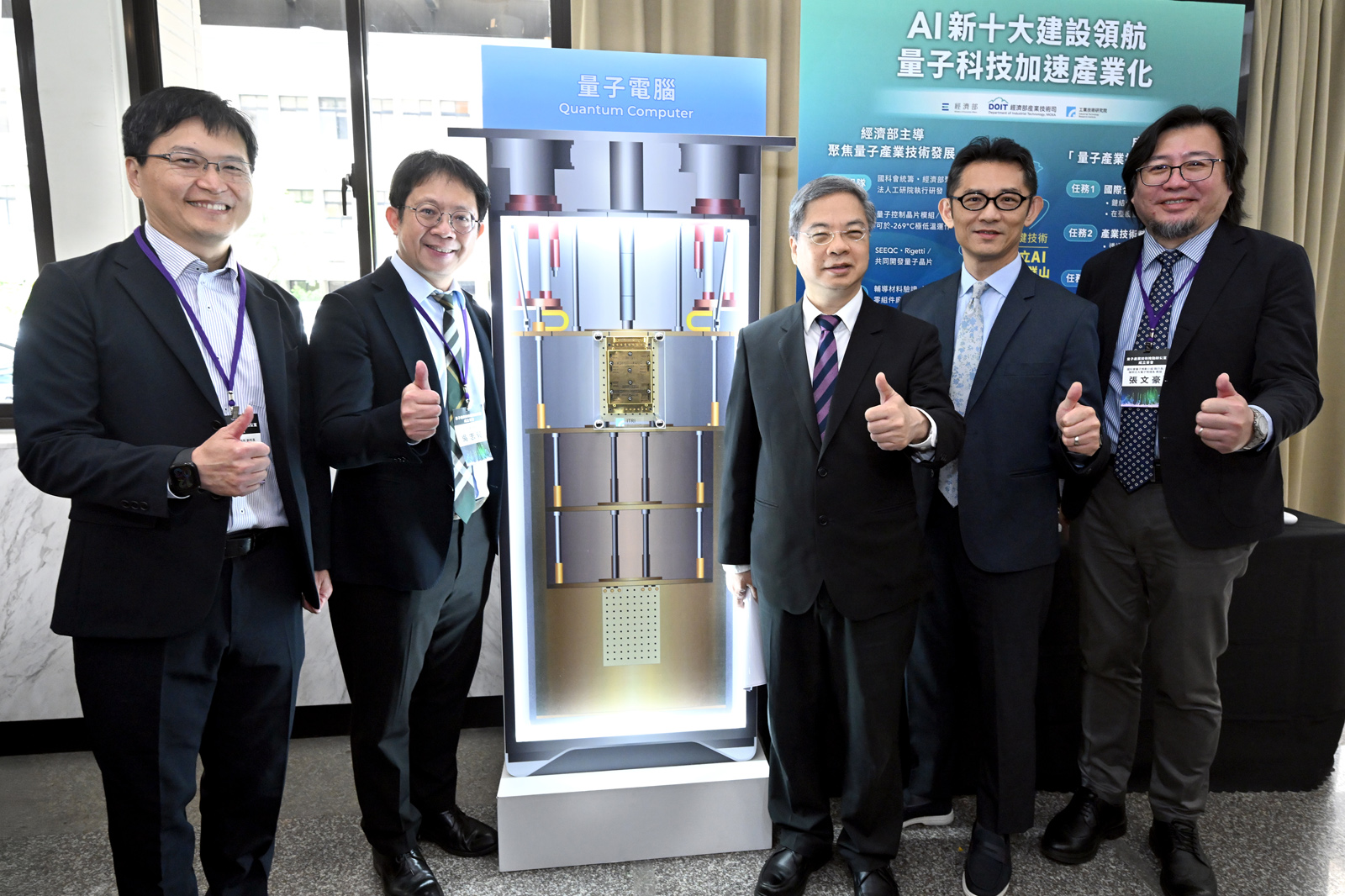 Taiwan's Ministry of Economic Affairs and ITRI established the Quantum Industry Technology Promotion Office. (Courtesy of the Ministry of Economic Affairs)
In April, the Ministry of Economic Affairs (MOEA) established the Quantum Industry Technology Promotion Office (QITPO), to be run by ITRI for the purpose of nurturing a whole new industry. The hope is that the combined prowess of Taiwan's semiconductors and electronics manufacturing will attract an influx of international quantum computing companies.
Dr. Chang at ITRI reveals that the Finnish quantum computing company IQM has already set up shop in Kaohsiung and entrusted its five-qubit quantum computer to Taiwan Semiconductor Research Institute. What's more, quantum startups from America, Asia, and Europe are lining up to talk with ITRI.
Everyone from the "Big Six" to semiconductor fabs to ITRI is laying the groundwork for quantum computers. Taiwan's first battle for victory in the quantum epoch has begun.
What is quantum computing, and what are the three main hardware approaches?
Quantum computing uses principles such as quantum superposition and quantum entanglement to process information. Hon Hai, for example, is developing trapped-ion quantum computers, which use electromagnetic fields to trap ions and lasers to manipulate them for computation. The two other leading approaches are superconducting qubits, pursued by companies such as Google and IBM, and neutral-atom quantum computing, represented by France-based Pasqal.
Why are Taiwan's electronics manufacturers investing in quantum computing before the technology is fully commercialized?
The biggest future customers for quantum computers are expected to be North American cloud service providers—the same companies that already purchase AI servers from Taiwan's electronics manufacturers. Wistron CTO David Shen describes quantum computing as "the natural extension of AI infrastructure." Rather than replacing AI servers, quantum computers are expected to complement CPUs and GPUs in next-generation high-performance computing, allowing Taiwanese manufacturers to expand their existing supply chain instead of entering an entirely new market.
How are Taiwan's major technology companies positioning themselves in quantum computing?
Wistron has acquired a 20-qubit quantum computer and indirectly invested in quantum startups. Hon Hai has established its own trapped-ion quantum laboratory and aims to build Taiwan's first civilian-made five- to ten-qubit general-purpose quantum computer by 2027. Quanta has invested in one startup from each of the three leading quantum hardware approaches—superconducting, trapped-ion, and neutral-atom computing—with a combined investment of roughly NT$3 billion. Compal is focusing on quantum annealing algorithms and uses Nvidia's CUDA-Q platform to accelerate drug discovery simulations. Meanwhile, Kinpo has invested in U.S. quantum startup SEEQC to help develop room-temperature control systems for superconducting quantum chips.
Why do quantum computers require temperatures close to absolute zero?
Many quantum computing technologies, particularly superconducting systems, are extremely sensitive to heat and must operate at temperatures close to absolute zero (−273°C). Even slight temperature fluctuations increase electrical noise and reduce computational accuracy, making cryogenic infrastructure and thermal management critical components of future quantum data centers.
How is Taiwan promoting its quantum industry and attracting international quantum companies?
In April, Taiwan's Ministry of Economic Affairs established the Quantum Industry Technology Promotion Office, operated by ITRI, to accelerate commercialization of quantum technologies. ITRI has already manufactured ultra-low-temperature control chips for U.S. startup SEEQC using its 8-inch wafer fab. Finnish quantum computing company IQM has also opened an office in Kaohsiung and placed its five-qubit quantum computer at Taiwan Semiconductor Research Institute, reflecting growing international interest in Taiwan's quantum ecosystem.
Have you read?
- King Slide’s 87% Gross Margin Tops Nvidia’s. What Makes Its Server Rails So Hard to Replace?
- Two-Way Bet: Why Chip Materials Suppliers Are Localizing in Taiwan and Arizona
- How Did an Optical-Fiber Veteran Break Into TSMC's COUPE Silicon Photonics Supply Chain?
Translated by Jack Chou
Uploaded by Ian Huang
Views

Subscribe to CWE Newsletter (every Thursday)
Stay abreast of what's happening in Taiwan with our weekly digest.
Keywords: