Two-Way Bet: Why Chip Materials Suppliers Are Localizing in Taiwan and Arizona
Source:Judy Lin
As geopolitical shocks threaten global maritime routes, chipmakers and specialty chemical suppliers are ditching isolated expansions in favor of shared overseas hubs and deep domestic synthesis.
Views
Two-Way Bet: Why Chip Materials Suppliers Are Localizing in Taiwan and Arizona
By Judy Linweb only
With the Russia-Ukraine war approaching its fifth year and escalating Middle Eastern tensions threatening strategic maritime passages like the Strait of Hormuz, geopolitical volatility is accelerating a decisive shift across the semiconductor industry.
Yet supply chain localization is no longer a one-way street confined to domestic borders.
As Taiwanese chipmakers expand overseas, their domestic materials partners are confronting identical pressures to localize alongside their anchor customers—pushing suppliers to explore unprecedented collective models to survive the high costs of globalization.
 (Source: Judy Lin)
A Shared Industrial Beachhead in Arizona
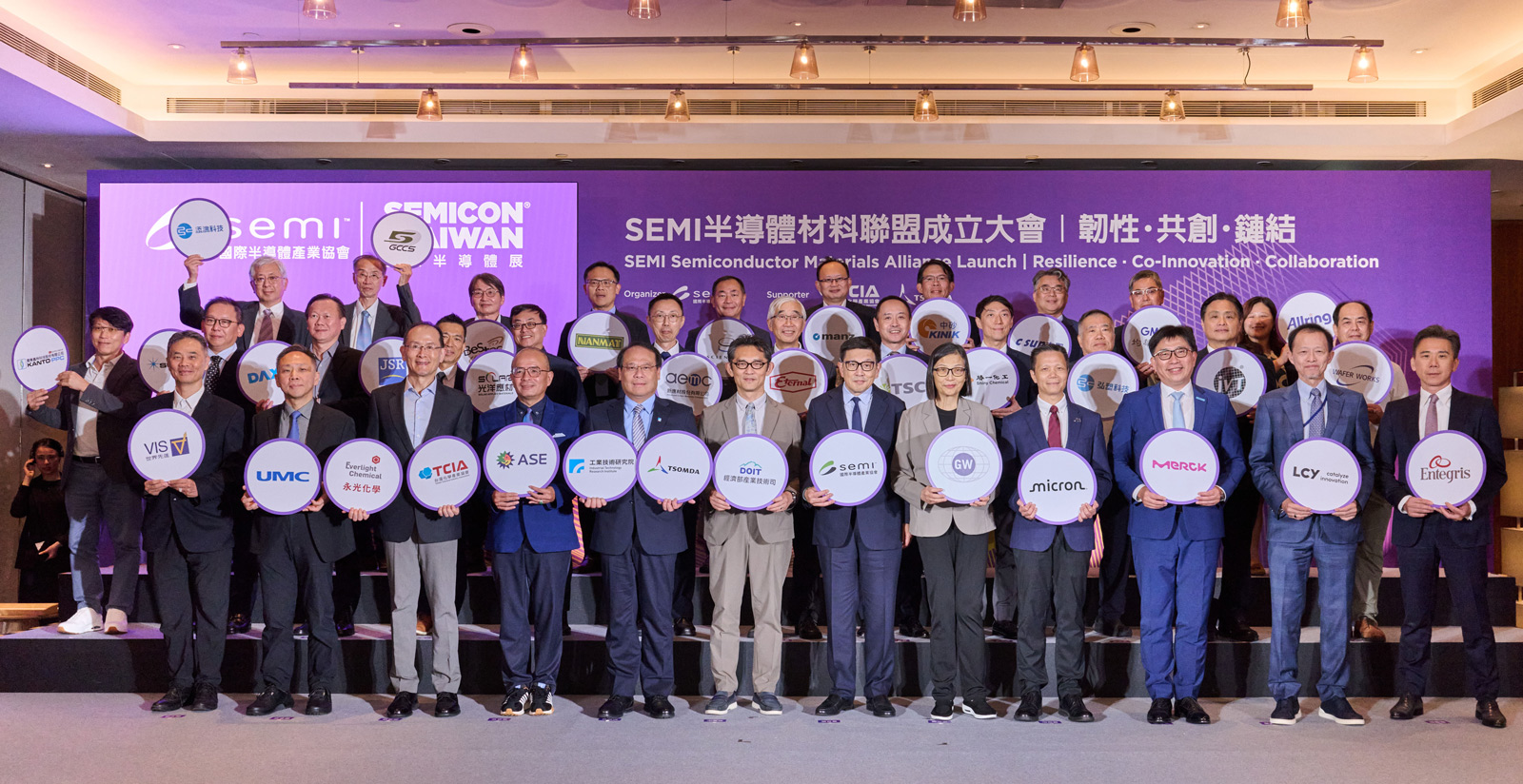
At a recent press conference marking the establishment of the SEMI Taiwan Materials Alliance, material partners supporting TSMC revealed they are actively discussing collective investment plans in Arizona to support their largest customer.
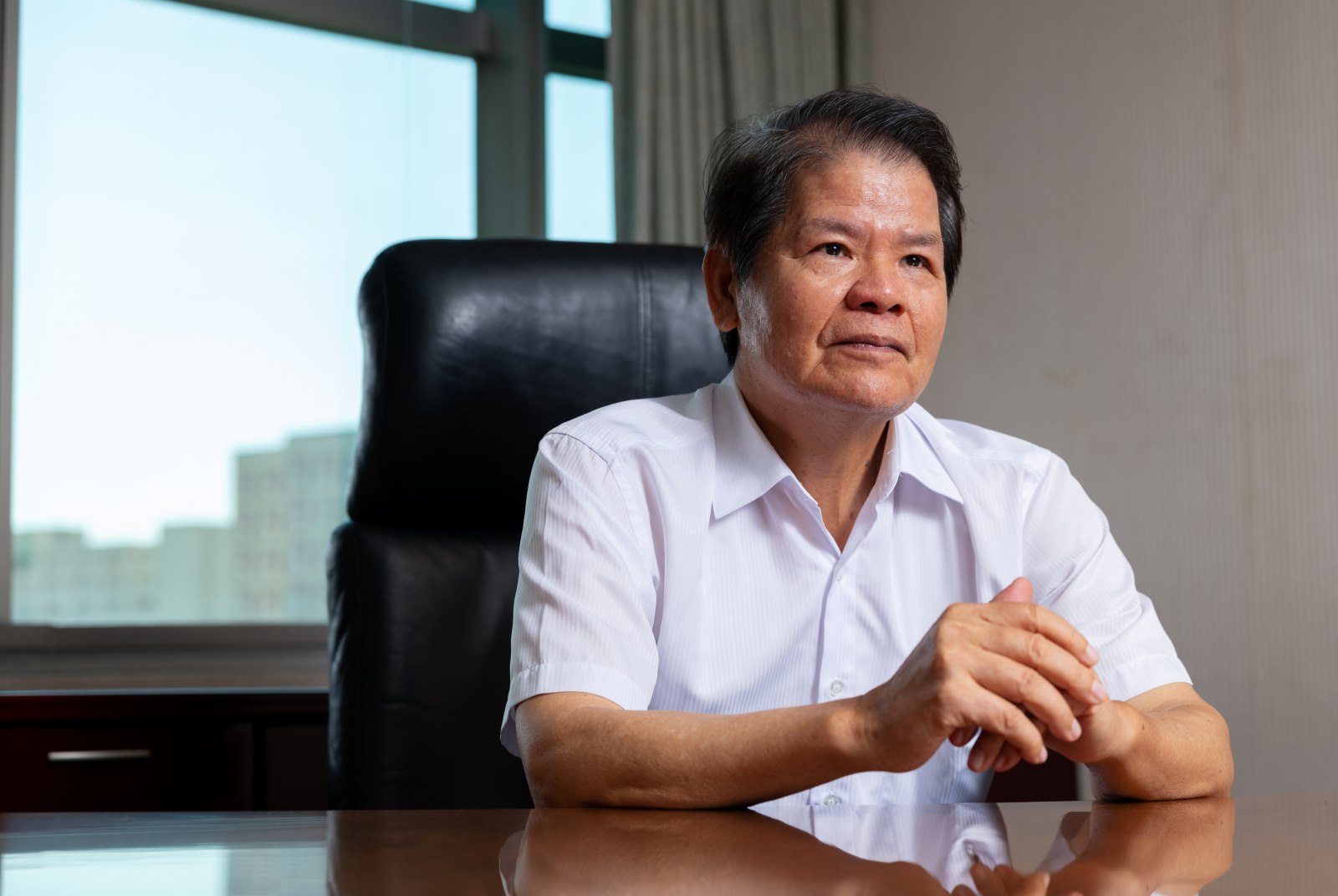
“What we would prefer is for chemical companies to expand overseas together,” Wei-wang Chen, General Manager of Everlight Chemical Industrial Corp., told CommonWealth English on the sidelines of the briefing. “In any country today, setting up a chemical manufacturing site involves stringent regulatory requirements, high costs, and demanding specifications. If every chemical company were to build its own facility independently, it would probably be difficult for anyone to be profitable.”
Instead, Chen proposed establishing a joint chemical manufacturing park modeled on an industrial co-working space. Under this framework, participating companies would protect and maintain their own proprietary core technologies while sharing common infrastructure, environmental compliance management, utility networks, and local workforce recruitment resources.
“We are in the process of discussion, and it requires a lot of feasibility studies,” Chen said.
Chokepoints and the Urgency of Supply Defense
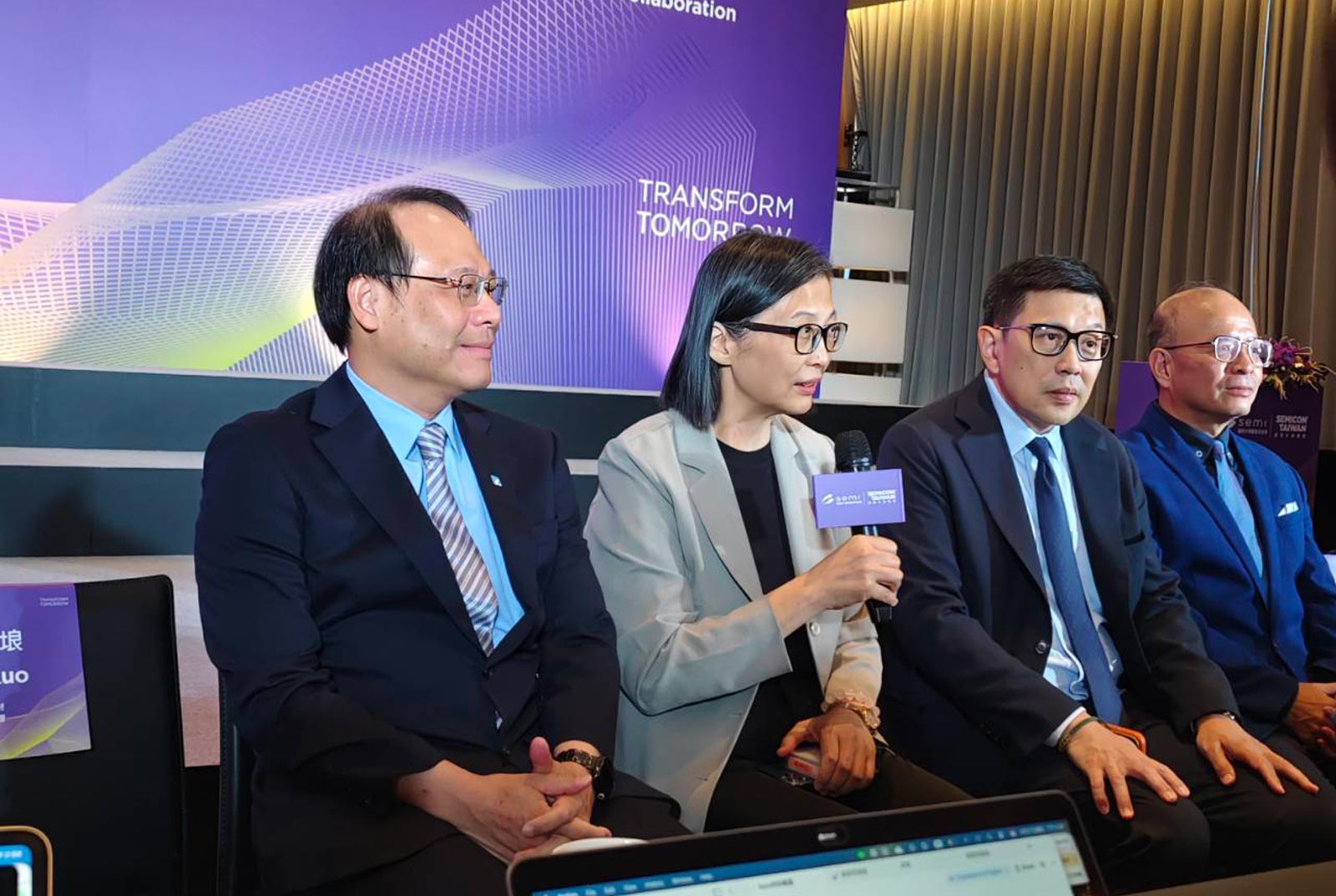
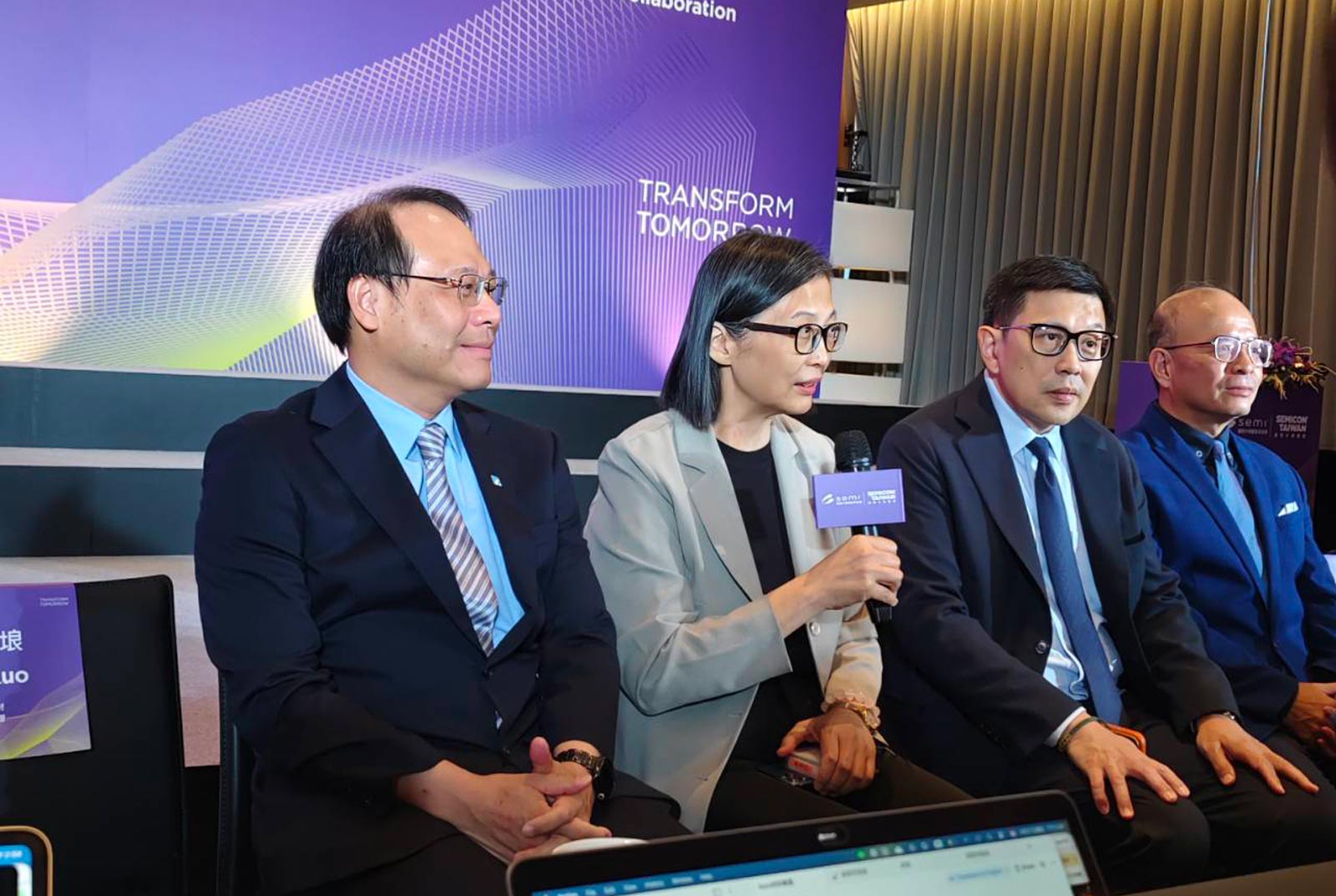 Hiro Huang (far-right), ASE’s VP, Doris Hsu (mid-left), CEO of GlobalWafers, Jeffrey Chiou, VP at ITRI. (Source: Judy Lin)
This push to build shared operational beachheads abroad mirrors the urgent domestic localization taking place across Taiwan. At the alliance launch, industry leaders emphasized that supply-chain defense has become a prerequisite for operational continuity amid mounting geopolitical friction and export controls on strategic materials.
“During the COVID lockdown, it was the first supply chain breakdown that I experienced in my life, but now such risks are happening more frequently than ever,” said Hiro Huang, ASE’s Vice President of Production Planning, Material Management, and Logistics Service Integration, recalling the urgency of searching for alternative supplies when an Evergreen container ship was stuck in the Suez Canal for six days in 2021.
Doris Hsu, Chairperson and CEO of GlobalWafers Co., Ltd., echoed this urgency, warning that geopolitical tensions and policy uncertainty could instantly sever supply lines through blocked shipping routes or sudden trade restrictions.
Japanese chemical companies recognized this dynamic years ago, steadily embedding their operations in Taiwan due to geopolitical tensions and the dense demand generated by the local semiconductor ecosystem, observed Jeffrey Chiou, VP and General Director of Material and Chemical Research Laboratories at the Industrial Technology Research Institute (ITRI).
Domestic Alliances and Inbound Mega-Investments
Domestic conglomerates are moving swiftly to capture this demand. On August 17, Formosa Plastics announced a joint venture with Japan’s Daicel to produce electronic-grade photoresist thinner—a key chemical used in semiconductor manufacturing—for the first time at its Renwu plant in Kaohsiung. This marks Formosa Plastics’ fifth joint venture with a Japanese materials leader, following partnerships with SUMCO, Daikin, Tokuyama, and Asahi Kasei. While Chang Chun Group’s Changbin facility and Sheng Yi Chemical currently supply similar products in Taiwan, Formosa Plastics is positioning for stronger future demand driven by advanced semiconductor process nodes.
Global material giants are executing matching long-term bets. In December 2025, Germany’s Merck officially inaugurated its new facility at the Lujhu Science Park in Kaohsiung. At €500 million (roughly NT$17-18 billion), the investment represents the largest single local investment worldwide by Merck’s Electronics business.
Beyond Packaging: Anchoring Full-Lifecycle Synthesis
Crucially, this wave of localization goes far beyond downstream assembly.
“What does this localization actually mean? Many products brought into Taiwan are often only packaged locally. But for these products, we are bringing the entire process to Taiwan—from synthesis and purification to testing, packaging, and ultimately delivery to customers,” explained John Lee, Chairman of Merck Electronics Taiwan.
“Once you start from synthesis, you need to identify partners throughout the entire process. We work with a large number of local partners. Among them, we find local suppliers of global-standard tools and materials partners that we need for synthesis and purification. And we also work with partners that support us with testing.”
Whether anchoring complex chemical synthesis directly into Kaohsiung or forming shared consortium parks in Arizona, the semiconductor industry is executing a fundamental structural pivot. The era of relying on vulnerable, long-distance maritime corridors for critical chemistry is giving way to localized clustering—turning proximate supply depth into the ultimate moat against global disruption.
Have you read?
- How Did an Optical-Fiber Veteran Break Into TSMC's COUPE Silicon Photonics Supply Chain?
- Taiwanese American-Founded AOI Closes in on U.S. Laser Trio
- Why TSMC Is Letting Go of CoWoS—and Where Its Real Second Moat Lies
Uploaded by Ian Huang
Views

Subscribe to CWE Newsletter (every Thursday)
Stay abreast of what's happening in Taiwan with our weekly digest.
Keywords: