Can China Catch Up with Memory Chip Leaders? What CXMT’s Breakthrough Means for Taiwan
Source:Shutterstock
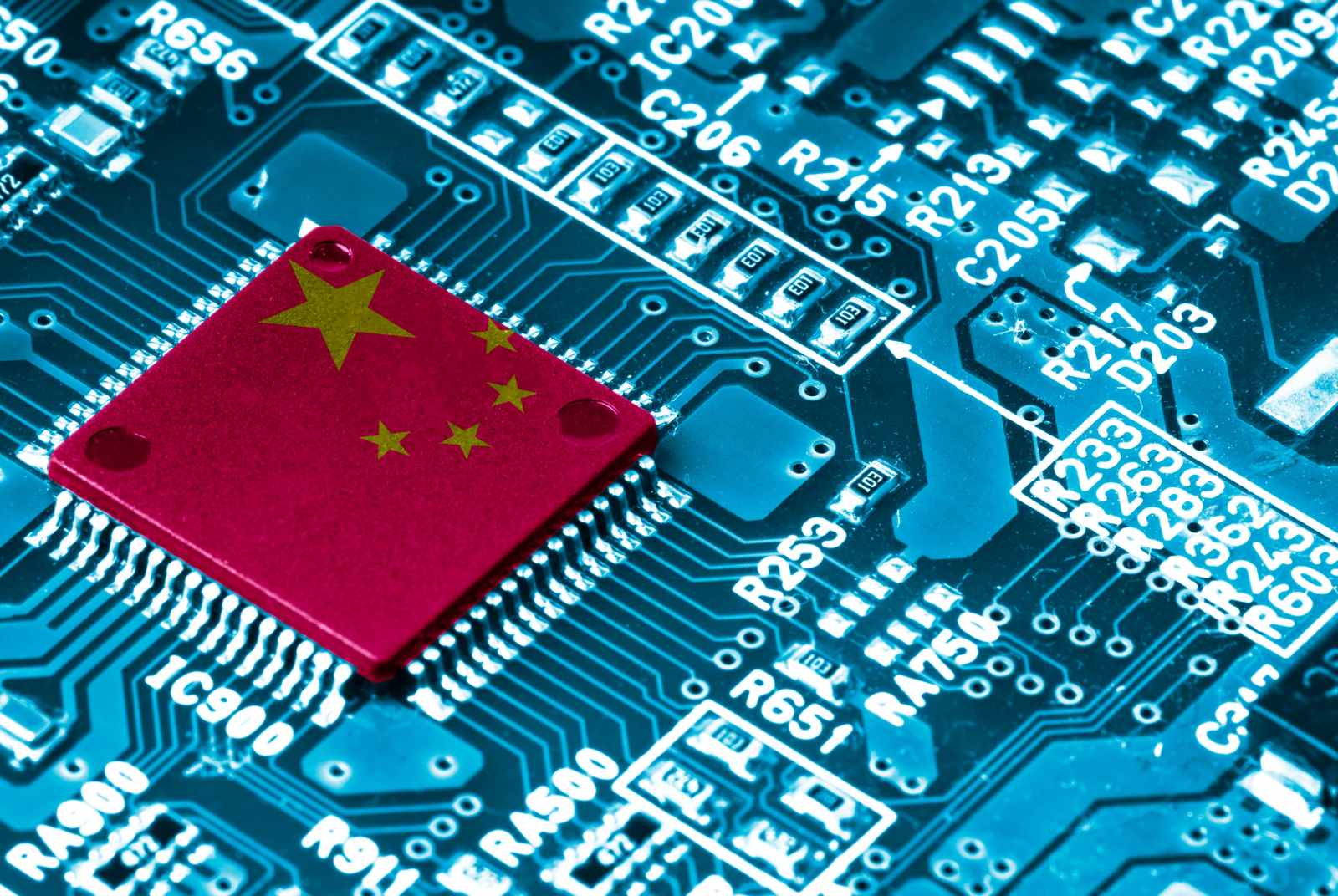
China’s CXMT has begun mass-producing a new generation of DRAM, launched LPDDR6, and rapidly expanded its global market share. But advanced AI memory remains dominated by Samsung, SK Hynix and Micron. How close has China really come, and what does its rise mean for Taiwan’s memory industry?
Views
Can China Catch Up with Memory Chip Leaders? What CXMT’s Breakthrough Means for Taiwan
By CommonWealth Magazineweb only
China’s biggest DRAM maker has delivered two major technology announcements in less than two weeks.
On September 7, ChangXin Memory Technologies, better known as CXMT, announced that its LPDDR6 memory had entered mass production and would debut in Xiaomi’s new flagship smartphone. Less than two weeks later, the company unveiled its fifth-generation DRAM manufacturing platform, saying it had also entered mass production.
The new G5 process uses self-aligned quadruple patterning to reduce the active-area half-pitch of its memory cells to 11.95 nanometers. CXMT says the process can produce at least 50% more dies per wafer than its previous generation. It also unveiled 24Gb LPDDR5X products based on the technology.
For a company that only a few years ago was regarded as a distant challenger, the pace of progress is striking.
But whether China has actually caught the world's leading memory producers is a more complicated question.
CXMT is no longer a minor DRAM player
CXMT was founded in Hefei in 2016 and has since emerged as China’s flagship DRAM manufacturer.
Its global position has changed rapidly. TrendForce data put CXMT’s share of global DRAM revenue at 9.5% in the second quarter of 2026, up from 7.6% in the previous quarter. Samsung remained first with 39.4%, followed by SK Hynix at 24.9% and Micron at 23.3%.
The company’s technological rise is not entirely new. CW English previously examined how CXMT narrowed the gap with Micron despite being unable to buy EUV lithography equipment.
Its latest platform offers another example of that strategy.
Unable to access the most advanced EUV lithography systems because of U.S.-led export restrictions, CXMT has relied on more complex patterning techniques and process engineering to continue shrinking its DRAM.
The result does not mean those restrictions have become irrelevant. It does show that blocking one manufacturing tool does not necessarily freeze technological progress.
The bigger test is HBM, not smartphone memory
The most important distinction is between conventional DRAM and high-bandwidth memory, or HBM, the advanced memory stacked alongside AI processors.
That is where the technology gap remains much wider.
TrendForce said earlier this year that Chinese HBM suppliers were still in the early stages of verification. CXMT has been targeting HBM3-class products and advanced packaging, but technical barriers and localization requirements have delayed large-scale production.
Marina Zhang, an associate professor at the University of Technology Sydney, told The Straits Times that CXMT still faces three major hurdles: market share, technology generation and advanced HBM. “A genuine fourth pole is a hopeful scenario for the medium-to-long term; it’s not yet a done deal.”
Counterpoint Research director MS Hwang similarly told The Straits Times that CXMT remains behind the market leaders in HBM, although he expects the company to begin narrowing that gap from late 2026.
This matters because AI is changing the economics of the memory business.
Samsung, SK Hynix and Micron have been directing more production toward HBM and high-capacity server DRAM as hyperscalers race to expand AI data centers. TrendForce says this shift has helped create severe supply tightness in conventional server memory, with shortages expected to persist into 2027.
CXMT therefore does not necessarily need to overtake the Big Three immediately to become influential.
It can gain ground in the large markets they are partially leaving behind.
China's first goal may be self-sufficiency, not technological leadership
The strategic question is also different from the commercial one.
For Beijing, having the world's fastest memory chip is only one objective. Building a domestic supply chain that can continue operating under tighter U.S. technology restrictions is another.
Zhang told The Straits Times that China’s immediate interest in domestic DRAM lies largely in scale and supply security rather than reaching the absolute performance frontier.“Even if CXMT’s HBM trails those of the Big Three, domestic production at scale ensures that China’s AI servers don’t grind to a complete halt under US sanctions.”
That helps explain why CXMT’s progress matters even before it matches the latest HBM from South Korea or the United States.
The company already supplies major Chinese customers. Its rapid expansion gives smartphone, PC and server manufacturers another source of conventional DRAM while providing China's domestic AI industry with an increasingly capable memory supplier.
Its ambitions are also widening. Reuters reported on September 18 that CXMT is preparing to enter NAND flash memory, putting it into direct competition not only with Samsung, SK Hynix and Micron but also with fellow Chinese memory champion YMTC.
What does CXMT’s rise mean for Taiwan?
Taiwan occupies a different position from South Korea in the memory industry.
It does not have a DRAM producer comparable in scale to Samsung or SK Hynix. Instead, Taiwan’s memory sector includes companies such as Nanya Technology and Winbond, while Micron maintains major manufacturing operations on the island.
This makes the competitive impact uneven.
In cutting-edge HBM, CXMT is still trying to close a technology gap with the global leaders. In conventional memory, however, its growing scale could put greater pressure on Taiwanese manufacturers that compete in more mature product categories.
The AI boom has temporarily complicated that picture.
As the largest memory companies devote more production to HBM, shortages have emerged in older DRAM products. That has benefited Taiwanese producers including Nanya and Winbond. CW English previously examined how this unusual shortage allowed Taiwanese memory makers to benefit as global suppliers shifted capacity toward AI memory.
CXMT could eventually alter that balance.
TrendForce has already found that international PC and electronics brands are increasingly validating Chinese component suppliers as shortages and high prices force them to diversify procurement.
If Chinese DRAM becomes competitive enough in price, performance and reliability, Taiwan’s conventional-memory producers may face a much larger competitor precisely in the segments where they have recently benefited from supply scarcity.
The memory race is becoming a race for scale
One lesson from Taiwan’s own DRAM history is that technology alone is not enough.
Counterpoint’s Hwang pointed to Taiwan’s experience after 2008, when shrinking market share weakened local DRAM manufacturers' ability to finance increasingly expensive fabs and technology upgrades. “That’s the line CXMT has to cross and everything they are building now is a race to get there first.”
CXMT now has something previous challengers often lacked: massive domestic demand, government backing, access to capital and an increasingly large manufacturing base.
It still faces formidable technological barriers, particularly in HBM and advanced semiconductor equipment.
But the question surrounding CXMT is changing.
It is no longer simply whether China can manufacture competitive DRAM.
It is whether CXMT can achieve enough scale to finance the next technological leap, turning China from a large memory-chip customer into a lasting fourth force in the global DRAM industry.
Have you read?
- How China's DRAM Maker CXMT Caught Up With Micron Without EUV
- How TSMC Helped SK Hynix Overtake Samsung in the AI Memory Race
- Why Phison’s CEO Predicts a Ten-Year Memory Shortage Amid the AI Boom
Uploaded by Ian Huang
Views

Subscribe to CWE Newsletter (every Thursday)
Stay abreast of what's happening in Taiwan with our weekly digest.
Keywords: