The Real Engine of Taiwan's Tech Success Was Never Just the Science Park
Source:Chien-Tong Wang
Taiwan’s tech success was built on more than science parks. Chang-tai Hsieh argues that dense urban networks linking talent, universities, firms, and suppliers may be the real foundation of innovation, and the key to Taiwan’s next phase of growth.
Views
The Real Engine of Taiwan's Tech Success Was Never Just the Science Park
By Chang-tai HsiehCommonWealth Magazine
In May, I attended a closed-door meeting in Washington on U.S.-Taiwan economic cooperation. Much of the discussion focused on Taiwan's experience building manufacturing ecosystems.
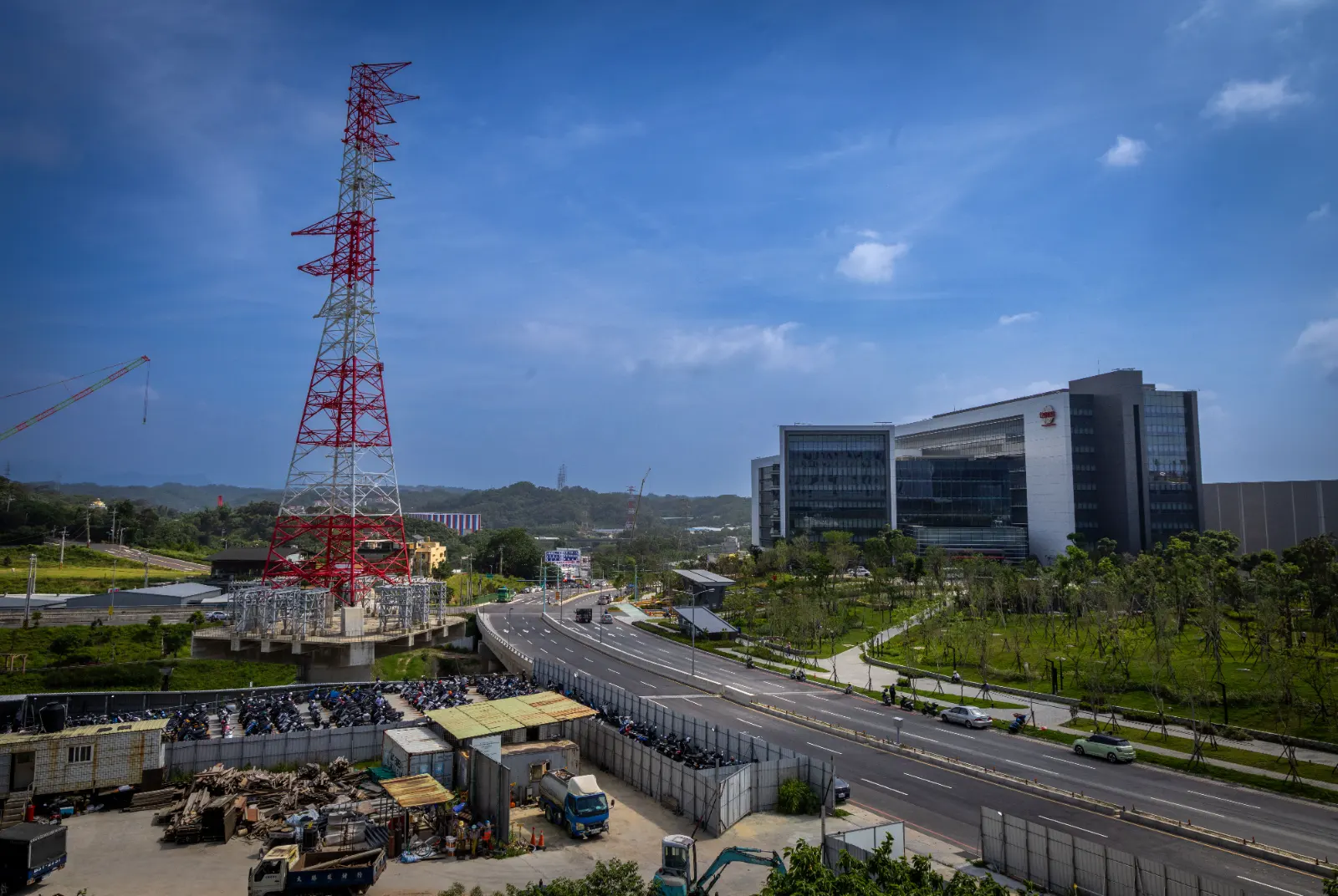
Taiwan has every reason to be proud of that record. Few industrial policies have been as successful as the Hsinchu Science Park. By bringing together manufacturers, suppliers, and universities, it helped transform Taiwan into the center of the global semiconductor industry.
Listening to the discussion, one question stayed with me.
If Taiwan were designing its industrial policy today, would it begin by building another Hsinchu?
I think the answer is no.
That is not because Hsinchu failed. Quite the opposite. Hsinchu solved the central problem of an earlier era. The challenge facing Taiwan today is different.
When people tell the story of Taiwan's economic miracle, they usually begin with export processing zones, industrial estates, science parks, and the government agencies that built them. Cities play only a supporting role. They are where workers live while production takes place somewhere else.
That was never the complete story of Taiwan's manufacturing success.
For decades, a number of Taiwanese sociologists argued that Taiwan's manufacturing economy depended on something much broader: dense networks of firms, suppliers, entrepreneurs, engineers, and workers embedded in its cities, and not just in its science parks. Knowledge spread because people interacted repeatedly.
Suppliers specialized because customers were nearby. Engineers carried ideas as they moved between companies. Universities, neighborhoods, and factories formed a single ecosystem. Science parks mattered, but they succeeded because they were connected to this larger urban network. Among the scholars associated with this tradition was Chen Ming-chi, now Taiwan's Deputy Foreign Minister, who documented how important Taiwan's urban networks were for the bicycle industry.
When I first encountered this literature, I regarded it as an interesting reinterpretation of Taiwan's industrialization. Today I think it was identifying something more fundamental.
Many of the world's most innovative industries—and where Taiwan hopes to go next—are constrained less by factory capacity than by their ability to attract talented engineers, researchers, and entrepreneurs. The question is no longer simply where production should take place. It is where talented people choose to build their lives.
Several years ago, I spoke with members of Amazon's HQ2 site selection team. I expected the conversation to focus on tax incentives. Instead, almost every question concerned talent. Which metropolitan areas could recruit thousands of engineers? Which universities produced them? Which cities could persuade them to stay? By the end of the discussion, I realized we had barely talked about incentives at all, or where it would be cheapest to build HQ2.
As the Amazon team described their ideal city, I kept thinking of Taiwan. Dense, walkable neighborhoods, good universities, efficient public transportation, safety, and the countless opportunities for people to interact every day all sounded remarkably familiar.
Perhaps Taiwan's greatest strength has never been science parks alone. Perhaps it has been the cities that made those science parks possible.
Taiwan's cities developed different strengths while remaining tightly connected through transportation, universities, labor markets, and business relationships. Engineers move easily among them. Firms collaborate across them. New companies build on capabilities accumulated over decades. Taiwan functions less as a collection of separate cities than as a single innovation system.
My own research has led me to appreciate another feature of Taiwan's cities: their ability to adapt. Compared with many American cities, neighborhoods in Taipei are much more capable of changing as economic activity changes. New firms can enter. Existing firms can expand. Housing, offices, shops, and workshops adjust together rather than being separated by rigid land-use rules. That adaptability may have mattered during Taiwan's manufacturing era. It may matter even more in industries where technologies and business models change rapidly.
If this is where Taiwan's strength lies, then housing, transportation, universities, immigration, public space, adaptability, and the quality of urban life are not simply social issues. They shape where talented people choose to live, whom they interact with, and where new firms emerge.
Taiwan's industrial policy once solved the challenge of building a world-class manufacturing economy. The next task is creating the places where talented people want to live, work, and start new companies.
That is a different kind of industrial policy. It is also one for which Taiwan may already have stronger foundations than it realizes.
About the author
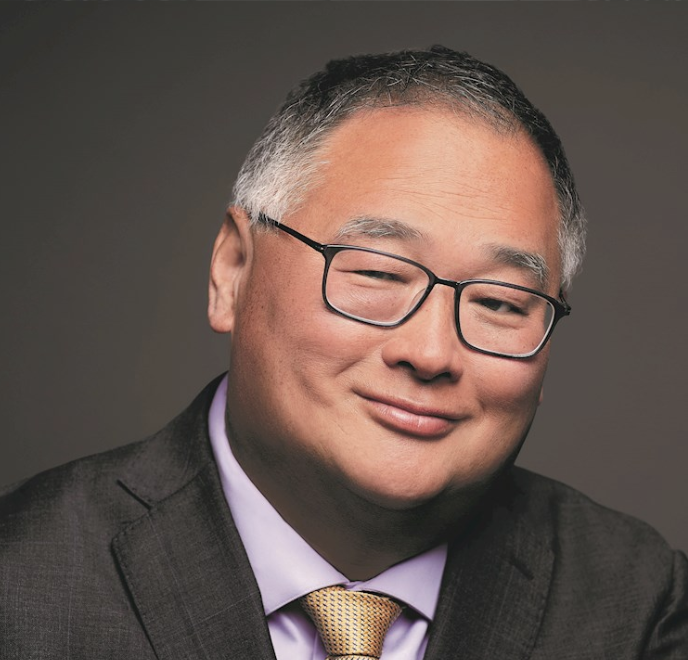
Chang-Tai Hsieh is the Phyllis and Irwin Winkelried Professor of Economics and PCL Faculty Scholar, University of Chicago Booth School of Business.
Have you read?
- Why W. John Kao Went to Hawaii for a Job Interview
- The AI Boom’s Hidden Victim: Taiwan’s Fragile Insurance Sector
- America’s Threat to Taiwan
Uploaded by Ian Huang
Views

Subscribe to CWE Newsletter (every Thursday)
Stay abreast of what's happening in Taiwan with our weekly digest.
Keywords: