Once Obsolete, Why Taiwan Two-stroke Engines are Given New Life by Drones
Source:Getty Images
Taiwan eliminated two-stroke engines on motorbikes more than 20 years ago, but they have re-emerged as a new opportunity for scooter makers that could revive a supply chain stuck in the doldrums.
Views
Once Obsolete, Why Taiwan Two-stroke Engines are Given New Life by Drones
By Jenna Yuanweb only
The two-stroke engine vanished from Taiwan many years ago, but it is making a comeback because of the wars raging around the globe.
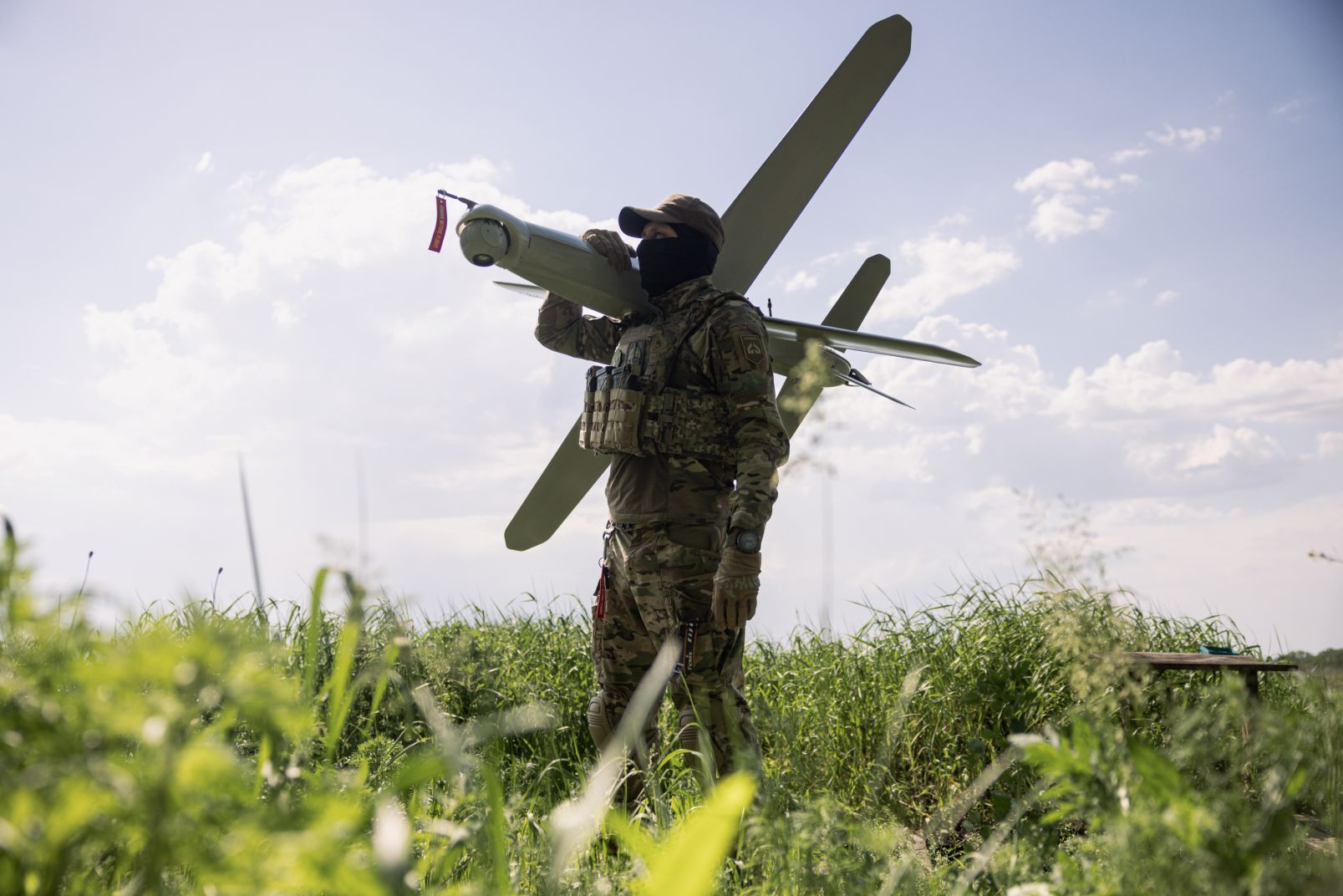
Iran's Shahed-136 attack drones and their two-stroke engines cost only US$20,000-US$50,000 to make, but they have forced the United States military to deplete its stock of interceptor missiles costing more than US$1 million apiece.
Taiwan stopped producing two-stroke engines for motorbikes in 2004 because they were noisy and generated large amounts of toxic exhaust. But they are also cheap and have longer range than batteries, leading to their emergence as key elements in keeping the prices of attack drones down.
They also represent a new opportunity for Taiwan's motorbike supply chain — Taiwan's drone exports rose 13.4-fold in the first seven months of 2026 compared to the same period a year earlier.
The agricultural and reconnaissance drones featured during the pandemic relied mostly on battery-powered motors, but they can only stay airborne one to two hours. The Russia-Ukraine war and Middle East conflict have changed that calculus, requiring attack drones to fly hundreds of kilometers and carry munitions, which led to the adoption of fuel engines.
"If you add just a liter of gasoline to an engine, it will fly over 100 kilometers and become lighter the more it flies," said one industry insider.
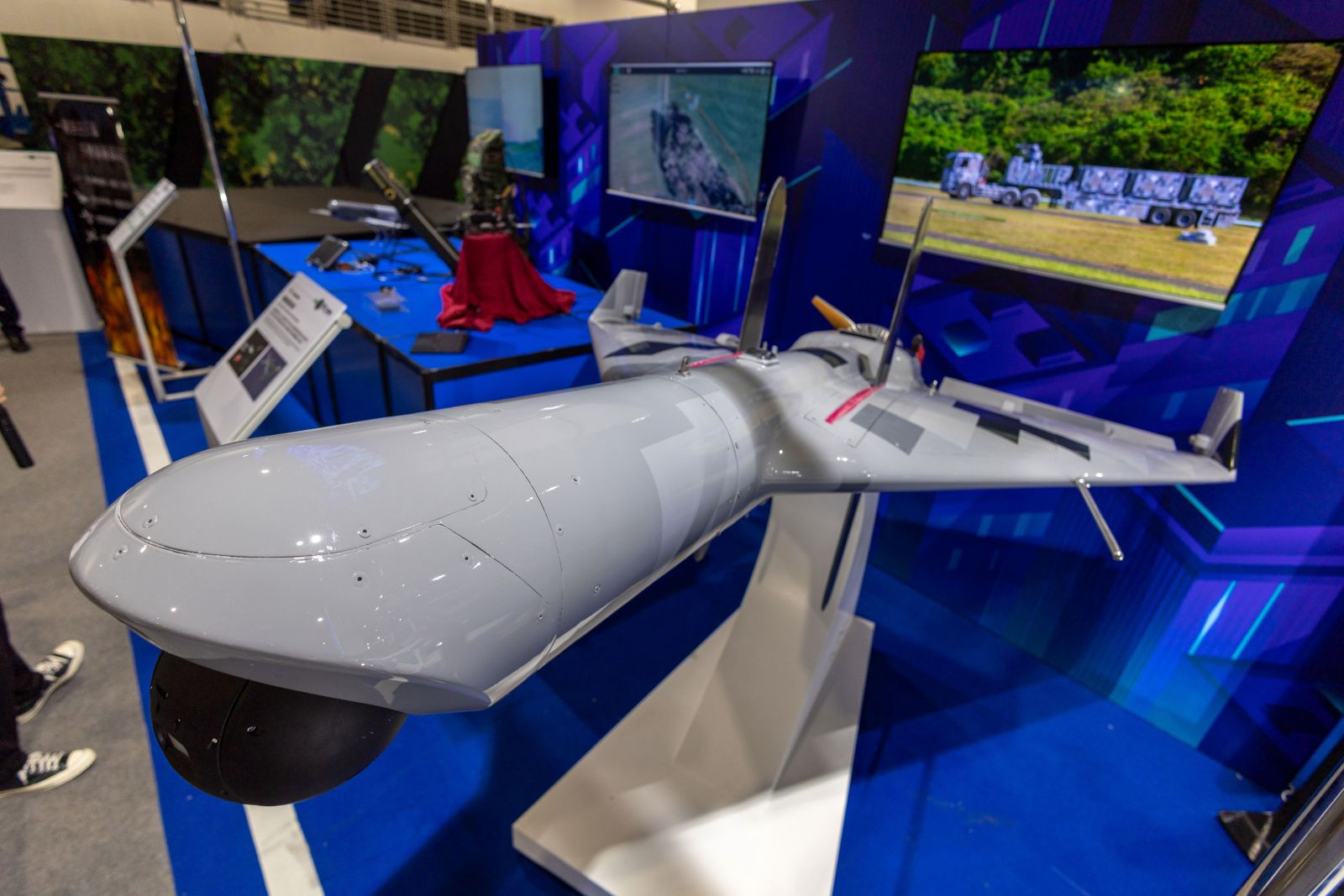 According to an assessment by NCSIST, fitting the Ching Feng II drone with a two-stroke engine could bring significant benefits. (Photo: Chien-Tong Wang)
Taiwan's main weapons development unit, the National Chung-Shan Institute of Science &Technology (NCSIST), has estimated that equipping Taiwan's indigenous Mighty Hornet II (勁蜂二型) drone with a two-stroke engine would reduce the drone's cost to about one-third that of drones equipped with four-stroke rotary engines.
Tung Pei Industrial Co., Ltd. (TPI), a major bearings manufacturer in Taoyuan, sensed the trend beginning in 2024 when its engine parts clients began purchasing bearings for two-stroke engines. The company suspected they were going to be used in drones.
 TPI Bearings Vice President Chen Yi-wei is looking ahead, hoping the company can extend its manufacturing capabilities into precision components for drones and other applications. (Photo: Chien-Tong Wang)
Bearings are relatively standardized, so TPI only needed to tweak its existing production lines to meet this new demand. TPI Executive Vice President Chen Yi-wei (陳奕瑋) is hoping to extend the company's capabilities to precision parts such as motors and engines and create a Taiwanese supply chain that emulates the upward path of China's humanoid robot supply chain.
It would be a much-needed boost for Taiwan's motorbike supply chain, which has seen the output value of motorbike components fall 20 percent over the past four years, according to Taiwan Transportation Vehicle Manufacturers Association statistics. The decline is mainly due to international scooter brands shifting orders to lower cost suppliers in Southeast Asia and China.
Chen Ching-chuan (陳慶全), who runs the Hong Jia Motorcycle Shop in Chiayi and is a prominent figure in Taiwan's motorbike repair circles, said many of Taiwan's motorbike wiring and chassis manufacturers are currently getting orders for drone parts.
"For motorbike part makers to get into drones, it's actually a step down technically, which gives them a big edge," Chen said.
Taiwanese vendors with their own technologies also stand to gain because many major Japanese motorcycle manufacturers have joint ventures with Chinese companies and are reluctant to get involved in the defense industry.
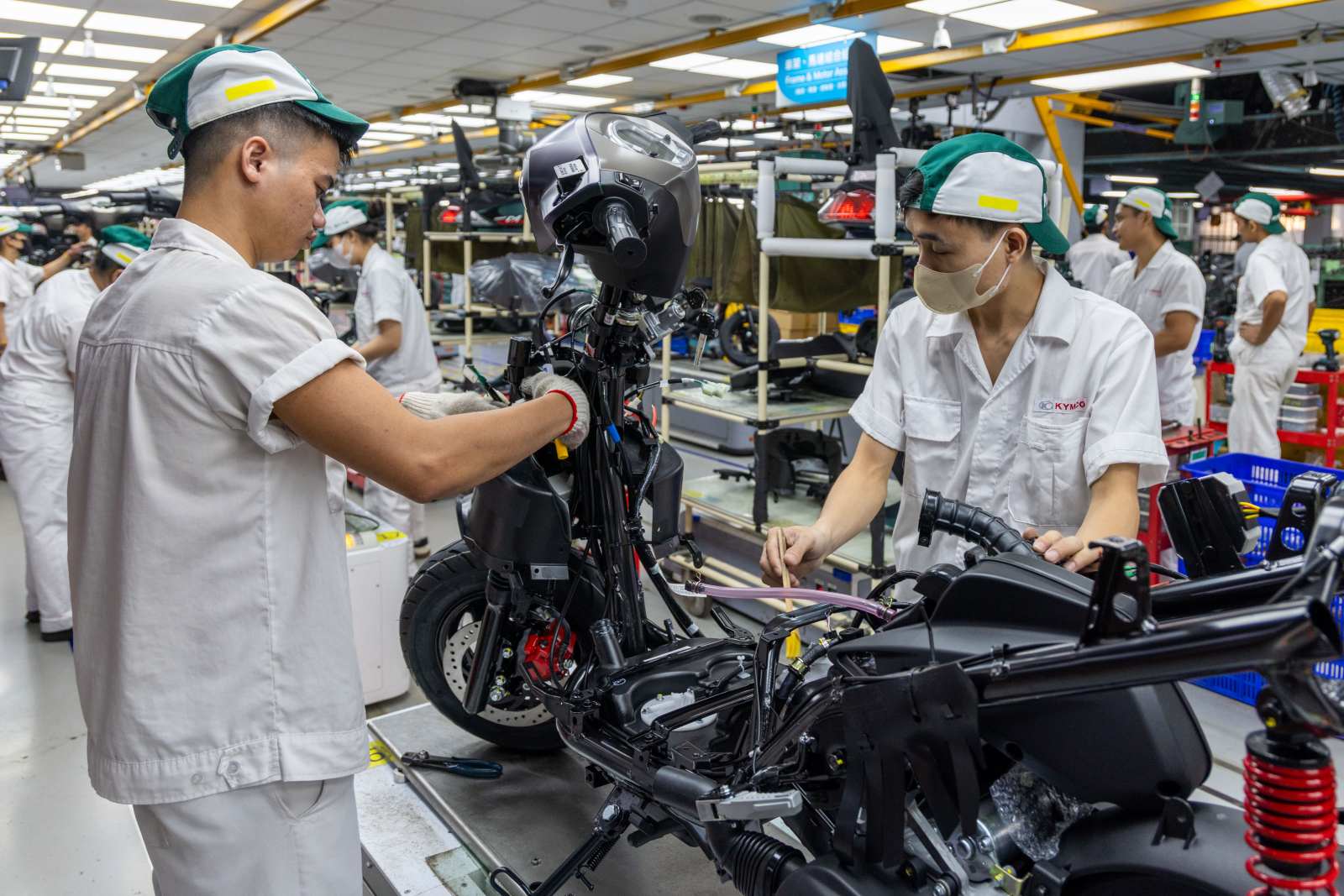 Demand for long-range, fuel-powered drones driven by the Russia-Ukraine war has unexpectedly opened a path for highly skilled manufacturers to diversify into a new field. (Photo: Chien-Tong Wang)
When President Lai Ching-te (賴清德) visited the NCSIST in July, the power systems of the Mighty Hornet I and Mighty Hornet II drones had switched to two-stroke engines, cutting costs to about one-third that of four-stroke rotary engines. The institute also opened ground testing and technical guidance to the public.
Though motorbike part vendors seem eager to get on the drone bandwagon, large motorbike brands are more cautious.
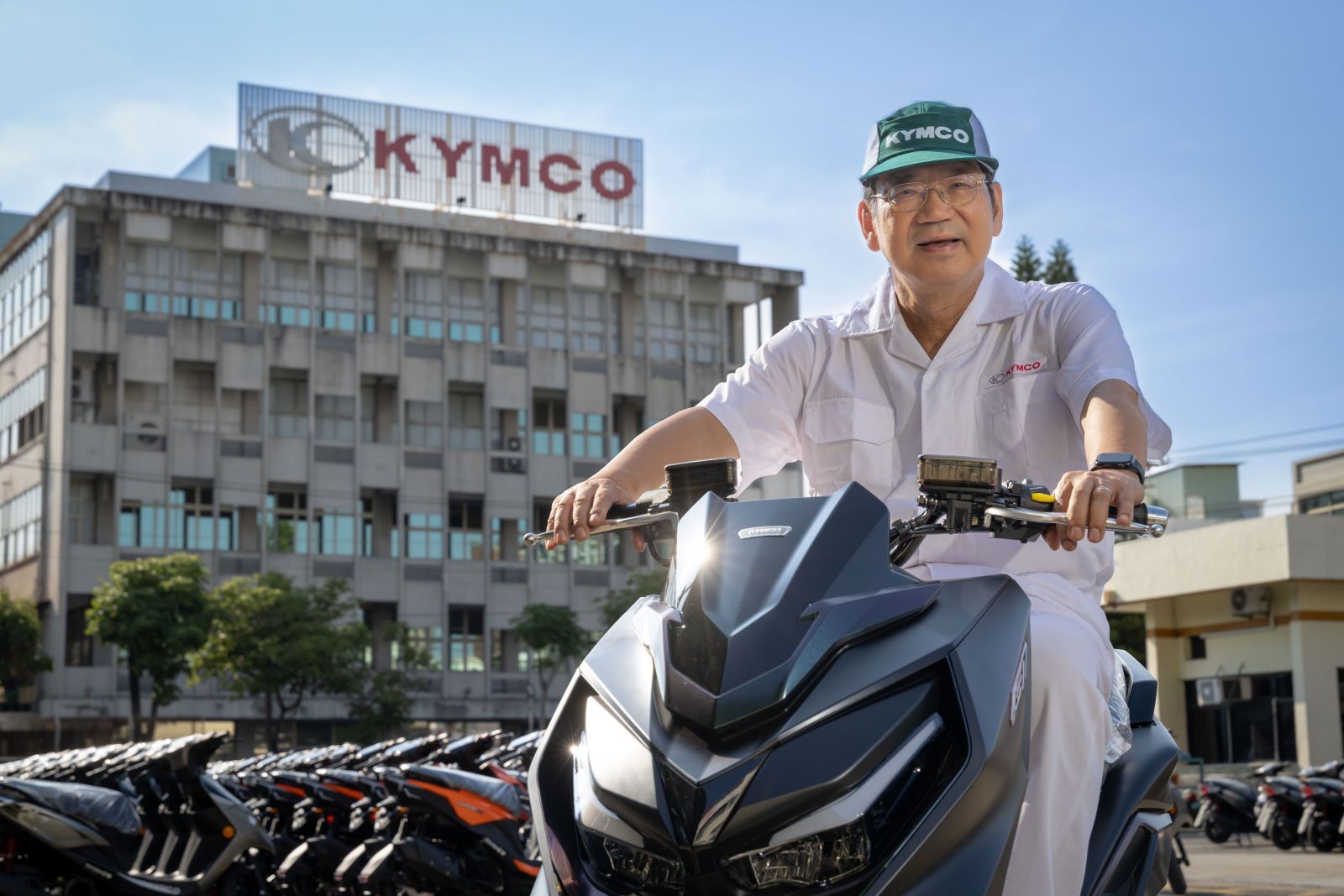 Compared with component suppliers that are actively expanding into the sector, Taiwan’s major motorcycle manufacturers remain more cautious about investing in drone engines, largely due to concerns over production scale. Pictured is Ko Chun-ping, chairman of Kymco Group. (Photo: Chien-Tong Wang)
KYMCO Chairman Ko Chun-ping (柯俊斌) said "developing [the technology] would not be a problem" for his company, but it would have to carefully assess the value of the opportunity.
If KYMCO were to get into the drone business as a supplier of engine parts rather than the completed drone, it would have to figure out whether it was worth investing in tooling and test equipment given that the size of Taiwan's market is only a few thousand to 10,000-20,000 drones a year, far below the company's annual production of motorbikes, according to Ko.
Sanyang Motor (SYM) Director Wu Yi-cheng said that while power systems are one of SYM's core competencies, the company currently does not have any drone-related plans.
The motorbike parts industry may already be getting a boost from the emerging drone industry. But the journey has just begun if Taiwan hopes to achieve a complete industrial chain.
Have you read?
- Why Google Is Building Its Own Nvidia
- The Red-Free Challenge: Why the US-Taiwan Autonomous Defense Push Faces an Industrial Reality Check
- SEMICON Taiwan 2026: Micron Counters Rivals, Declares AI Still 'Massively Undersupplied'
Translated by Luke Sabatier
Uploaded by Ian Huang
Views

Subscribe to CWE Newsletter (every Thursday)
Stay abreast of what's happening in Taiwan with our weekly digest.
Keywords: