Taiwan Think Tank: AI Infra Growth Not Slowing Down; DRAM Capacity Crunch to Last Until 2030

Source:Shutterstock
MIC expects AI data center capacity of major CSPs to more than triple from 2025 to 2028, while the bigger question is whether demand can translate into a sustainable business model.
Views
Taiwan Think Tank: AI Infra Growth Not Slowing Down; DRAM Capacity Crunch to Last Until 2030
By Judy Linweb only
Despite warnings from frontier AI researchers calling for a slowdown in AI development, double-digit growth in AI infrastructure buildout is expected to continue over the next two years, while memory capacity constraints are unlikely to be fully resolved before 2030, according to Dr. Bo-chi Lin, Deputy Director General of the Market Intelligence & Consulting Institute (MIC) under Taiwan’s Institute for Information Industry.
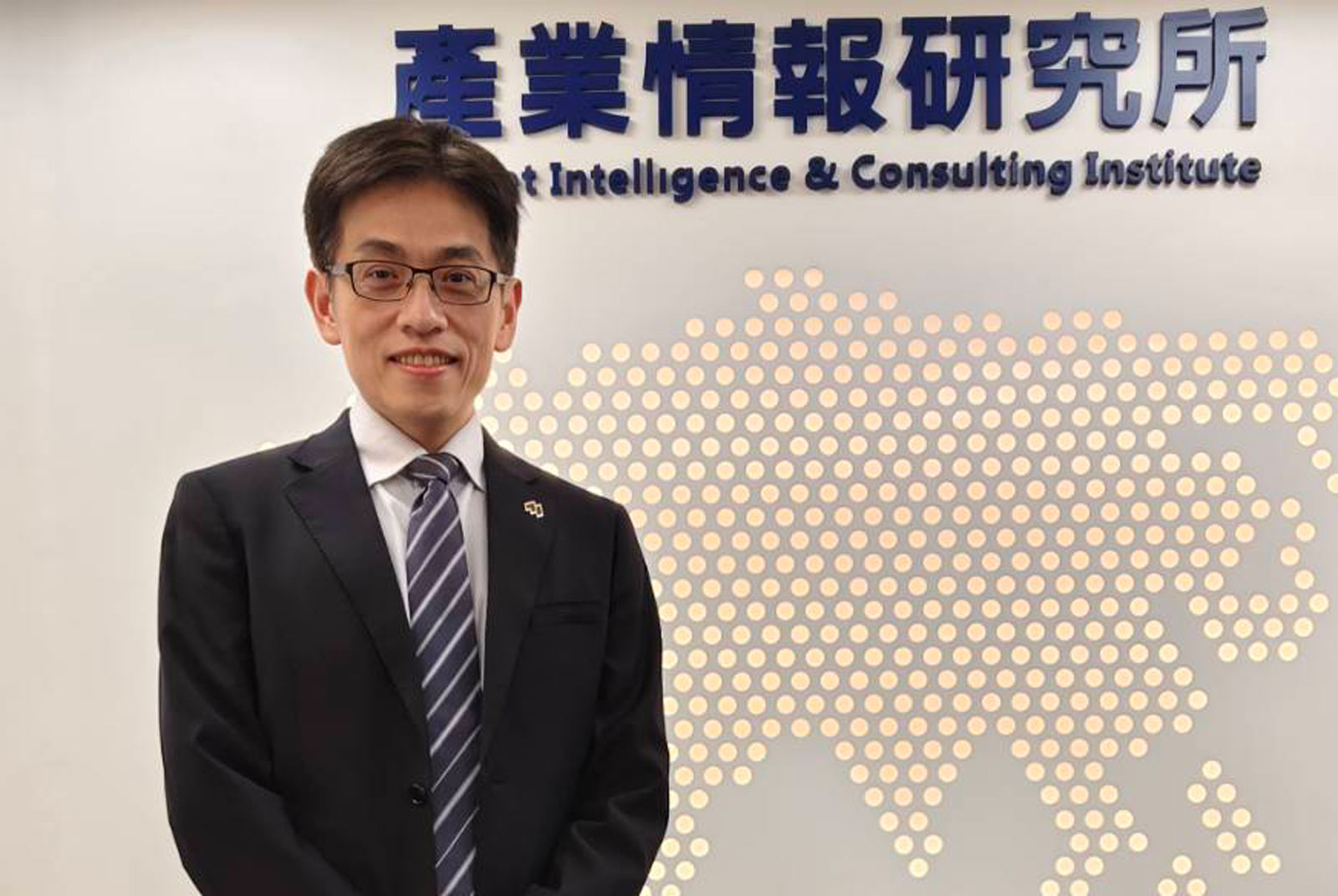 Dr. Bo-chi Lin, Deputy Director General of the Market Intelligence & Consulting Institute (MIC).
In an exclusive interview with CommonWealth English, Lin said the debate over slowing AI development reflects fundamentally different perspectives within the industry. But from an infrastructure standpoint, he believes the AI boom cycle is far from over.
“I told the audience in our latest forum that the capacity shortage of DRAM due to the AI boom is going to be alleviated by 2028,” Lin said. “But alleviating doesn’t mean it's completely solved; the problem is unlikely to be solved before 2030.”
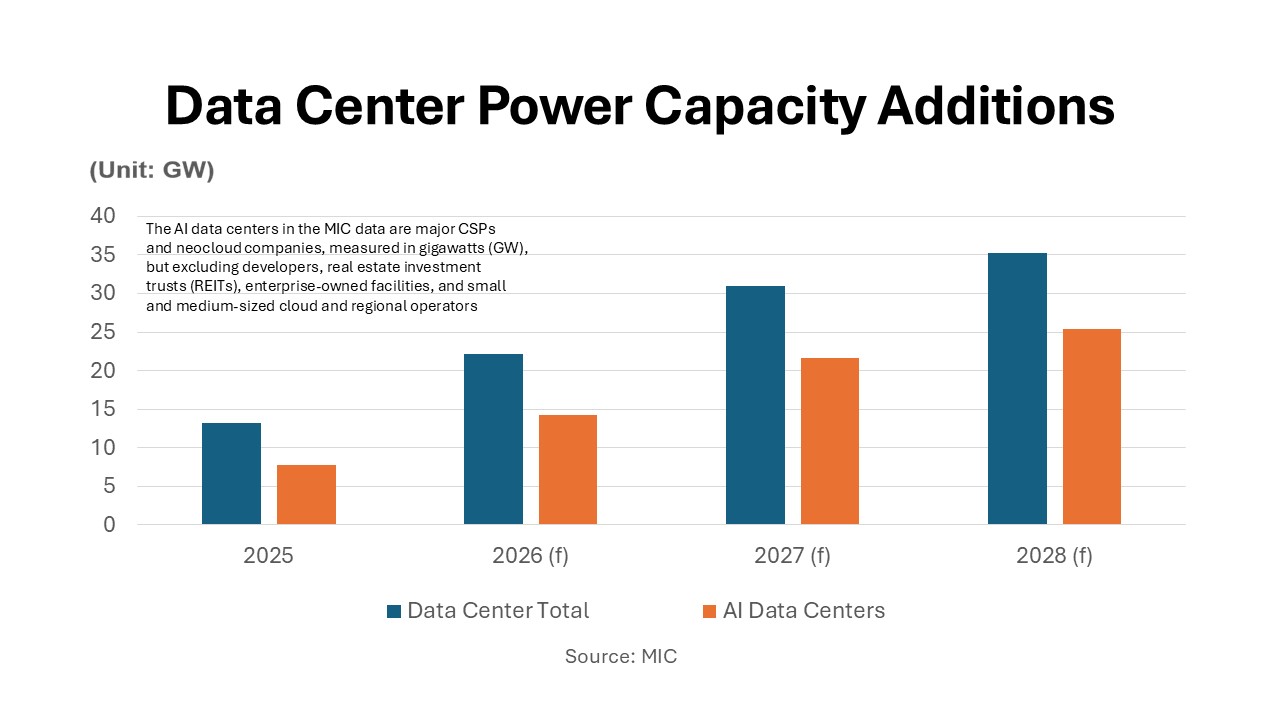
MIC estimates that the AI data center capacity of major cloud service providers and neocloud companies, measured in gigawatts (GW), will grow 69% this year and another 39% in 2027 (excluding developers, real estate investment trusts (REITs), enterprise-owned facilities, and small and medium-sized cloud and regional operators). Their total AI data center capacity is projected to reach 25.4 GW in 2028, more than triple the 7.8 GW recorded in 2025.
Lin said the debate over slowing AI development partly reflects differences in perspective between researchers and business leaders. In his view, some researchers at frontier AI companies such as OpenAI and Anthropic place greater emphasis on the potential societal consequences of AI development, while companies must also weigh commercial considerations.
He drew a limited historical analogy to the Manhattan Project—not in terms of the technologies or their consequences, but in how researchers involved in developing powerful new technologies may begin questioning their broader implications.
Researchers working closest to frontier models may be particularly sensitive to the possibility that increasingly capable AI systems could become harder to control, Lin said. Others in the technology industry, however, are more focused on expanding AI adoption and bringing its benefits to the many people and businesses that have yet to use the technology extensively.
“Both sides have a point. They are simply looking at AI from different perspectives,” Lin said, predicting that the debate over the pace of AI development will continue.
For Lin, however, one of the biggest questions over the next few years is commercial: What will become AI’s mainstream, sustainable business model?
Optimism remains strong throughout the AI hardware supply chain. Foundries such as TSMC continue to receive orders from chip designers, which in turn are responding to demand from system makers. System suppliers, meanwhile, continue to see strong spending by cloud service providers (CSPs).
“At every layer of the AI supply chain, companies can point to orders from the next customer and say, ‘There is no bubble,’” Lin said.
The harder question arises at the end of that chain. Google, Microsoft, Amazon and other cloud giants are investing enormous sums in AI infrastructure, but the business models needed to generate sufficient returns on those investments are still taking shape.
“What exactly is the business model that will allow these cloud giants to monetize all this AI investment?” Lin asked.
That uncertainty explains why investors are increasingly scrutinizing revenue, free cash flow and other financial indicators for evidence that massive AI capital spending can translate into sustainable returns. The companies making these investments may be technology giants with deep pockets, but the fundamental question remains: Who ultimately pays for all this AI infrastructure?
Some of that answer is beginning to emerge. Companies are increasingly paying for AI services for their employees, creating an enterprise revenue stream. But Lin believes the real test will come when paid AI services become commonplace among individual consumers.
“When consumers pay for AI services just as they pay their utility or mobile phone bills without a blink, then we will know the business model has been validated,” Lin said.
Have you read?
- TSMC's Baipu Plan: Advanced Packaging, Hidden in Plain Sight
- Can China Catch Up with Memory Chip Leaders? What CXMT’s Breakthrough Means for Taiwan
- How China's DRAM Maker CXMT Caught Up With Micron Without EUV
Uploaded by Ian Huang
Views

Subscribe to CWE Newsletter (every Thursday)
Stay abreast of what's happening in Taiwan with our weekly digest.
Keywords: