Why Asian Companies Keep Going Where Others Won't, and What’s Next
Source:Shutterstock
Asia built a growth model around taking risks others wouldn't. The next test is whether it can learn to price risks others haven't.
Views
Why Asian Companies Keep Going Where Others Won't, and What’s Next
By David Kimweb only
On June 30, 1988, Iraqi fighter jets bombed the Kangan gas plant in southern Iran. Thirteen Korean workers were killed. Foreign contractors had been leaving the country for years. Daelim Industrial, building the refinery, evacuated its survivors.
Three months later, it went back.
That instinct has a price tag. In December 2024, fifty-nine years after Hyundai built its first foreign road in Thailand, Korea's cumulative overseas construction orders passed $1 trillion — half of that year's book from the Middle East, the market Korean firms entered when the work was dangerous and the bidders were few.
The model dates to 1976 and the Jubail industrial port: a contract worth a quarter of the Korean government's annual budget, awarded to a company with no offshore experience. Hyundai fabricated the steel in Ulsan and barged it to Saudi Arabia.
What made that repeatable was not nerve but architecture. KEXIM, founded the same year, took the sovereign exposure; export insurance took the political risk; the chaebol bid where others would not; diplomacy opened the door. No company could underwrite Iran at war with Iraq. The package could.
Western banks spent those same decades perfecting the opposite skill — pricing a risk accurately enough to decline it. Not timidity: their shareholders had not signed up for a war zone. But precision leaves vacancies, and Korea built a system to fill them. Each survived project became the credential for the next.
The invoice came in Kuwait. After Saddam Hussein invaded in 1990, Hyundai eventually settled for a fifth of what Iraq owed it. It wrote off most of the debt and kept the reputation.
It made sense because someone sat across the table. Myanmar was the harder case: POSCO International had been producing gas at Shwe for eight years when the generals took power in 2021, its partner a state company that now answered to them. It stayed, and endurance became the thing it was defending.
Korea was not the only small exporter reaching these conclusions. Taiwan got there without an embassy.
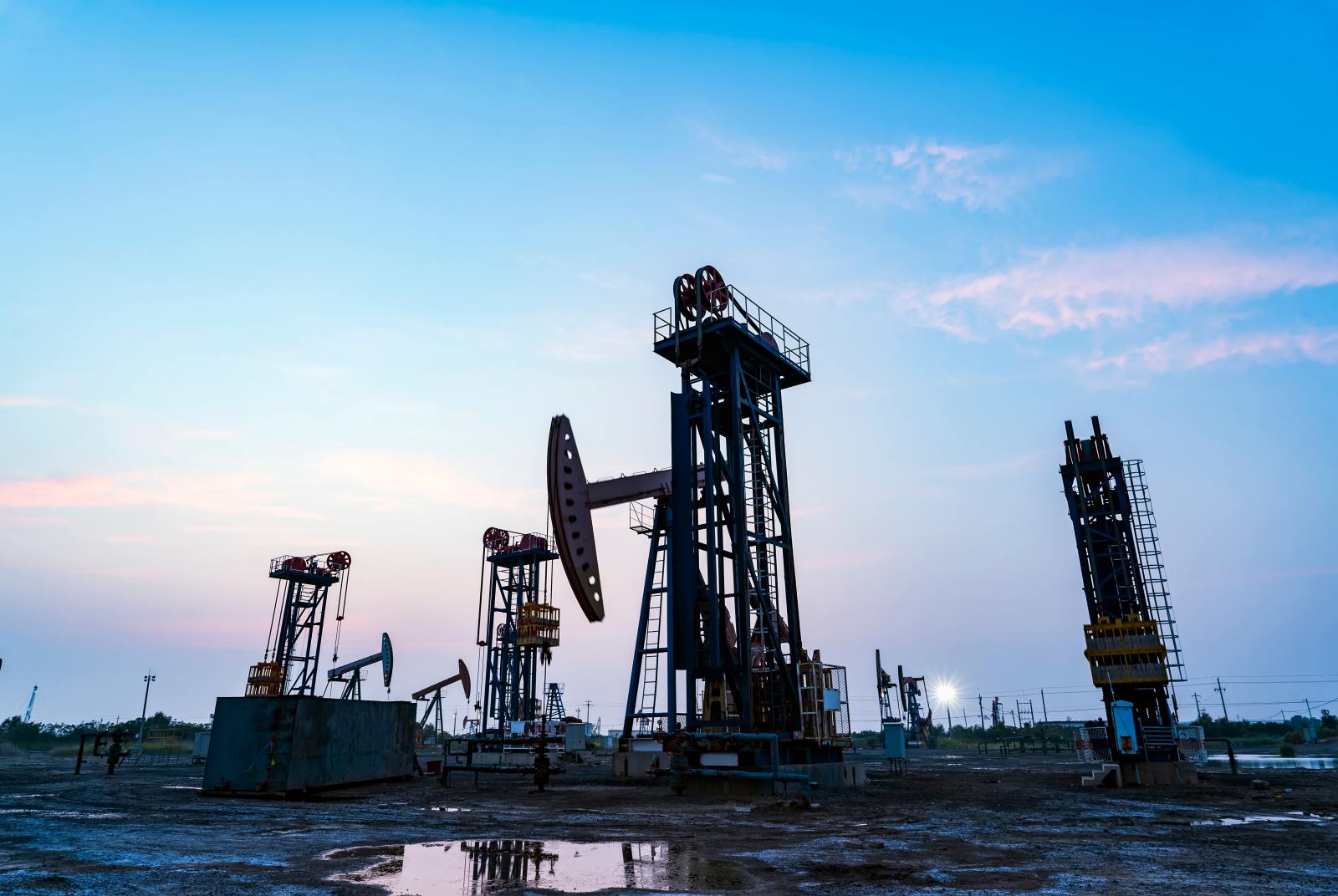
In January 2006, CPC, Taiwan's state oil company, signed an exploration deal in Chad. Seven months later Chad recognised Beijing and the Taiwanese mission closed. The licence held. CPC went on drilling in a country that no longer acknowledged its existence, sold 35 per cent to a Chinese group in 2016 to cut its exposure, and in late 2020 — fourteen years after the embassy shut — took delivery of its first Chadian crude. A few thousand barrels a day: a modest commercial prize, and a precise measure of what a company will sit through without diplomatic cover.
Niger is where Taiwan's version and China's sit in the same well — CPC 20 per cent of the Agadem field, CNPC 65, the crude leaving through a Chinese-built pipeline that a coup and then a border quarrel with Benin have each shut in turn. Taipei and Beijing contest almost everything else.
China then changed the scale and the motive. Belt and Road has committed roughly $1.4 trillion across 150 countries since 2013, energy taking 43 per cent of last year's total. Korea took fifty-nine years to book its first trillion in overseas construction orders. China has come close to that figure in Belt and Road construction contracts alone in twelve.
On the morning of August 26, seismometers above the Nepal–Tibet border registered what looked like a magnitude 5.2 earthquake. It was a mountain: bedrock and ice coming off the peak and down the Trishuli valley as a wall of water and rock.
In its path stood Upper Trishuli-1 — $647 million, 84 per cent built, with KEXIM, the Asian Development Bank and the IFC on the paperwork. No cowboy project: export credit, two multilaterals, their due diligence, the insurance project finance always carries. It had already survived the 2015 earthquake and two financing restructurings. It did not survive this. Nine Korean workers are still missing, and the flood took out roughly a tenth of Nepal's generating capacity.
Every risk in this story had an author until now — a general, a creditor, a rival that still wanted the oil. Authors can be outlasted, renegotiated, insured. This one had no author.
The hazard had been assessed. A 2018 disaster-management plan weighed glacial risk and judged it limited, partly on distance. The flood went farther than the plan allowed. Across the Himalayas, ice is now disappearing at twice its pre-2000 rate, and another 200 gigawatts of hydropower is planned across the same terrain.
"When the government is putting some big hydropower project, is there any glaciologist in the panel who is looking for this danger? That approach is completely missing." — Farooq Azam, Senior Cryosphere Specialist, ICIMOD, September 2026
The project had finance, insurance and safeguards in place. After the 2015 earthquake, conventional insurers would not carry seismic risk at a site that remote, so the IFC and Swiss Re built a policy that paid out on ground shaking measured by USGS ShakeMaps — the first time multilateral lenders backed a construction project with parametric cover. The USGS attributed the August 26 collapse to rapid slope failure involving a glacier. The insurance had been designed for an earthquake.
Insurance may rebuild Trishuli's dam. It cannot restore the years lost, the interest accrued or the returns investors expected. Nepal has exposed the difference between absorbing a loss and understanding the risk that produced it.
That difference is a capital-structure problem, and nobody has priced it. Put physical hazard honestly into the discount rate and a serious share of those 200 gigawatts stops clearing — and the difference lands on someone. Developing Asia needs $1.7 trillion a year in infrastructure on the ADB's climate-adjusted estimate, and the models, reinsurance and ratings that decide what is bankable are still written in Zurich, Munich and New York.
For fifty years, Asian companies turned risks others declined into contracts, credibility and growth. Korea built a system of finance, diplomacy and execution; Taiwan learned to work alongside its geopolitical rivals; China took the model to another scale. That model rewarded the willingness to absorb risk, not the ability to measure it, and the Nepal disaster shows what that gap costs. Asia's next advantage belongs to the people who measure first and price the answer into the financing before the concrete is poured.
(This piece reflects the author's opinion, and does not represent the opinion of CommonWealth Magazine.)
CommonWealth Magazine welcomes op-ed submissions. Please send your article proposals to [email protected]
About the author:
David Kim is a former investment banker turned technology journalist who writes about the intersection of technology, innovation and capital. He is the founder of Alpha Narrative Lab.
Have you read?
- Taiwan's Next Test in Tech Sovereignty Comes After the Sale
- Taiwan’s Resilience Procurement Is Measuring the Wrong Output
- China Treats AI as Comprehensive Strategy and That Makes a Big Difference
- Taiwan's Drone Problem Is Replenishment, Not Production
Uploaded by Ian Huang
Views

Subscribe to CWE Newsletter (every Thursday)
Stay abreast of what's happening in Taiwan with our weekly digest.
Keywords: