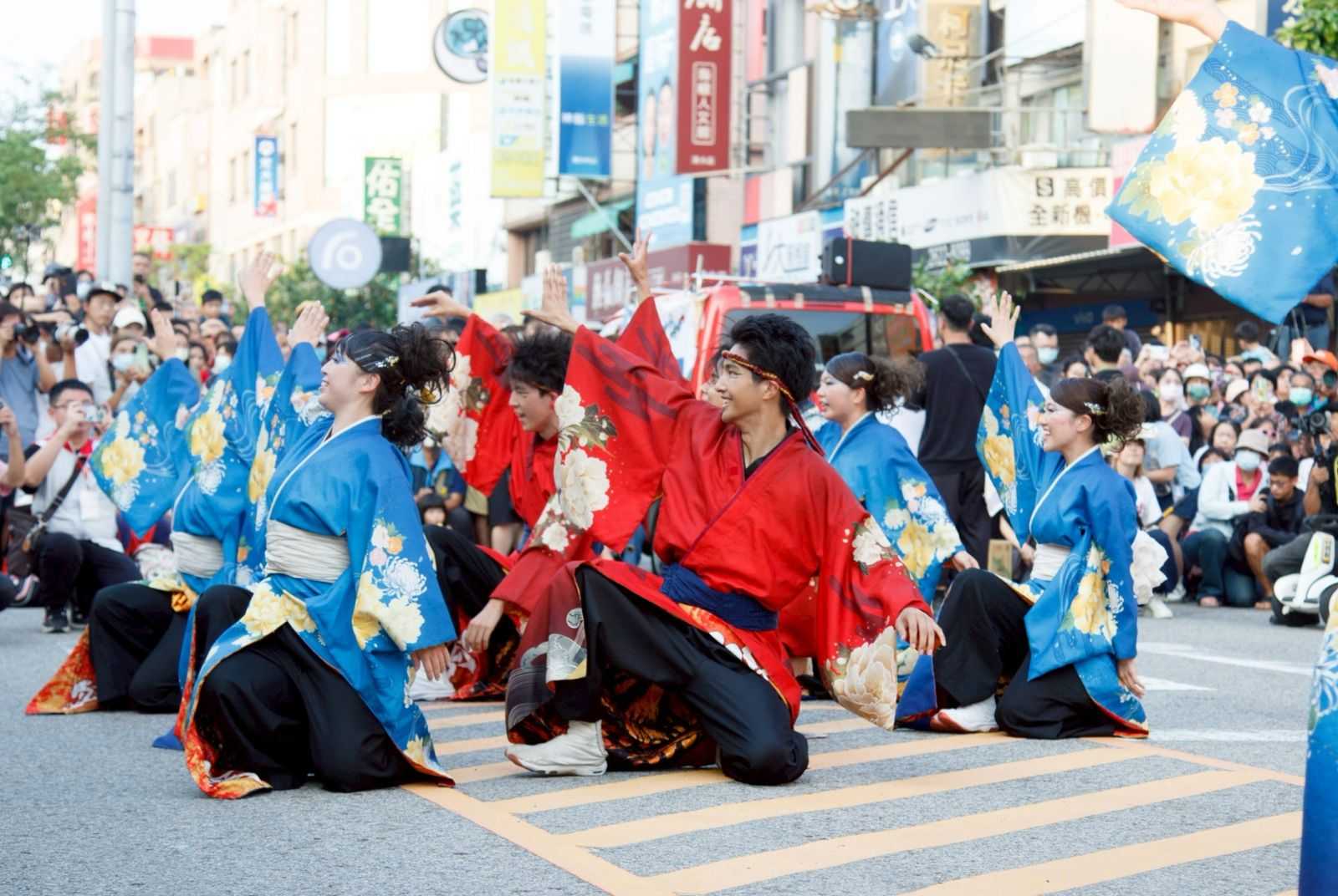
Viral Photos of Statue Boost Taichung's Coastal Travel Corridor
Source:Taichung City Government Tourism and Travel Bureau
When people think of Taichung's coastal region, it's usually the intertidal flats of Gaomei Wetlands shimmering at sunset, fragrant seafood dishes at Wuqi Fishing Harbor, or the modern Mitsui Outlet shopping complex set against the backdrop of the Taiwan Strait. Alternatively, what may first come to mind is the incense perpetually burning at Dajia Jenn Lann Temple or the old houses and stories of the Taichung Qingshui Military Dependents' Village Cultural Park. These sites shape people's lasting impressions of Taichung's coastal travel corridor, a blend of religious history, ecological preservation, old settlements, and new retail centers.
Views
Viral Photos of Statue Boost Taichung's Coastal Travel Corridor
By Taichung City Government Tourism and Travel BureauSponsored Content
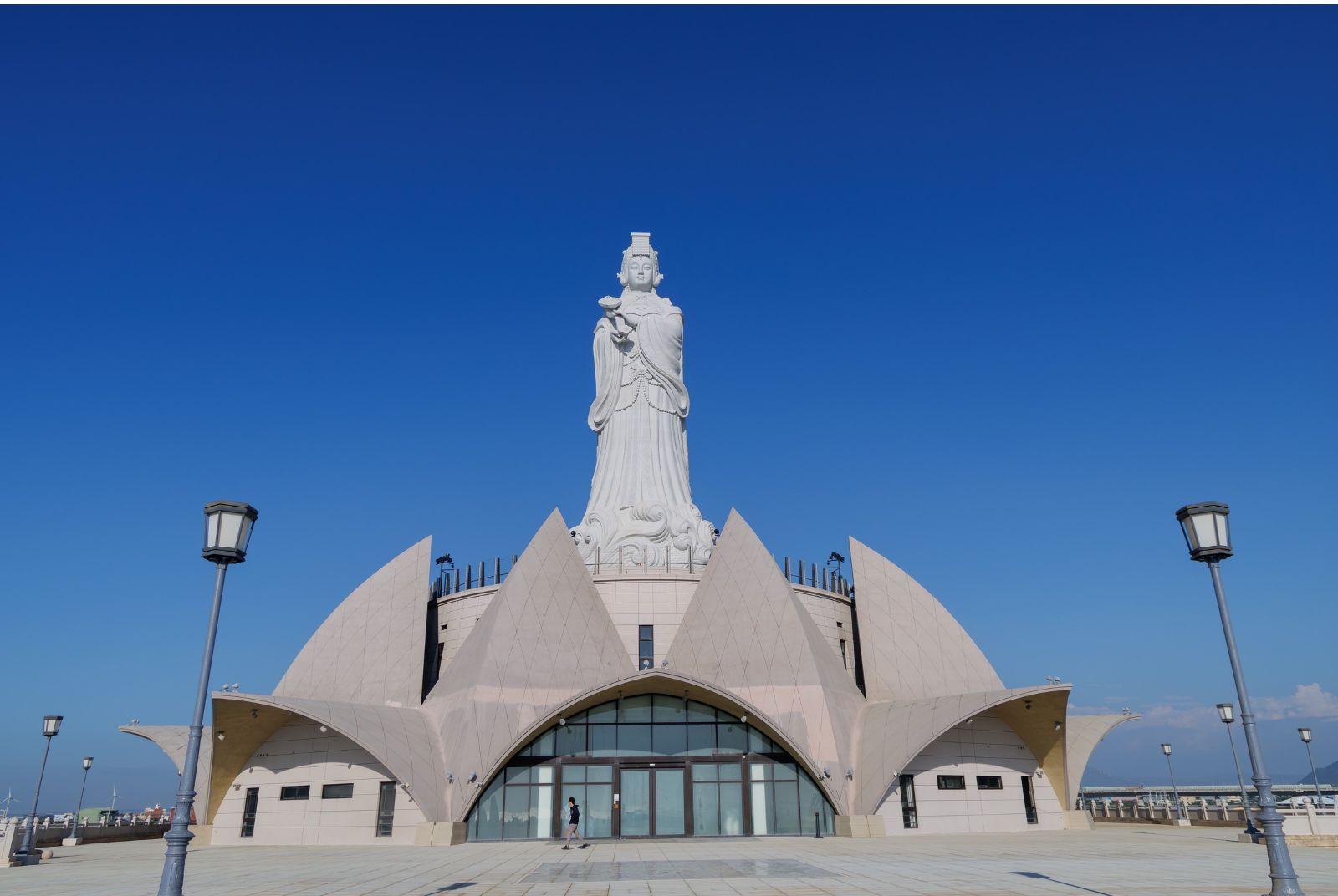
A newly completed 53.6-meter-tall granite statue of the sea goddess Mazu is a distinctive addition to the travel attractions along Taichung's coast.
Now, this storied area has gained a new landmark that is redrawing the tourism map: the Da'an Port Mazu Cultural Park, featuring a towering statue of the sea goddess Mazu that was recently completed after fourteen years of construction. Chen Mei-xiu, Director of Taichung's Tourism and Travel Bureau, describes the Park as holding a "front-row seat on the coast." It also completes a Mazu-themed cultural belt that links Baishatun Gongtian Temple, Dajia Jenn Lann Temple, and Lukang Tianhou Temple.
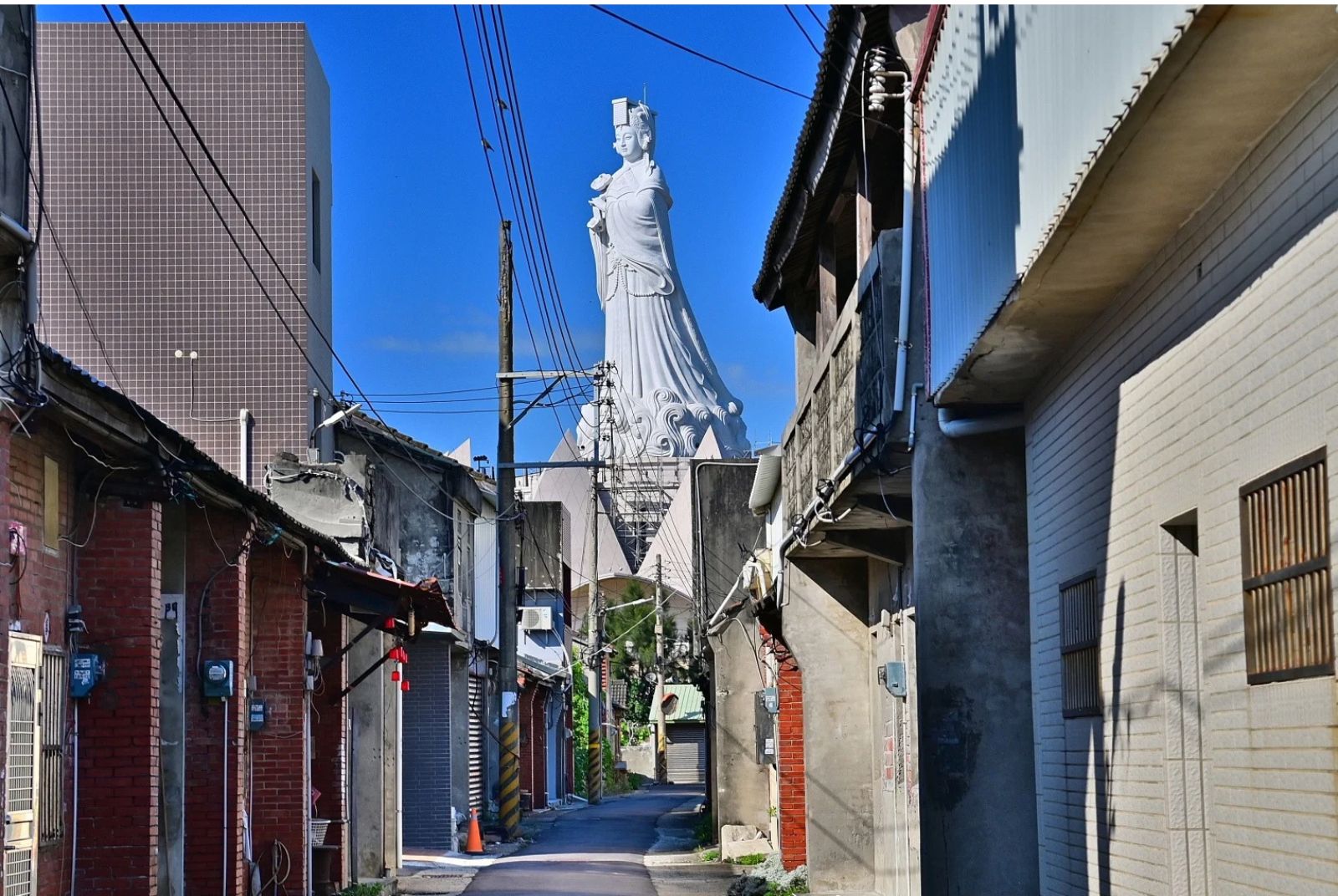
Recently, a particular vantage point for photographing the Mazu statue has become popular on social media—from the narrow lanes of the adjoining village, looking out toward the gleaming white figure in the distance. In these photos, low-slung houses, utility poles, and everyday local life fill the foreground, while in the background Mazu seems to be watching over the coastline beyond. The scene in daytime conveys a folksy ambience—at night, when the lights come on, a more mysterious and dramatic quality emerges.
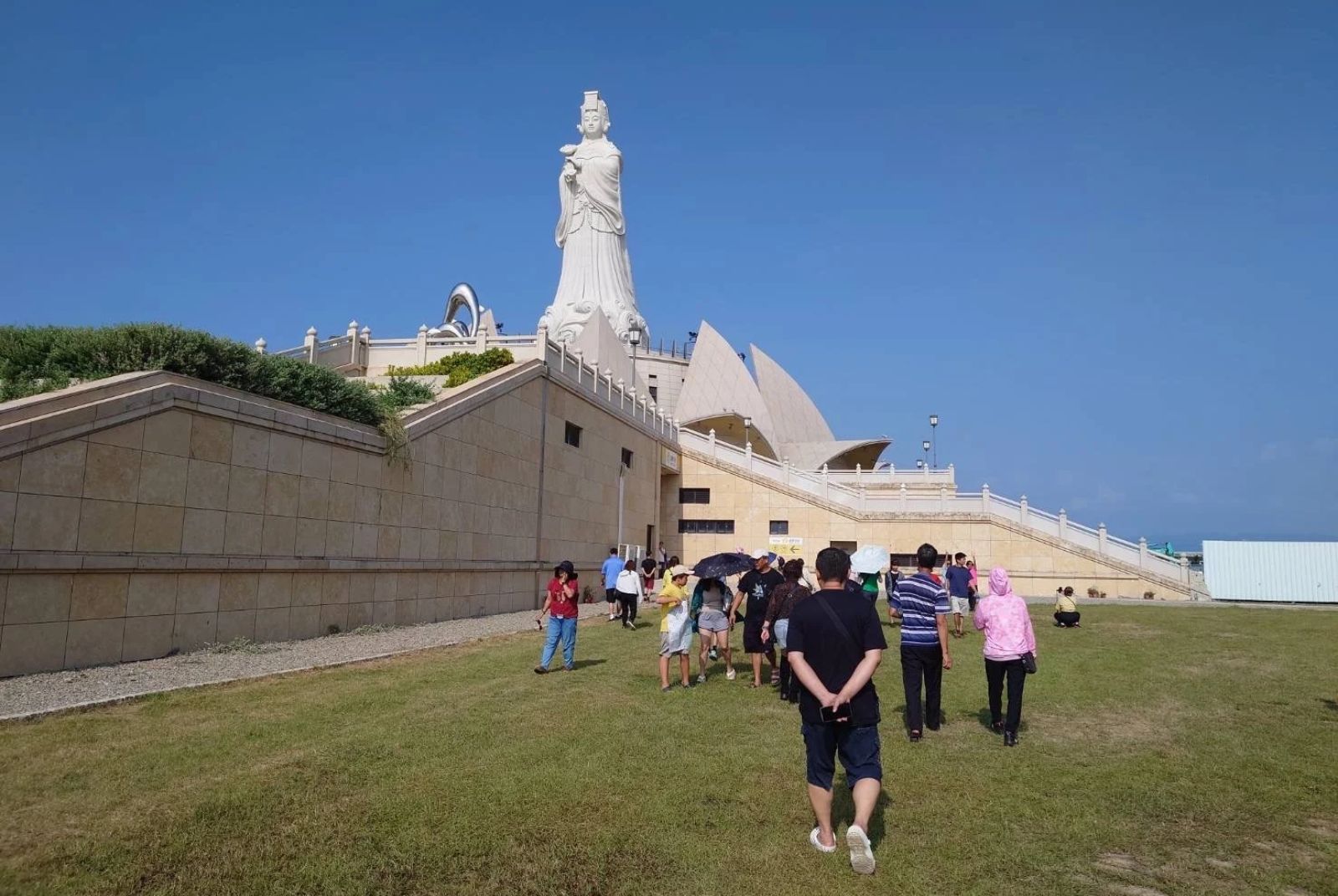
After fourteen years of planning and construction, the Mazu statue overlooking Da'an Port has been officially completed, becoming a new coastline landmark and driving increased visitor traffic.
A "village lane perspective" boosted awareness of the new statue
Photos of the Mazu statue quickly gained popularity online, making the story behind it more widely known. Carved entirely from granite and designed by renowned sculptor Ko Chien-hua, the statue took fourteen years to complete. It stands at a total height of 53.6 meters, making it the tallest Mazu statue on Taiwan's main island. The statue's base incorporates visual motifs that evoke the rare dolphin species nicknamed the "Mazu fish" by local fishers—lending the landmark added ecological, as well as cultural, significance.
"The Da'an Port Mazu Cultural Park is a hub for cultural tourism. Residents of the areas along Taiwan's western coast are very familiar with Mazu worship, but people from elsewhere may be less so," said Chen. She noted that besides viewing the statue, visitors can also take in a number of exhibitions within the Park. One uses old photographs, accounts of local figures, and historical materials to help visitors understand the development of settlements and community life in the Da'an area, connecting Mazu culture with local history. There's also a photographic exhibition documenting beach cleanup efforts, and another featuring artworks made from driftwood collected on the shore.

Taichung City Tourism and Travel Bureau Director Chen Mei-xiu shares plans for the Da'an Port Mazu Cultural Park and Taichung's coastal tourism corridor.
A Mazu-themed route along the coast
To the north of the Da'an Port Mazu Cultural Park is Baishatun Gongtian Temple, the starting point for an internationally noted annual pilgrimage on foot to Beigang Chaotian Temple roughly 200 kilometers away. To the south of the Park is Dajia Jenn Lann Temple, known for its abundant incense and prominently featured in the Dajia Mazu International Tourism and Culture Festival, a major annual event blending religious faith and local culture that draws believers and tourists from both Taiwan and abroad. Still further south lies Lukang Tianhou Temple, one of the most significant points of origin for Mazu worship in Taiwan, whose deep historical roots are juxtaposed with the rustic charm of the old rural settlement in which it is nestled. The Da'an Port Mazu Cultural Park serves as a perfect hub for this Mazu-themed travel corridor, where visitors can gain a more complete perspective on the coastal region's stories of spiritual life and everyday living.
That said, for the Park to truly thrive, convenient transportation options are a top priority. Chen explained that visitors with their own vehicles can take Provincial Highway 61 (the West Coast Expressway) to the Daan 1 or Daan 2 exit and quickly reach the Park. Visitors using public transportation can take bus 658 or 92, or minibus 1, among other options. In the future, a railway will link Da'an and surrounding villages to Dajia Train Station, with a stop planned for the Park's visitor center. Once at the Park, visitors can rent a YouBike to enjoy coastline cycling routes and leisurely explore the area's scenic and cultural attractions.
After a night by the shore, head home with some local specialties
Da'an is also known for its flavorful agricultural specialties, particularly its "five treasures"—pork, taro, scallions, rice, and sweet potato liquor. Visitors can enjoy these on the spot or bring them home as souvenirs—or as gifts for friends and family, a common custom in Taiwan. Nearby, restaurants around Wujia Fishing Harbor serve up fresh seafood dishes, adding culinary delights to the travel itinerary as well. For accommodation, Nayang Beach, just across a bridge from the Park, offers a glamping experience complete with the sound of the surf and star-strewn skies—a memorable departure from the usual city hotel stay.
For visitors planning an overnight trip, the first day could start at the Da'an Port Mazu Cultural Park, followed by an afternoon of biking and beach fun, then winding down to views of the sunset over the Taiwan Strait. On the second day, head south to visit Gaomei Wetlands, Wuqi Fishing Harbor, Taichung Aquarium, and the Mitsui Outlet shopping complex. Even such a brief trip can weave together memorable samples of local culture, ecology, and recreation.
The completion of the Da'an Port Mazu Cultural Park marks a sort of rebirth for Taichung's coastal region. From the "village lane perspective" that spread on social media and the varied exhibitions within the Park to the beaches, cycling paths, and sunset views of the Taiwan Strait surrounding it, the Park offers a rich and varied palette of options. The presence of the tallest Mazu statue on Taiwan's main island is simply the capstone for a range of attractions expected to boost tourism along the western coastal region, turning it into a destination visitors will want to return to again and again.
(Advertisement—Taichung City Government Tourism and Travel Bureau)
Views

Subscribe to CWE Newsletter (every Thursday)
Stay abreast of what's happening in Taiwan with our weekly digest.
Keywords: