The Elephant in the Recording Room
Source:Julien Oeuillet
Internationally acclaimed Taiwanese band Elephant Gym has opened Micro Movement, a recording studio and education hub in Kaohsiung aimed at helping southern Taiwan's musicians access professional facilities, develop their skills, and reach global audiences.
Views
The Elephant in the Recording Room
By Julien Oeuilletweb only
Elephant Gym has a special place in the heart of Kaohsiung.
Figuratively, first. The rock band has gone beyond local and national success to become world famous, and thus is a source of local pride.
And now, literally: Elephant Gym has opened a recording and rehearsal place right in the heart of the city, complete with studio equipment, instruments, and even a cafe on the ground floor.
“We built a world-class recording studio and equipment studio for artists to have access to higher-grade equipment,” says Jared Lin, a Taiwanese-American who co-founded Micro Movement with the band. “Especially because in the southern region of Taiwan right now, a lot of the artists' budgets to create music go towards transportation and lodging to Taipei because all the recording facilities are in Taipei, so we want to build a world-class recording studio in Kaohsiung, so the southern artists can have this resource.”
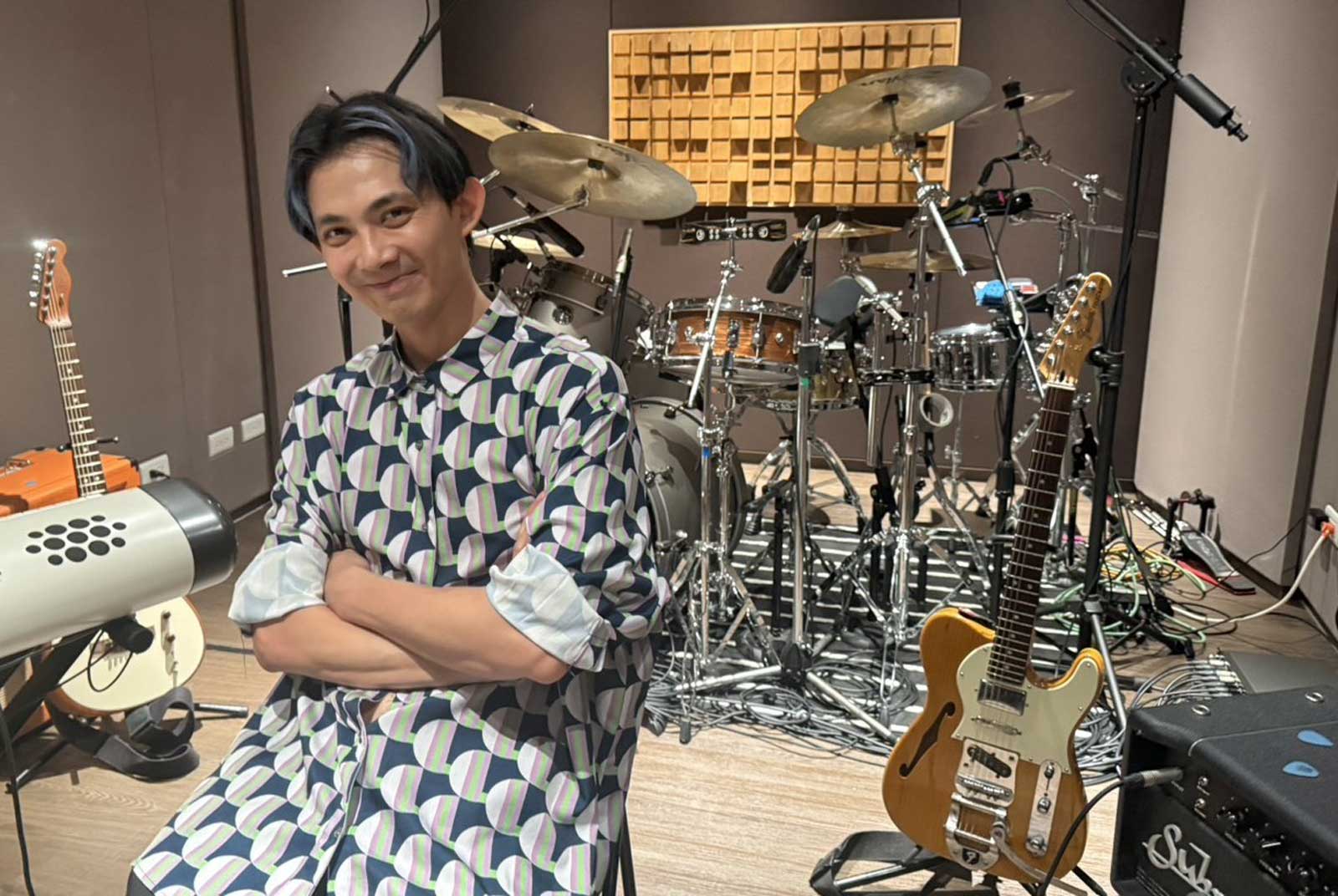
I follow Jared along with a few guests as he presents the facilities. A typical Taiwanese urban house, the second floor has been converted into a studio, its walls covered in acoustic padding, enclosing high-quality musical instruments. The next floor has a mixing studio and control room, with a computer and various sound machines. A little lounge corner allows musicians to rest. The place also contains books about music and band memorabilia.
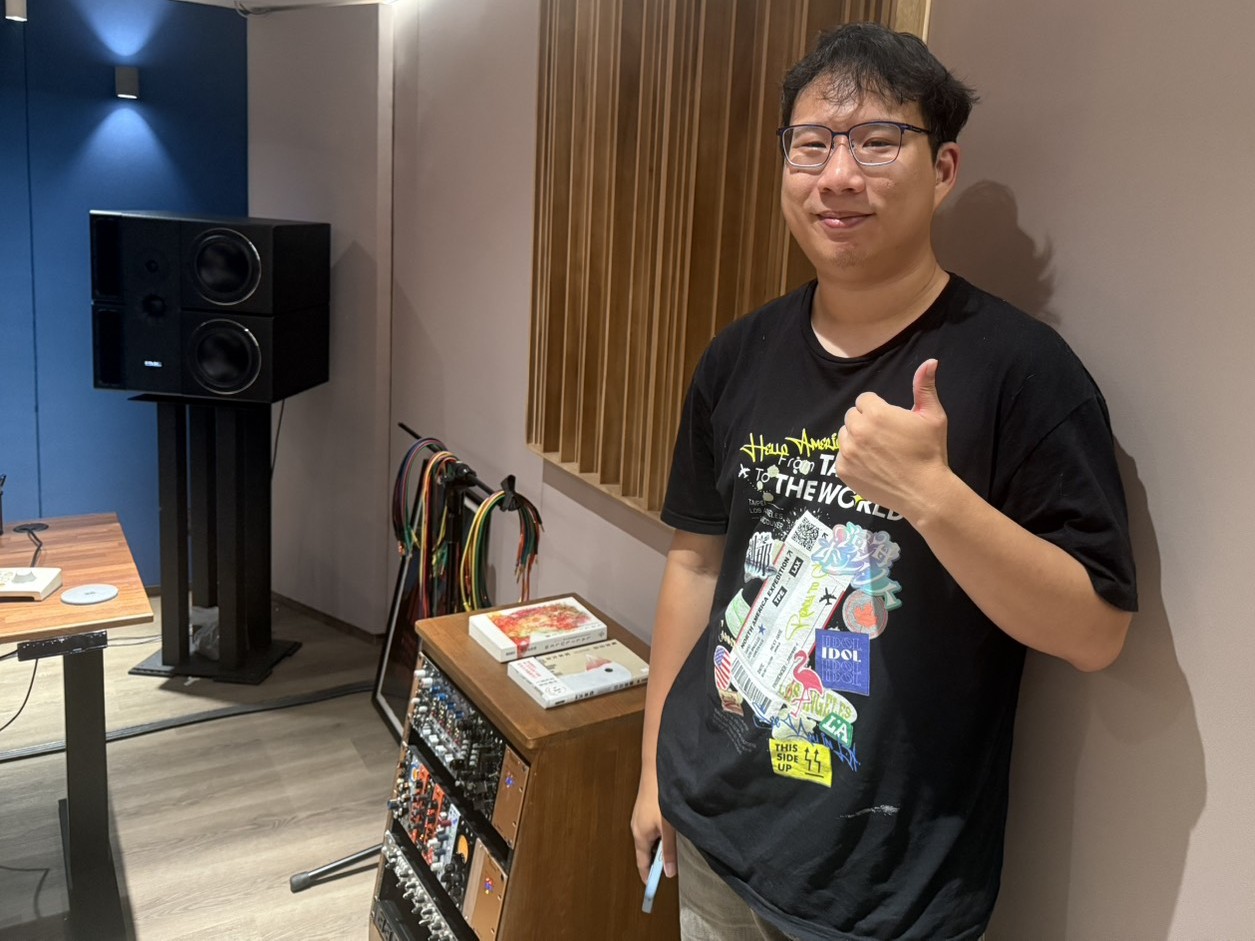 Jared had prior experience bringing Taiwanese acts to America before associating with Elephant Gym to create Micro Movement. (Photo: Julien Oeuillet)
Jared is the man behind Fortune Ferret Productions. “I founded the company in America,” he explains, “to help Taiwanese bands with any tour-related issues in the United States. Over the past two years, while this building was still under construction, I already registered my company and got some very lucky opportunities.”
These two years of construction work produced a state-of-the-art, comfortable facility. On the roof, besides more little booths, is a terrace offering a stunning view over the Formosa Boulevard neighbourhood, which is effectively the axis around which Kaohsiung is built. The Nanhua night market lies just below.
It took Elephant Gym to create such a place.
Self-described as a “math rock” band, Elephant Gym plays music that oscillates between weird and fun. A trio made up of two siblings and their friend, limited to bass, drums and guitar, and rarely vocals, Elephant Gym walks the narrow line between complex, brainy rhythms and joyful, accessible pop sensibilities.
After carving their spot in the Taiwanese musical landscape and getting popular across the country beyond their native Kaohsiung, Elephant Gym then became the rare case of a Taiwanese band that became famous overseas. Earlier this year, they released a documentary telling the history of the band and culminating with a world tour that saw them filling concert venues in Europe and the Americas.
Now, this band is giving back to the city that cradled them.
“We hope everyone can use this place,” says Tell, the guitarist of the band, “especially young artists or young engineers, because actually it’s very hard for young engineers to produce, to practise how to produce or how to record and mix. So this is a place where you can enjoy practising even if you’re a very new engineer. You can still book the studio and ask to work with a new band and hire them to finish a single.”
A tall, lean man in his thirties, sporting blue highlights in his hair, Tell handles the guitar while his sister KT slams on the bass and their friend Chia-chin builds up architectural drum beats.
“Maybe their first experience with a new band will sound terrible,” he goes on, “but at least they have practised, and you don't really have any other place to practise as an engineer. Every studio belongs to one specific engineer and all the gear belongs to him, so you’ll be super afraid to ruin it! But here, don’t be afraid, you can just have fun and play. If anything is damaged, we’ll just get a new one!”
Yet, the equipment is impressive: three kinds of Fender guitars and the legendary Fender Jazz Bass are available along with a drum kit and a keyboard.
“Incorporating the audio equipment with the space provided was the challenge,” says Jared about building a professional environment in what remains a little townhouse. “And making sure the noise cancellation is good, too. The sound insulation is fine now, but it was also difficult to set up all the electronics across the building, making it on an industrial scale. For the second-floor recording studio, all the connections go straight up. We needed good cables so the musicians upstairs could record directly and be monitored from the mixing room on the other level.”
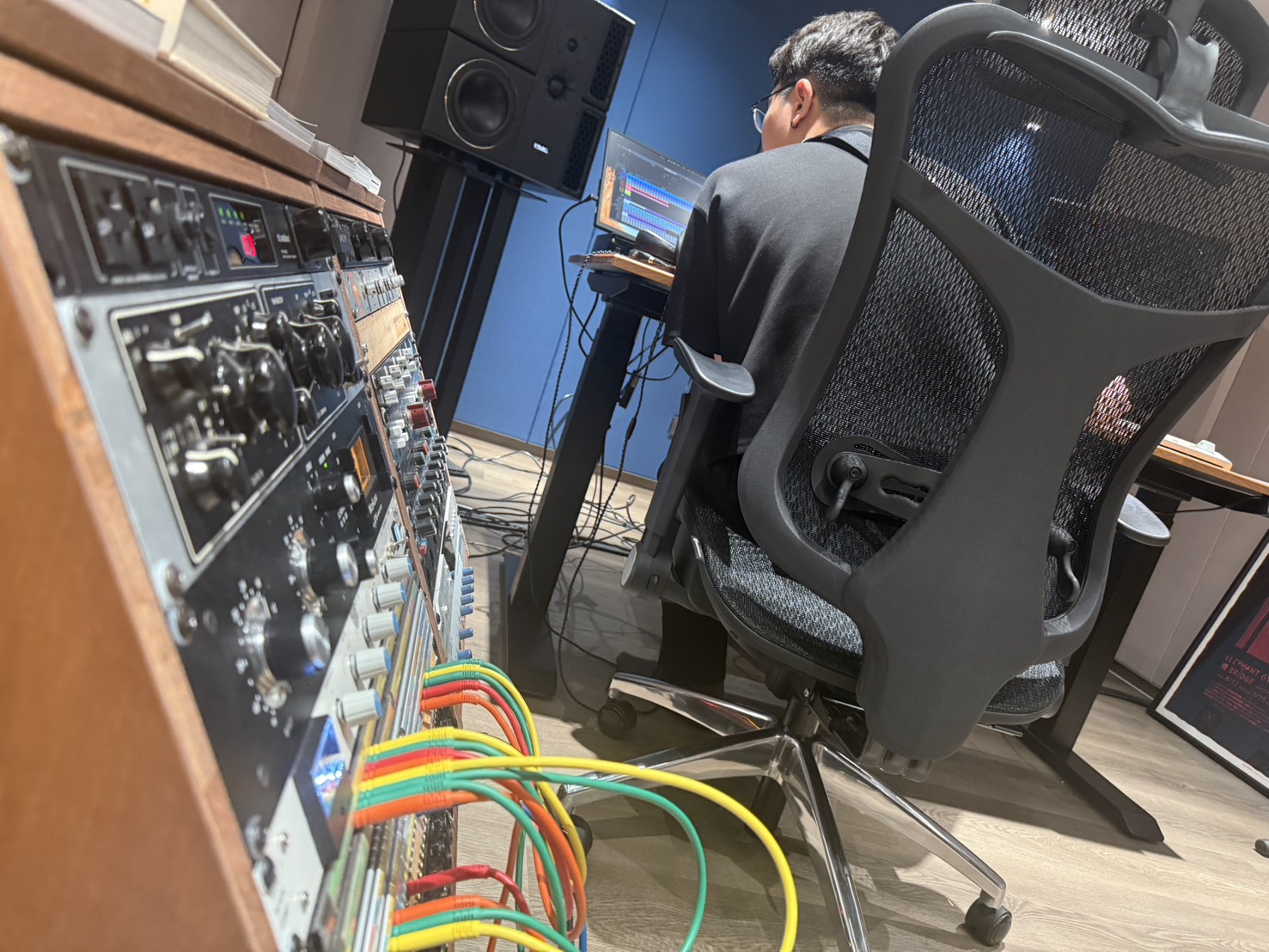 In Micro Movement's control room.
Everything about Micro Movement is designed to help local musicians. “Every time Elephant Gym needs to produce an album,” Tell says, “we have to go to Taipei or we have to go to Tokyo or even we have to go to Chicago to have a good recording quality. So that’s why we built this place to have good acoustic sound and to have good equipment to produce a good album.”
“It cost a lot to build such a place!” Tell adds, “and actually I don’t have that much money, but fortunately I have some angel investors, including a former high school classmate. He called me in 2018 because he made a lot of money from the stock market and he wanted to give back to his hometown, Kaohsiung.”
A feeling of “Kaohsiung pride” surrounds the entire venture. Tell says his friend's initial idea was “to build a live house for bands to perform, but I told him that maybe it’s not a good idea because the government has already built a lot of live venues in Kaohsiung. I said, maybe what we need is an education centre and a recording studio. I didn’t have time back then because my band was touring around the world. But after our second world tour I called him back and said, hey, I have time right now, do you still have the money to build this project?”
Tell insists the place is both a recording studio and an education centre. “We want to start from little things and then make big waves,” he says, “so you start with micro movements.” Hence the name of the place.
Jared adds, “It is really hard to reach an audience if your main focus is on the lyrics, because Taiwanese bands will sing mostly in Mandarin, which is not necessarily easy for foreign audiences. I think part of why Elephant Gym got a fandom overseas is because there are little to no lyrics in their records. They are primarily about the music, so the language barrier doesn't exist. So, with what we provide at Micro Movement, new bands can focus on musicality and grow really high instrumental and technical skills like Elephant Gym did.”
Jared shares his experience with the “underground idol” scene, an emerging kind of artistry that goes beyond singing alone and is built organically.
“You must be familiar with K-pop,” he explains, “well, I guess it is sort of the underground version of that, and more in the Japanese style. There’s a very thriving idol culture in Japan and a lot of people in Taiwan, if you’re into anime or cosplay or into all sorts of Japanese styles of art, are really drawn to this community. So, over the past decade there have been more and more Taiwanese idols and they’re performing in a more Japanese style rather than the Korean K-pop style.”
He names Taiwanese acts such as Therarez (styled THEΔRAREz), which blends pop and idol vibes with hard rock, or girl group Meikai Oceanus, as examples of successful underground, alternative idol bands that achieved success online.
“I ended up working with the underground idol scene. There are a lot of them in Taiwan and lots of idol fans in America, so I’ve been bringing them to perform in America and the American reception is really great.”
This was done through Jared's first business venture, Fortune Ferret Productions.
“American idol fans are drawn to the overall package of an idol,” he explains. “It's not about what you are saying in Japanese or Mandarin. They still respond equally enthusiastically, so while we’re still trying to find ways to bring Taiwanese bands over to America, we’ve actually built a pipeline over to America over the past years, and I’m really excited to continue this.”
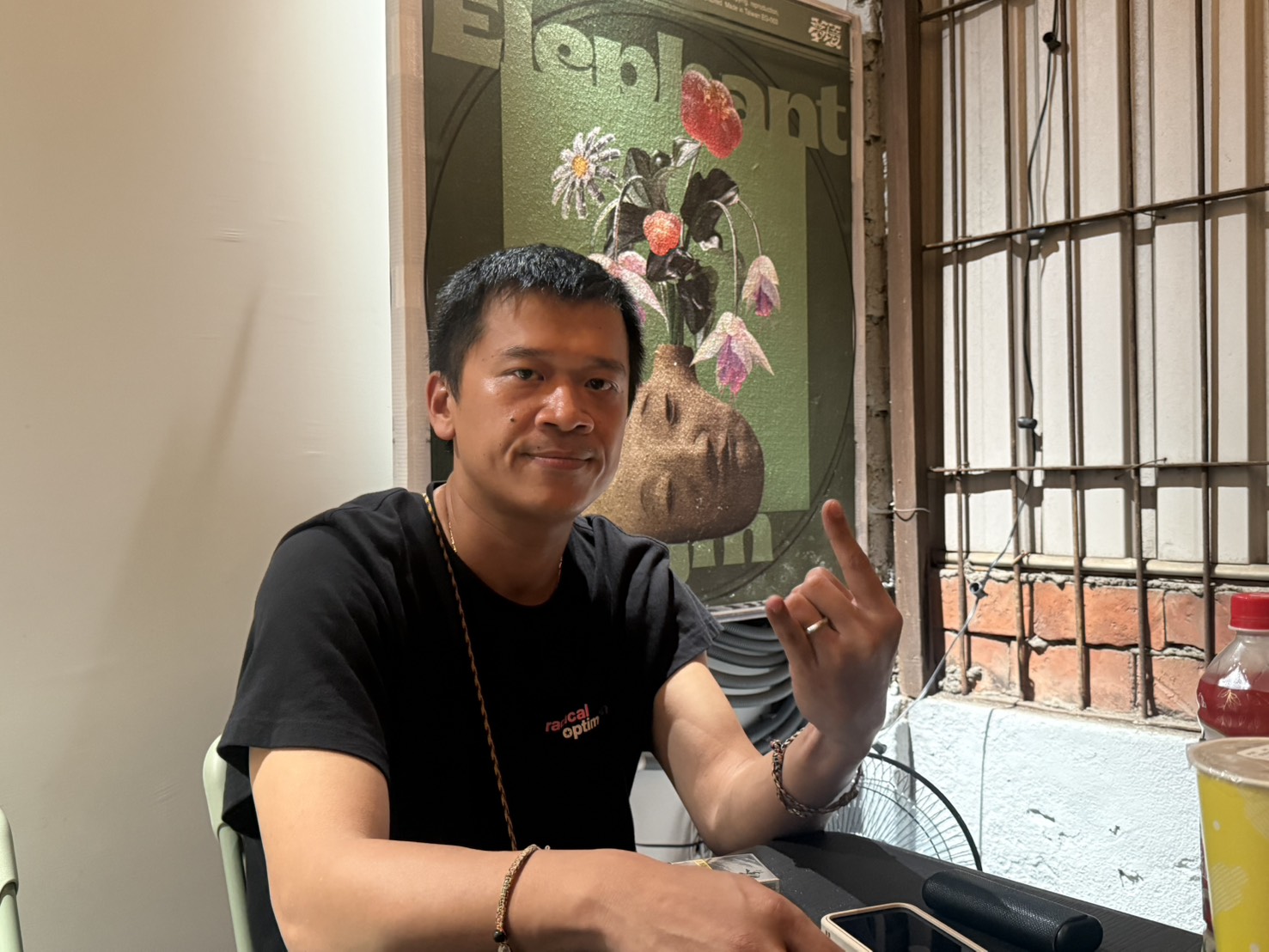 Mr Lee, here enjoying Micro Movement's terrace, has directed several videos for Elephant Gym.
At Micro Movement, we also meet Mr Lee, a man who was involved with Elephant Gym in the past: from 2013 to 2018, he directed several music videos and commercials for the band. Now, he lounges in a cloud of tobacco on the roof of the studio.
“I think Elephant Gym is crazy,” he says, “because in this generation so many young people don't know what to target, you know? They don't know why they study, learn music, watch movies, but Elephant Gym do something, try something, very hard. And now they give back to their hometown. I am very happy because now they have a following and we need this in Taiwan. We are an independent country and we should shout out to the world that we are a country and we have our own music.”
Tell also expresses this sentiment. Videos of Elephant Gym giving concerts overseas include Tell talking to the audience about Taiwan being a country with its freedom under threat.
“We are now importing so many artists from Korea or Western countries,” he says, “but I hope we can grow more international bands from Taiwan, and not only from Kaohsiung actually but from the entire country. But we don't want every perspective from Taipei. I love music from different places, I even love African music too, I love bands from Europe or Australia. Now I want to see more music from here being successful, and express our love of democracy.”
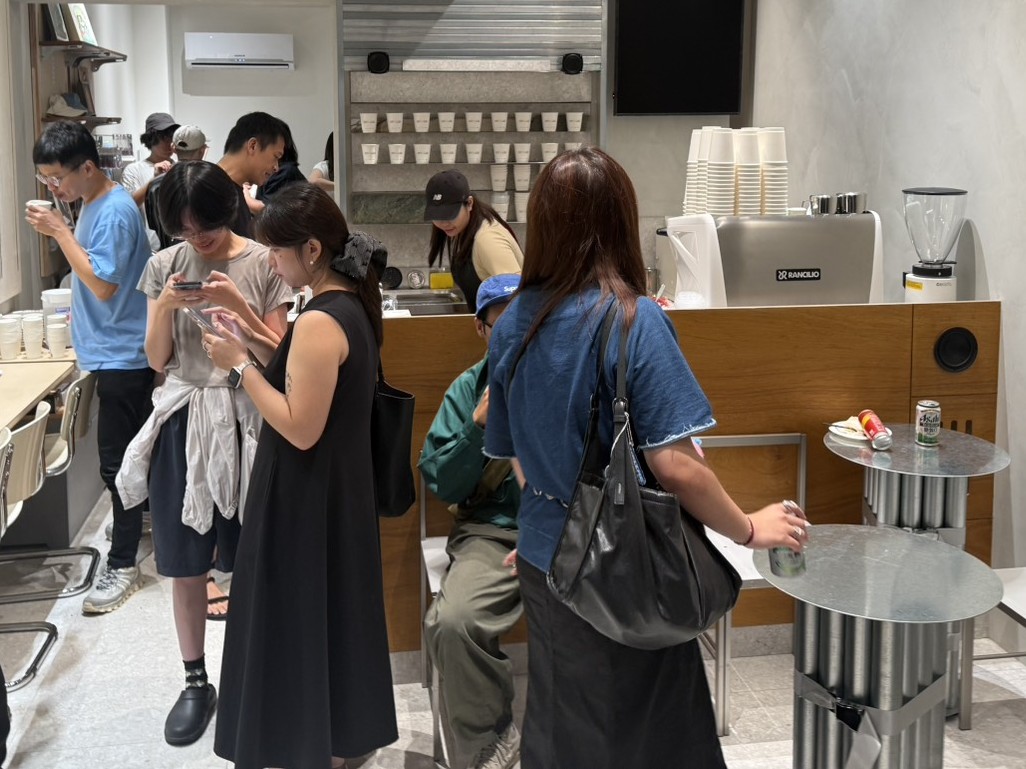 Micro Movement includes a cafe on the ground floor.
As we sit together downstairs, you could easily imagine we are just in another cafe in central Kaohsiung. And yet, this is a place built to project Taiwanese soft power and Kaohsiung's specific, homebrew cultural identity to the world.
“We are in a global village now,” Tell says. “I saw that with all these wars around the world. When war happens, tours cannot happen. Even when we were building this place, some of our materials for construction, things as basic as that, could not be shipped because of wars elsewhere in the world. So, wars also mean no studio, no recording, no music.”
Micro Movement Studio is located at No. 43, Nanhua 1st Road, Sinxing District, Kaohsiung City.
- Facebook: https://www.facebook.com/micromovement/
- Instagram: https://www.instagram.com/micromovent_studio_offical/
Have you read?
- Joy Is Her Calling: How Lee A-Young Made Cheerleading a Career in Taiwan
- How DJ Swallow Set the Tempo for Taiwan’s Women DJs
- Cartoon Cats and Robots, Made in Kaohsiung, With an Indonesian Heart
Uploaded by Ian Huang
Views

Subscribe to CWE Newsletter (every Thursday)
Stay abreast of what's happening in Taiwan with our weekly digest.
Keywords: