The TSMC-Intel Defection Drama Exposes Taiwan’s Dangerous Non-Compete Trap

Source:Chien-Tong Wang
Taiwan's crackdown on a senior TSMC engineer who left for Intel exposes an uncomfortable contradiction: the talent mobility that built its semiconductor empire is increasingly being treated as a threat to it. Can a country that owes its technological rise to the free movement of talent afford to criminalize it?
Views
The TSMC-Intel Defection Drama Exposes Taiwan’s Dangerous Non-Compete Trap
By Chang-tai Hsiehweb only
In 2007, Sheryl Sandberg left Google to become chief operating officer of Facebook. At Google, she had helped build the company’s advertising machine, turning a firm with enormous user traffic but little revenue into one of the world’s most profitable advertising platforms.
At Facebook, she did essentially the same thing. She helped build the infrastructure that transformed a fast-growing social network into an advertising powerhouse. Mark Zuckerberg had hired her precisely for that reason. In effect, Facebook was importing Google’s business know-how.
How did Google respond to this loss of business technology?
It did nothing.
Google was surely unhappy to lose one of its most important executives. It was probably even less happy to see a competitor adopt a similar advertising strategy. But there were no lawsuits, no accusations of betrayal, and no government investigations. Sandberg was free to change jobs.
Part of the reason was legal: non-compete clauses are illegal in California, where most technology companies are based. But the reaction also reflected a broader norm in Silicon Valley: employee mobility is part of the system.
Companies do not like losing talented people to competitors. But they accept that the best response is to make employees want to stay—and they benefit from the same openness when recruiting from rivals. Competition for talent ultimately strengthens the entire ecosystem.
Now compare that with the reaction in Taiwan last fall, when news broke that Lo Wei-Jen (羅惟仁), after retiring as a senior vice president at TSMC, planned to join Intel.
Like Sandberg, Mr. Lo had made major contributions to his company. He led teams that helped turn new semiconductor process technologies into manufacturable products. TSMC’s dominance in advanced chips was built in part on work he helped oversee.
And like Sandberg, he chose to join a competitor—a perfectly natural decision. Who else could make better use of his expertise?
Yet the reaction in Taiwan was dramatically different. Media coverage quickly turned accusatory, portraying Mr. Lo as betraying Taiwan. Reports emphasized that he had not disclosed his plans to join Intel during his exit interview with TSMC. They noted that he had attended internal meetings on critical technologies—as if that were surprising for someone who had spent more than two decades developing them.
Soon afterward, TSMC filed a lawsuit alleging that Mr. Lo had not informed them of his next destination, Intel, and had taken confidential company files. Taiwanese prosecutors even searched his homes.
We do not know whether Mr. Lo took confidential documents. That question will have to be resolved in court. If he did, those actions would be illegal and punishable in most jurisdictions—including California, where he now lives.
However, if Taiwanese society focuses too much on the dispute over the non-compete clause, it raises a deeper issue. It is understandable that companies worry about losing key technology when senior engineers move to competitors. Yet much of what experienced engineers and managers know cannot be separated from their own experience.
Does Mr. Lo’s knowledge of how to turn cutting-edge semiconductor processes into mass manufacturing belong to him—or to TSMC?
The answer is: both.
Companies understandably want to protect their intellectual property. But knowledge accumulated over decades is also a worker’s human capital. Drawing a clean line between the two is rarely possible. That is one reason non-competes have come under increasing scrutiny in the United States. Most states now limit them heavily, and California bans them entirely.
There are good reasons for that.
Non-competes limit workers’ ability to earn a living. For someone like Mr. Lo, the most valuable place to apply his expertise will almost always be at a competitor. Preventing him from doing so effectively sidelines decades of accumulated knowledge.
They also weaken workers’ bargaining power. In large organizations, the credible threat of leaving is often the only real leverage employees have.
Most importantly, worker mobility is one of the engines of innovation. Many leaders of today’s leading AI companies—including Dario Amodei of Anthropic—once worked together at Google Brain. Much of the early U.S. semiconductor industry was built by engineers who left Fairchild Semiconductor to start new companies.
Taiwan itself benefited from exactly this kind of mobility. Mr. Lo worked at Intel before joining TSMC. Morris Chang founded TSMC after nearly three decades at Texas Instruments. Would TSMC exist today if Texas Instruments had bound Morris Chang with a non-compete?
The danger for Taiwan is not just that one engineer may leave for one rival firm. It is that strict non-compete clauses will push the next generation of entrepreneurs to build new companies abroad rather than at home. How could a younger version of Morris Chang leave TSMC to start the next great Taiwanese technology company if he were bound by a non-compete? The easiest path would be to leave Taiwan and build that company elsewhere—perhaps in the United States, where such restrictions do not apply.
Some argue that Taiwan must protect critical technology for national security reasons. That concern is understandable. But restricting sensitive technology transfers to geopolitical rivals is very different from treating the movement of talent to companies in allied countries as a threat.
I do not know Mr. Lo personally, and I have no information beyond what has been reported publicly. It is possible that he did take confidential documents, and if so the courts should decide the case. But the publicly available facts do not point to espionage. They point to something much more ordinary: a talented engineer changing jobs.
In Silicon Valley, that happens every day—and it is one of the reasons innovation thrives there.
Taiwan should be careful not to punish the very mobility that helped build its semiconductor success. If it does, the next generation of innovators may simply build the next great Taiwanese company somewhere else.
About the author
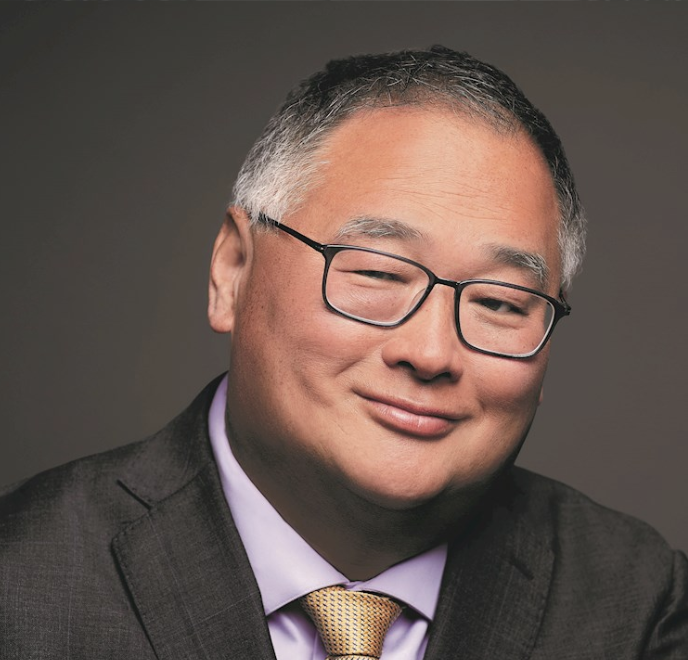
Chang-Tai Hsieh is the Phyllis and Irwin Winkelried Professor of Economics and PCL Faculty Scholar, University of Chicago Booth School of Business.
Have you read?
- The AI Boom’s Hidden Victim: Taiwan’s Fragile Insurance Sector
- America’s Threat to Taiwan
- Taiwan’s Never Ending Trade Surplus
Uploaded by Ian Huang
Views

Subscribe to CWE Newsletter (every Thursday)
Stay abreast of what's happening in Taiwan with our weekly digest.
Keywords: