Shopee's Quiet Takeover of Taiwan's Retail Map
Source:Kai-Cheng Chuang
Shopee has long been Taiwan's largest e-commerce platform. Now, with more than 3,000 pickup points and a free-shipping policy that has rattled rivals, it is pushing deeper into physical retail — and competitors from convenience store chains to supermarket operator PX Mart are taking notice.
Views
Shopee's Quiet Takeover of Taiwan's Retail Map
By Yi-chih WangCommonWealth Magazine
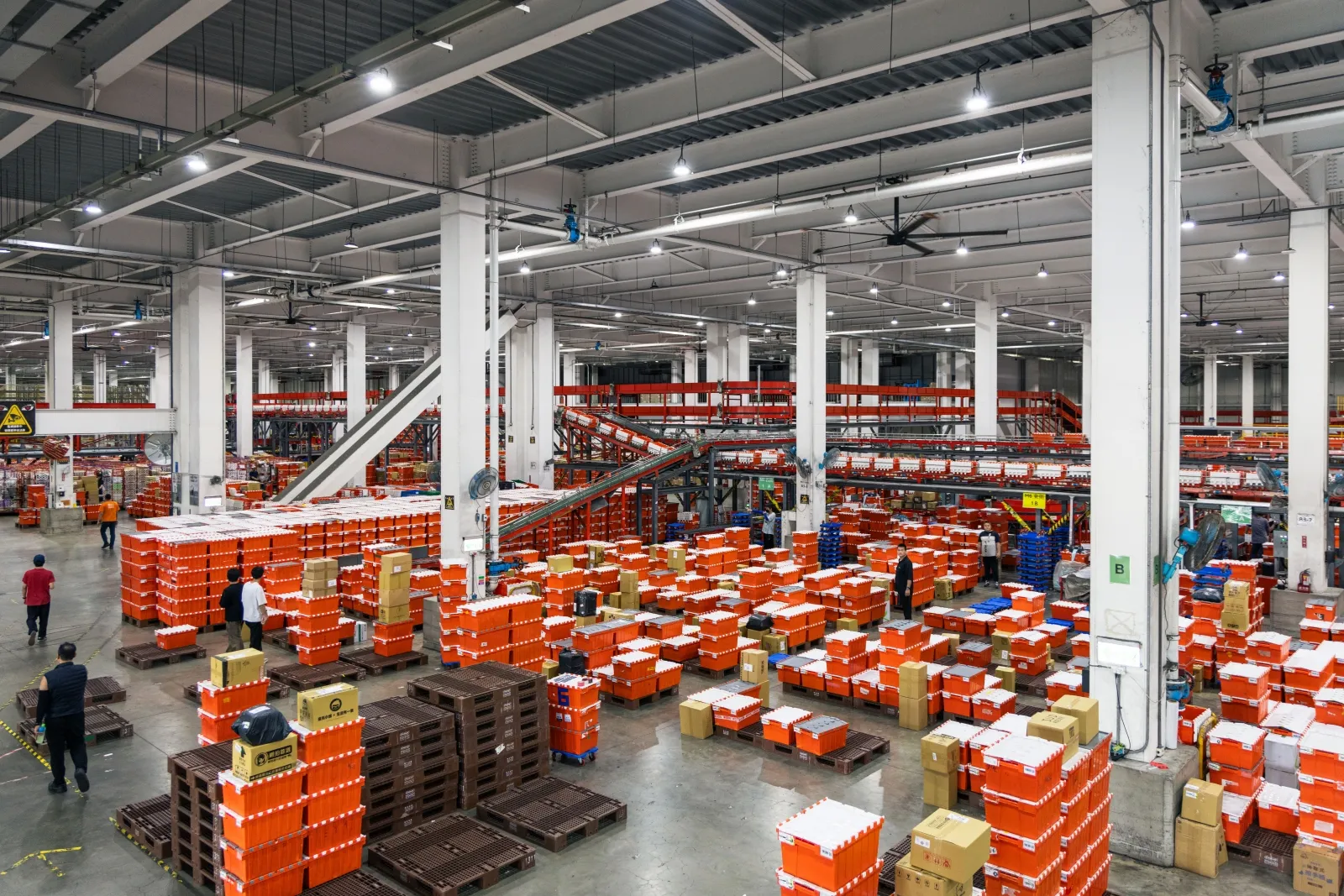
Orange storage crates are stacked floor to ceiling. Conveyor belts run day and night. Packages are scanned, sorted, and dispatched one after another. Shopee now operates 12 such sorting and warehousing centers across Taiwan, including one in Dayuan, Taoyuan.
Earlier this year, an unannounced "free shipping revolution" quietly ignited a retail war across Taiwan.
Shopee announced nationwide free shipping — no more clipping coupons, hitting minimum spending thresholds, or waiting for the fixed free-shipping days on Wednesdays and Saturdays. Customers could simply order, whenever they wanted.
The backlash was immediate. Seller groups complained that Shopee was shifting shipping costs onto them. Competitors argued the offer wasn't truly unconditional, noting that minimum thresholds still applied. Some sellers of Pop Mart blind-box toys said publicly the move was unsustainable for their margins. Criticism dominated industry discussion for weeks.
Shopee did not back down.
"From a platform's perspective, if we want higher e-commerce penetration, what's still missing?" says Vincent Lee (李毓晨), Shopee Vice President and General Manager of Shopee Taiwan and the Philippines. Shipping cost, he explains, is the single biggest obstacle to closing a sale — and to make free shipping feel like the default, it had to apply across every seller, not just some.
Three Cards Shopee No Longer Needs to Burn Cash For
The policy was not an impulsive gamble. Before the rollout, roughly 80% of orders were already eligible for some form of free shipping, and those promotions had been lifting sales by 30% to 40% on average. "Southeast Asia had already rolled this out, and we'd run the numbers extensively, so we decided to commit," Lee says.
For many Taiwanese consumers, memories of free shipping wars date back to 2017, when Shopee — then just two years into the Taiwan market — poured more than NT$20 billion into shipping subsidies to seize market share, upending the local e-commerce landscape and catching incumbent PChome off guard. That was a battle of scale bought with cash.
This time is different. Hsun-chi Chu (朱訓麒), an assistant professor in the marketing group at Yuan Ze University's College of Management who studies the e-commerce ecosystem closely, notes that the 2017 round relied on subsidies to build buyer traffic from scratch.
Shopee's infrastructure has matured since then, and the company has developed a distinctive operating model that has driven logistics costs down sharply. "This time, Shopee optimized first and is using the resulting margin as a strategic lever — it's less a subsidy than a calculated trade-off," Chu says.
In other words, Shopee is now playing from a position of strength on three fronts. First, sheer selection: Shopee already carries more product listings than any other e-commerce platform in Taiwan, so it isn't worried about losing buyer traffic. Second, locked-in seller traffic: sellers have little incentive to leave, even if fees rise. "Even with no commission, what would I do without the traffic? Listing products takes effort too," says one seller who resells small imported goods from Korea. Third, its own delivery network: Shopee no longer depends on the cooperation of convenience store chains or retailers like PX Mart. Its own pickup-point network, Shopee Xpress, already exceeds 3,100 locations — and is expected to overtake FamilyMart in density as early as the second half of next year, making it one of Taiwan's densest pickup networks.
From E-Commerce to Convenience Store: A Shift in Shopping Habits
Skepticism about the policy hasn't gone away, but Shopee Taiwan's numbers are answering critics directly. Lee says that since nationwide free shipping launched, both purchase frequency and order volume have risen markedly.
According to Forrest Li Xiaodong, founder, chairman and group CEO of Singapore-based Sea Limited, Shopee's parent company, speaking on the company's most recent earnings call, Taiwan's gross merchandise value (GMV) grew by double digits year-over-year in the first quarter.
Consumers, Vincent Lee says, have shifted from a "wait for free-shipping day" mentality to buying smaller amounts more frequently and picking items up on the go — a pattern that increasingly resembles convenience-store shopping.
That behavioral shift extends beyond Shopee's own order data. Purchases are no longer being diverted to physical retail simply because customers are waiting for a free-shipping promotion, pulling consumers more firmly into an online rhythm. Purchases once kept in physical stores by the friction of shipping costs are now migrating online — a development with implications well beyond order counts.
Three and a half months later, domestic e-commerce leader momo followed suit, partnering with two major convenience store chains to lower the threshold for store pickup — Shopee, once again, setting the pace for the entire market.
Over the past decade, Shopee has repeatedly rewritten the rules of Taiwan's e-commerce market through bold moves like this one, rising to the top of the industry.
Shopee's Ambitions in Physical Retail
According to SimilarWeb, Shopee averaged 52 million visits per month in Taiwan over the first four months of this year — nearly double momo's traffic. Forrest Li has highlighted Taiwan's GMV growth and the rapid expansion of its pickup-point network on three consecutive earnings calls, noting double-digit GMV growth from last year through the first quarter of this year. "Taiwan's growth has become a model for the rest of Southeast Asia," he said.
Chu estimates that Shopee Taiwan's revenue is now likely on par with that of President Chain Store Corporation, the operator of 7-Eleven and the dominant force in Taiwan's physical retail sector.
"We underestimated them," says Daniel Tsai, Chairman of momo (Fubon Media Technology). "Shopee isn't a Taiwanese company — it's a regional player, which means it can recruit the best IT and engineering talent in Southeast Asia."
Conventional wisdom holds that the market leader should defend its position and avoid unnecessary risk. But Shopee carries an underlying insecurity that outsiders find hard to fully grasp, and it has kept throwing punches over the past two years.
Look closer, and Shopee's ambition extends well beyond e-commerce's "second half" — it is steadily encroaching on physical retail itself. The pace of its pickup-point expansion is the clearest sign. Before nationwide free shipping launched, Shopee was opening 70 to 80 new pickup points a month on average; this year, that pace has accelerated to around 100 a month.
Pickup Points: Encircling Convenience Stores and Delivery Apps
Chu, who lives near National Taipei University, has felt the expansion firsthand: two or three new locations open in his neighborhood every year. "Both my home in Taipei and my family's home in Kaohsiung are surrounded," he says.
On the surface, the expansion of Shopee's pickup points looks like an assault on convenience stores' package-pickup business. But Chu argues the real impact runs deeper.
"What bothers President Chain Store Corp most about Shopee isn't the size of its online traffic — it's having so many Shopee pickup points clustered around its own 7-Elevens. It's a constant irritant," he says. "And you can't predict what those pickup points might start doing next."
Without the wait for a clerk to finish ringing up the customer ahead of you, and with pickup times roughly a third of what a convenience store requires, Shopee's pickup points are winning over young office workers who live in apartments without doormen to receive packages — eating into the business of traditional home-delivery couriers.
Next-day or same-day delivery is also intercepting purchases that would otherwise go to physical retail. Consider someone planning a camping trip on Saturday: if today is Thursday and an e-commerce platform can't guarantee delivery by tomorrow, that customer will likely go in person to an outdoor-gear shop or department store instead. By guaranteeing next-day delivery, Shopee closes off that option.
Same-day delivery pushes even further, cutting directly into the instant-delivery market currently served by Uber Eats, foodpanda, and PX Mart's express delivery service — pulling demand for everyday goods away from food-delivery platforms.
During a visit to Shopee's flagship pickup-point store in Taipei's Songshan Cultural and Creative Park, CommonWealth observed vending machines selling tea, soy milk, and dairy products, along with QR-code-enabled access to Shopee's own retail offerings — and noticed the company appears to be quietly testing refrigerated lockers, raising the question of whether it is preparing to move into cold-chain and fresh-food delivery.
"No — that's just a test," says Liu Chun-lin, Senior Director at Shopee Taiwan, who also previously ran Shopee's fresh-grocery delivery business during the pandemic, denying any such plan directly.
Hung Shang-wen (洪尚文), who was on the founding team of Uni-President's black cat courier service, believes it's only a matter of time before Shopee moves into refrigerated pickup. "The impact on convenience stores would be even greater, because Shopee's cost structure is already lower," he says.
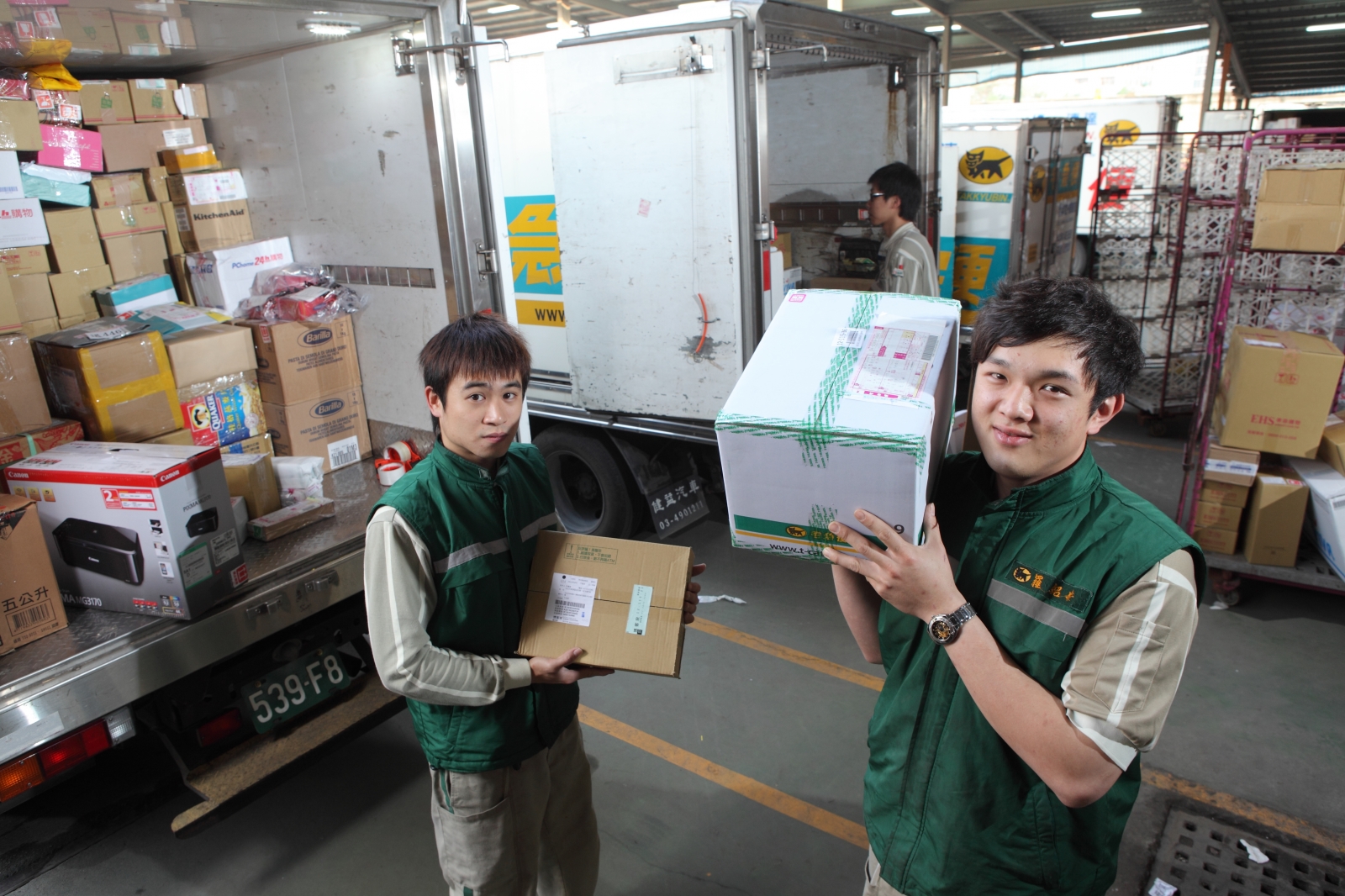 Shopee's store-to-store pickup service has won over young working adults, eating into the business of home delivery logistics providers. (Photo: CommonWealth)
Coupang's Arrival: Is Shopee the Real Target?
E-commerce remains Shopee's primary battlefield. Over the past two years, South Korean cross-border giant Coupang has entered the Taiwan market and stirred up fierce competition. Industry insiders widely believe Coupang's real target isn't overtaking momo. "They've always wanted to take down Shopee," one supplier says, relaying comments from a Coupang executive.
Coupang represents a type of competitor Shopee has never faced in Southeast Asia. Backed by a mature, highly profitable business model in South Korea, it has the financial firepower for a prolonged fight. Its "negative gross margin" strategy and 30%-off first purchase offers are aimed precisely at the price-sensitive users who form Shopee's core base, forcing Shopee Taiwan to respond with a different playbook.
Rather than engaging in a price war, Shopee Taiwan has chosen to keep accelerating its logistics infrastructure, improve service experience, push further into offline retail, diversify its seller base, and deepen customer loyalty.
That approach stems from a clear-eyed read of Taiwan's market conditions. Growth in Taiwan's e-commerce sector slowed to 3.4% last year. In a market approaching saturation, continuing to be "a better e-commerce platform" yields diminishing returns — only by redefining what "e-commerce" even means can a new growth curve emerge.
Logistics: Building the Fastest Orange Empire
Seen from above, Shopee's orange-branded locations are spreading across Taiwan at a striking pace.
The Dayuan logistics center in Taoyuan is a microcosm of this infrastructure. Conveyor belts roar like an unending river, packages flowing in from every direction and sliding precisely into their designated chutes.
Running 24 hours a day without pause, Shopee's 12 sorting and logistics centers process a relentless stream of packages — and continue to expand.
What puzzles traditional logistics operators even more is a nightly scene at pickup points: unbranded, uniform-free drivers in vehicles of every size delivering Shopee's orange crates.
"A whole layer of micro-logistics operators have been integrated through Shopee's powerful information systems," Chu says, comparing it to how Chinese platforms like Pinduoduo and Shein use information systems to connect small factories — manufacturers with no e-commerce capability of their own — directly to buyers. "Inside Shopee's pickup points, part-time staff scan and toss packages into lockers almost like shooting basketballs — it's astonishingly fast," he says, calling this Shopee's most formidable know-how.
VIP Subscriptions: Building a Lifestyle Services Ecosystem
That logistics speed has given Shopee the confidence to launch a VIP subscription program late last year. While momo introduced its own subscription, moPro, at NT$88 a month, Shopee set its annual fee at just NT$365 (US$11.5) — low enough, in Lee's words, "to leave you no reason to hesitate" — while bringing in non-e-commerce partners like KKday, WeMo, and KFC to build out a broader lifestyle-services ecosystem.
Shopee's internal estimates suggest that once a consumer pays NT$365 a year to join, they stop comparison-shopping across platforms altogether. VIP members spend on average five times more than non-members. "Running the VIP program is really about lowering the cost of retaining users compared with paid advertising," says Tang Yu-ju, Chief Marketing Officer of Shopee Taiwan.
Why does Shopee dare to innovate in ways competitors haven't? "If you do the same thing as everyone else, the best outcome is that you do it just as well as everyone else," Liu says. "If your model is different, there's more room to differentiate."
Taiwan was one of Shopee's earliest profitable markets — a head start that has given the Taiwan team more latitude than other markets to try things "no one else dares to do, or hasn't even thought of."
"Without some breathing room, it's hard to try anything new," says Vincent Lee, who has spent years competing against TikTok and Alibaba-owned Lazada for market share since being posted to the Philippines. "The parent group's expectation of the Taiwan team is also that we're capable of a bit of innovation."
Packaging-free delivery, used by more than four million customers last year, is a prime example. As Coupang and momo began rolling out reusable delivery bags and eco-friendly packaging, Shopee went further, removing outer boxes entirely and attaching electronic labels directly to products before sending them to pickup lockers — a move that upended industry assumptions.
"Taiwan's homegrown e-commerce players tend to make small, incremental innovations, not the bold moves Shopee makes — and Shopee isn't afraid even when something doesn't work smoothly at first," Chu observes. Behind nearly every major Shopee initiative is a model that has already been proven elsewhere. "These approaches were tested in China and the U.S. long ago — supporting brands, pushing brand development, these are inevitable steps once an e-commerce market matures. It's just that Taiwan's e-commerce sector doesn't even copy them."
"Stay on the Attack" — Shopee's Operating Philosophy
What stood out most to CommonWealth in interviews with Shopee Taiwan's team was a consistent mindset: stay on the attack. Even as the country's largest e-commerce platform, the team keeps reminding itself not to get comfortable.
"Speed is what I feel most strongly about," Lee says, pointing to Shopee's five core values posted on a meeting-room wall. Speed, he says, is one of the company's most important metrics.
When Shopee first launched its pickup points, some locations had staff and even sold coffee and snacks. The company later reversed course entirely: within two years, more than 70% of locations had converted to unstaffed, self-service lockers — a shift so fast that partners and customers alike struggled to keep up.
ACS, a sneaker distributor where roughly a third of all shoes sold annually move through Shopee and average order value exceeds NT$2,500 (US$79), has felt this rapid iteration firsthand. Chen Hou-ming, head of platform management at ACS, recalls that when Shopee introduced pickup-point delivery for sellers last July, persistent delays and warehousing problems led to a wave of customer complaints — "customers complained it took longer than ordering something from mainland China across the border."
Worried the customer-service team couldn't absorb the strain, ACS temporarily pulled out of the program, only returning this year. Within six months, the system had stabilized considerably. "Seven or eight out of ten customers who used to choose 7-Eleven or FamilyMart pickup have switched to Shopee's own pickup points," Chen says.
Outside of major initiatives like nationwide free shipping, Lee's general approach with his team is simple: "Go try it." He adds: "You need clear milestones and a clear sense of trade-offs before deciding whether to keep going."
And if it fails? "If it doesn't work, we shut it down. Sometimes that costs a little money, sometimes a lot," Lee says. What matters more to him is the willingness to try, to make mistakes, and to course-correct.
His own attempt at running Shopee's directly operated mall in Taiwan years ago ended in failure, losing a significant amount of money. He wasn't penalized for it — he was later sent to lead the Philippines operation instead.
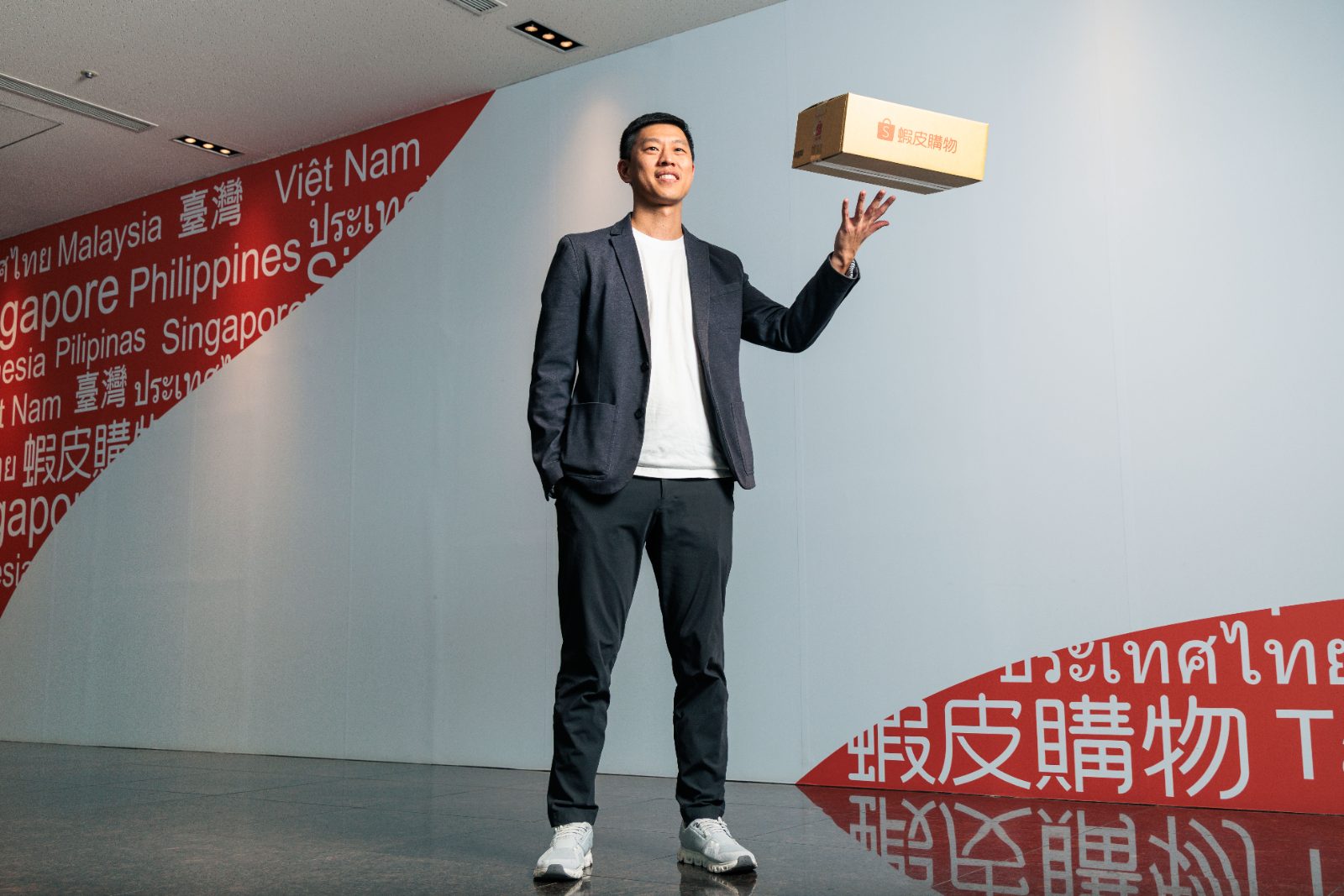 Vincent Lee, Shopee Taiwan and Philippines General Manager. (Photo: Kai-Cheng Chuang)
That mall has since made a comeback: B2C home-delivery volume nearly tripled last year compared to the year before, making Shopee's directly operated mall the only e-commerce business in Taiwan growing besides Coupang. "Shopee's directly operated mall offers packaging-free delivery, next-day shipping, and low prices — it's genuinely competitive," Hung observes.
Selling Products, Learning About Customers
Decision-making authority delegated from Sea's Singapore headquarters has been key to making all of this possible at speed.
"I treat my bosses the way you'd treat a board you happen to see often," Lee says of his mindset. "We're a company that's very much led by local teams — branch general managers are given a great deal of autonomy."
This delegated structure means the Taiwan team doesn't have to wait for a sign-off from Singapore on every decision, allowing it to genuinely move ahead of the curve. As a result, Lee holds himself to a standard of deeply understanding the local market well enough to develop innovations suited to it.
At Shopee Taiwan's Songshan office, a large tree sits at the center of a multipurpose room — reportedly a feature in every regional Shopee office, meant to symbolize Sea Group's hope of establishing deep roots and growing branches in each local market.
In Forrest Li's view, failure is treated as a learnable dataset rather than a metric to be judged against. The idea is to fail fast in the Taiwan market, then share successful innovations with other countries so they can avoid the same missteps.
But Shopee's experimentation isn't unguided.
"What they're doing doesn't really look like e-commerce — it looks more like designing a data-collection system for consumer behavior," says Jingle Lin, founder of Encore and former head of TikTok operations for Taiwan, Hong Kong, and Macau. "Shopee coins, livestreaming, payments, logistics — every layer is building a closed data loop. E-commerce is just the interface," she observes. The better a brand sells on Shopee, she notes, the more Shopee comes to understand that brand's customers — often better than the brand itself does.
By contrast, Taiwan's homegrown e-commerce platforms remain largely focused on operational questions like whether this month's targets were hit, rather than Shopee's ecosystem-level design thinking.
"Taiwan's e-commerce players sell products — take away the ads and discounts, and there's no business left," says an executive consultant who has analyzed the sector, noting that Shopee is constantly thinking about how to reduce transaction friction. "The existing-revenue trap has Taiwan's retail sector stuck, because trying something new isn't guaranteed to succeed, while sticking with the status quo at least guarantees you won't fail outright."
The Biggest Challenges: Cross-Border Competition and AI
Rewriting the rules doesn't guarantee permanent control of the game, and Shopee still faces several challenges in Taiwan that it cannot afford to ignore.
The first is rising social expectations around platform responsibility. As Shopee's scale increasingly resembles that of "Taiwan's largest daily marketplace," public tolerance for counterfeit goods, fraud, data-privacy lapses, and unfair treatment of sellers is shrinking. The seller backlash that followed the early rollout of nationwide free shipping was a direct expression of this.
Cross-border e-commerce is also eating into Shopee's business. According to Taiwan's Institute for Information Industry's Future Commerce Research Center, Taobao Taiwan's transaction value has posted double-digit annual growth for three straight years.
Shopee's own traffic fell 7.9% year-over-year in the fourth quarter of last year, forcing the company to actively redirect traffic from external platforms like YouTube back to its own app. "When a major platform has to go drive traffic on someone else's turf, that's already a sign of weakness — it means growth is running into real difficulty," Lin says.
Shopee also has to navigate the operational efficiency challenges that come with scaling back subsidies. One retail executive notes that as pressure mounts on Sea Group's profitability, subsidy levels in Taiwan are shrinking, putting customer loyalty to the test. Combined with uneven delivery quality and reliability as the pickup-point network expands rapidly — and with momo and Coupang each investing billions into automated warehousing and their own delivery fleets — "Shopee has to improve the consistency of next-day and same-day delivery even as subsidies decline," the executive says.
And looming over all of e-commerce is the prospect of AI agent commerce eventually taking over the consumer's shopping decision-making entirely. Before that gateway closes, Shopee needs to complete its transition toward more data-driven, API-accessible infrastructure.
"In the future, transactions may happen inside an AI agent's conversation window, not inside the Shopee app," the retail executive warns. "That would strip Shopee of its power to distribute traffic, demoting it from a visually engaging digital marketplace to a mere backend data supplier." This is a challenge facing every e-commerce platform, not just Shopee.
While every competitor scrambles to respond to what Shopee has already done — or is currently doing — that dynamic may be exactly what makes the orange empire so difficult to dislodge: a rhythm that leaves every rival perpetually fighting the last war.
Have you read?
- How Evergreen Marine Builds a Resilient Fleet Amid Global Volatility
- Vietnamese Women in Taiwan Build Billion-Dollar Nail Studio Niche
- Will Amazon’s Bazaar Win Taiwan’s Budget Battle?
Edited by Kwangyin Liu
Uploaded by Ian Huang
Views

Subscribe to CWE Newsletter (every Thursday)
Stay abreast of what's happening in Taiwan with our weekly digest.
Keywords: