The Island Redefines Asia's Luxury Residential Experience
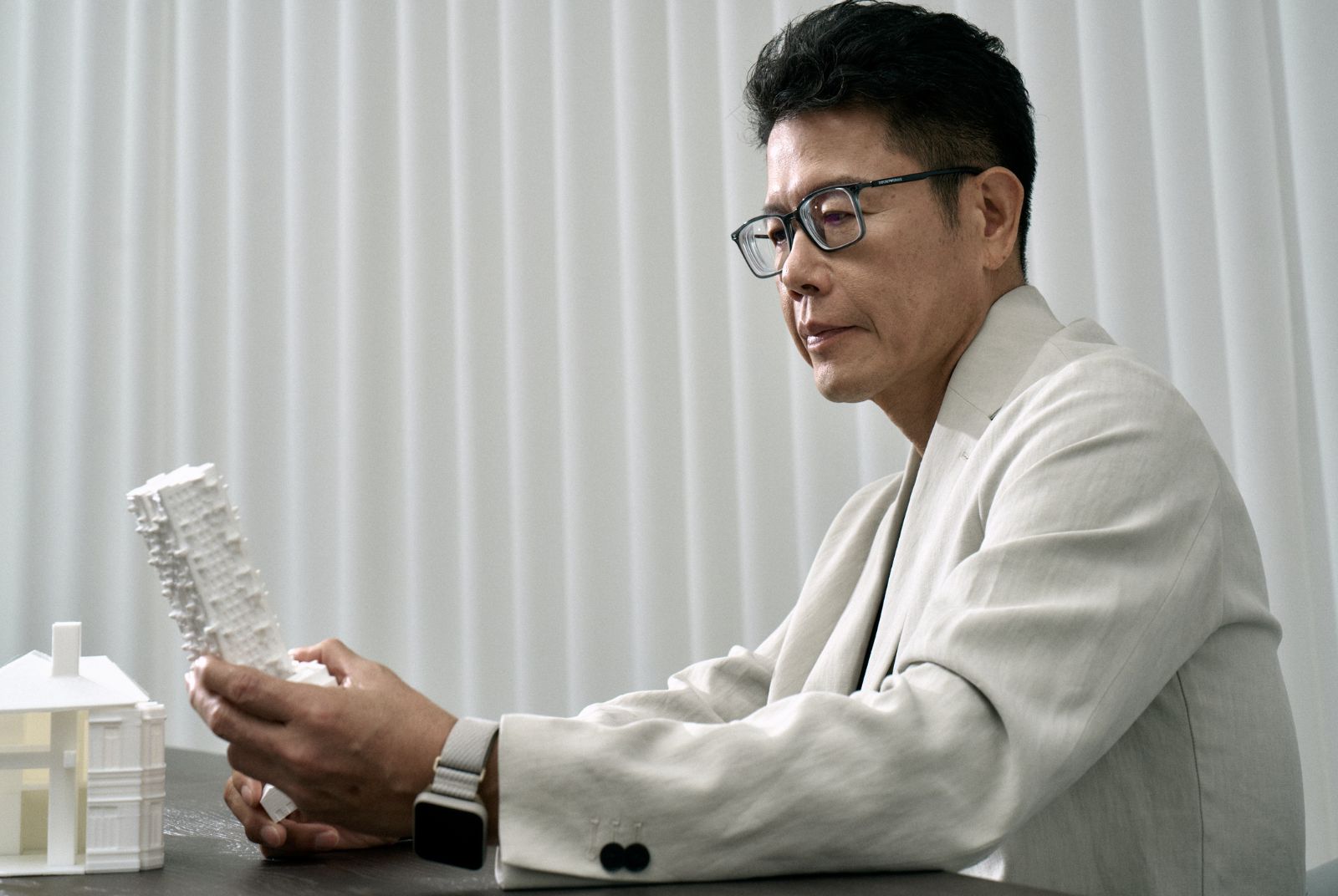
Source:Forbes Network Technology Co., Ltd.
2026 marks several milestones in architectural history: the centenary of Antoni Gaudí's passing and the completion, after 144 years, of his masterpiece, the Sagrada Família; the grand opening of Zaha Hadid's Danjiang Bridge; and the highly anticipated debut of The Island in Taichung—a collaboration between pioneering Dutch architectural firm MVRDV and Taiwanese builder Cheering Zu. As these three architectural marvels, all defined by their flowing curves and sculptural forms, arrive in this epochal year for human ingenuity, Cheering Zu Chairman Sam Shen, a developer with more than three decades of industry experience, remains single-mindedly focused on one profound question: How can architecture transcend time to bestow upon Taiwan an era-defining landmark of luxury living?
Views
The Island Redefines Asia's Luxury Residential Experience
By Forbes Network Technology Co., Ltd.Sponsored Content
Architecture is a language through which humanity can converse with time. Yet, in an era driven by an emphasis on efficiency, few developers are willing to transform a residential project into an aesthetic beacon for an entire city. For Shen, however, architecture has never been solely about satisfying immediate practical concerns, but rather about leaving a lasting imprint of a city's spirit in a given era. It is from this philosophy that The Island was born.
An aesthetic convergence spanning a century
Gaudí famously proclaimed, "The straight line belongs to Man, the curved one to God." Over a century ago, in his pursuit of the perfectly shaped arches to be incorporated into the Sagrada Família, Gaudí modeled them by suspending chains to form catenary curves. These curves, which we almost instinctively perceive as the most aesthetically satisfying, also distribute structural stresses evenly and are an integral source of the timeless wonder of the Sagrada Família. Shen personally led the Cheering Zu team on a pilgrimage to the Sagrada Família. Standing before it, he beheld not just a renowned building, but an embodiment of Gaudí's vision that has maintained its grace and enduring beauty through a century of tumultuous change.
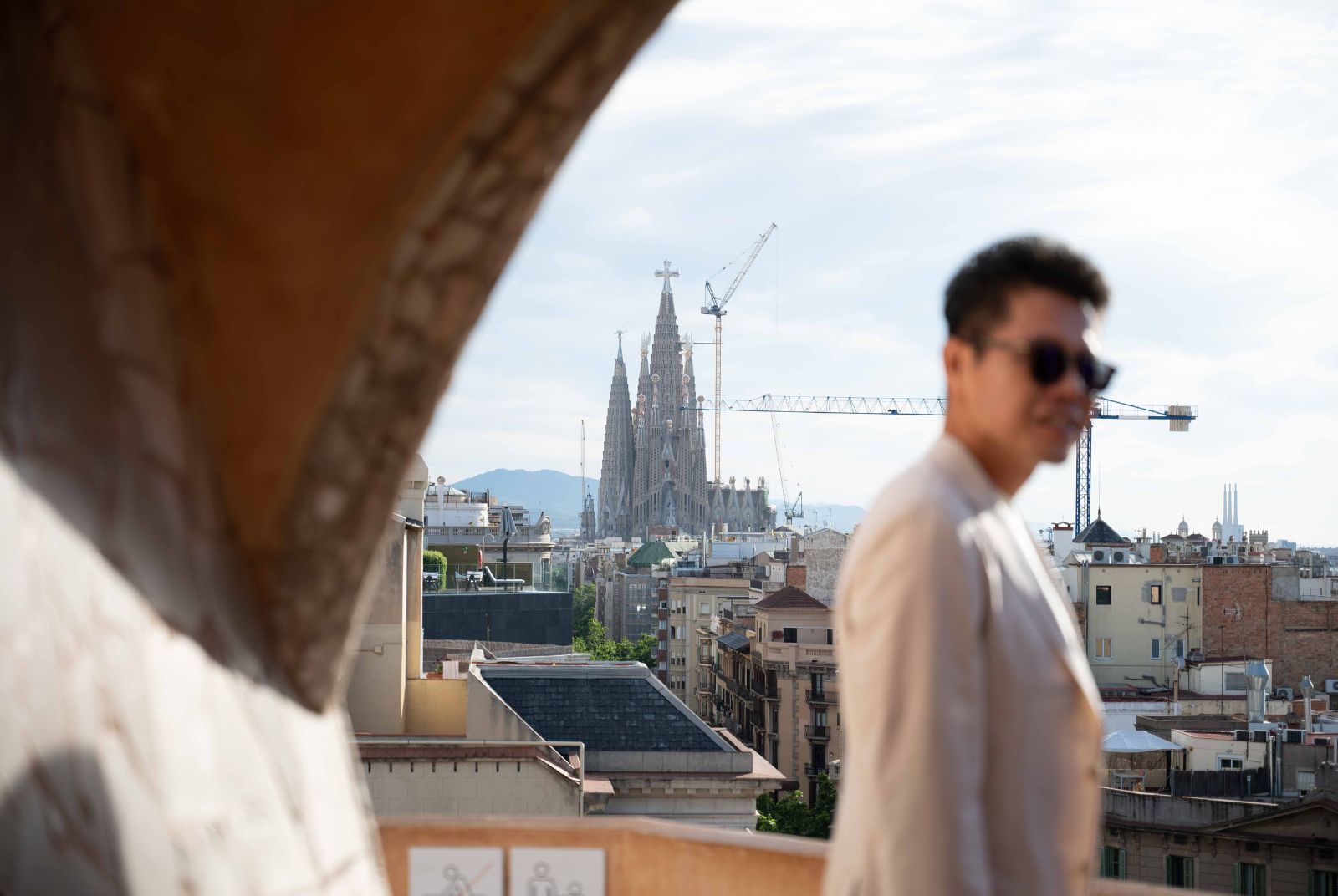 Shen led the Cheering Zu team on a study tour of Europe to explore local architectural aesthetics.
Gaudí's refusal to compromise on cost or aesthetics is echoed in The Island. Eschewing conventional masonry, The Island's facade features exquisitely crafted ceramic mosaics that pay homage to the richly tactile surfaces Gaudí pioneered at Casa Batlló. Architectural mosaics are rare in Taiwan, but Shen collaborated with local Cochin ware artisans to create custom kiln-fired tiles. Over the course of more than a year, the team experimented with multiple iterations of cut size, color, luster, and joint width to achieve an organic mosaic effect.
The homage to Gaudí extends to The Island's reverence for curves. The Island's facade presents flowing contours that extend even to the undersides of its balconies, a feat that even seasoned structural engineers deemed challenging to execute. Realizing this ambitious aesthetic vision required construction costs nearly 30% higher than those of traditional luxury residential buildings.
"Why do people from all over the world still marvel at Gaudí's work a century later? It is because he poured boundless dedication, passion, and creativity into it. I hope The Island stands as a testament to that same devotion to beauty," reflects Shen.
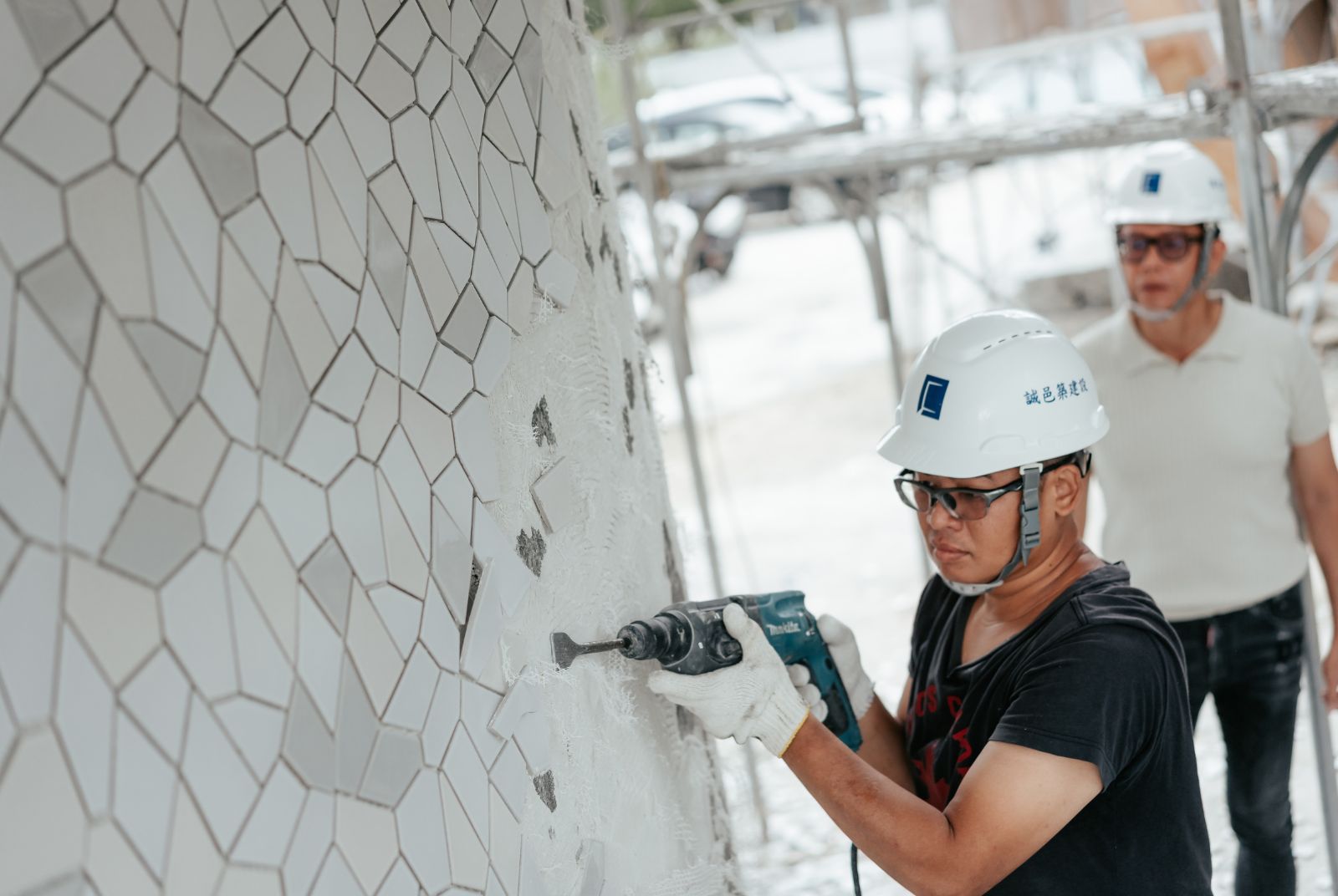 The Island's mosaic inlays and fluid curves pay tribute to Gaudí's spirit of innovation.
MVRDV's first residential masterpiece in Taiwan
Shen forged a partnership with the globally renowned Dutch architectural firm MVRDV during the earliest conceptual stages of The Island. Celebrated worldwide for its bold, avant-garde approach, the Rotterdam-based team created the iconic Markthal, which has become an urban landmark attracting millions of visitors annually, and Valley in Amsterdam, which has won multiple international architectural awards. A deep alignment between Cheering Zu and MVRDV regarding the harmonious interplay of architecture, land, and nature ultimately enabled the creation of The Island.
Each of The Island's 76 residences—just four per floor—has its own unique suspended garden. Together, these gardens adorn a facade punctuated by 104 distinctively shaped balconies, each accessible from the master bedroom, living room, secondary bedrooms, or master bathroom. Many units feature two of these lush sanctuaries, allowing household members to find a secluded retreat of their own. The plantings consist predominantly of native Taiwanese species selected for ease of long-term care, forming a small, self-contained ecosystem. For discerning individuals with a global outlook and a passion for fine living, the value of The Island transcends that of a mere residence, becoming a work of contemporary architectural art worthy of appreciation and contemplation.
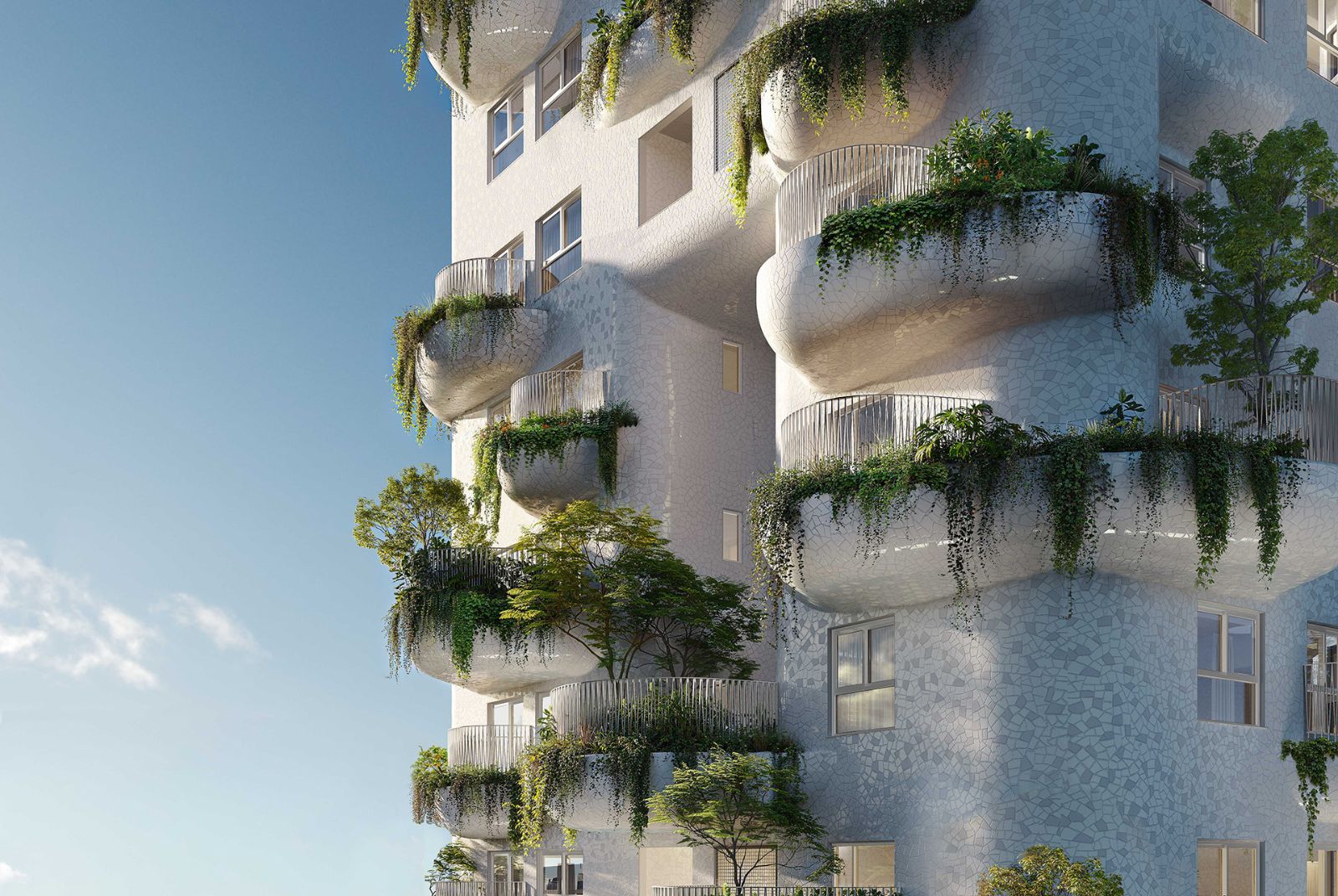 The Island's 104 unique suspended balconies host vibrant ecosystems in the heart of the city.
The next legendary addition to Taichung's skyline
Taichung is the fertile ground where this vision has taken root. Over the past two decades, works by Pritzker Architecture Prize winners have proliferated across the city, from Toyo Ito's National Taichung Theater to Kazuyo Sejima's Taichung Green Museumbrary, giving Taichung one of the highest concentrations of Pritzker laureates' works in Asia. Bolstered by its expansive urban landscape, robust industrial economy, and immense growth potential, Taichung has firmly established itself on Asia's luxury residential map, making it a premier destination for high-net-worth individuals seeking exceptional homes and strategic asset allocation opportunities. And The Island is destined to become the next iconic feature of the city's skyline.
"Why shouldn't a private residential structure also carry forward the cultural mission of inspiring admiration as a work of public art?" Shen asks. In his eyes, every true builder in Taiwan harbors a dream: to leave behind a classic building that melds cosmopolitan sophistication with an enduring local identity. And that is the dream that animates Cheering Zu.
Following The Island, Shen is already embarking on his next pioneering venture: breathing new life into one of Taichung's most beloved cultural heritage sites. In the eyes of his peers, it is yet another nearly impossible mission. But for Shen, architecture exists for the land and for future generations—true value is created only by leaving behind works that grow more beautiful with time.
Views

Subscribe to CWE Newsletter (every Thursday)
Stay abreast of what's happening in Taiwan with our weekly digest.
Keywords: