How China's DRAM Maker CXMT Caught Up With Micron Without EUV
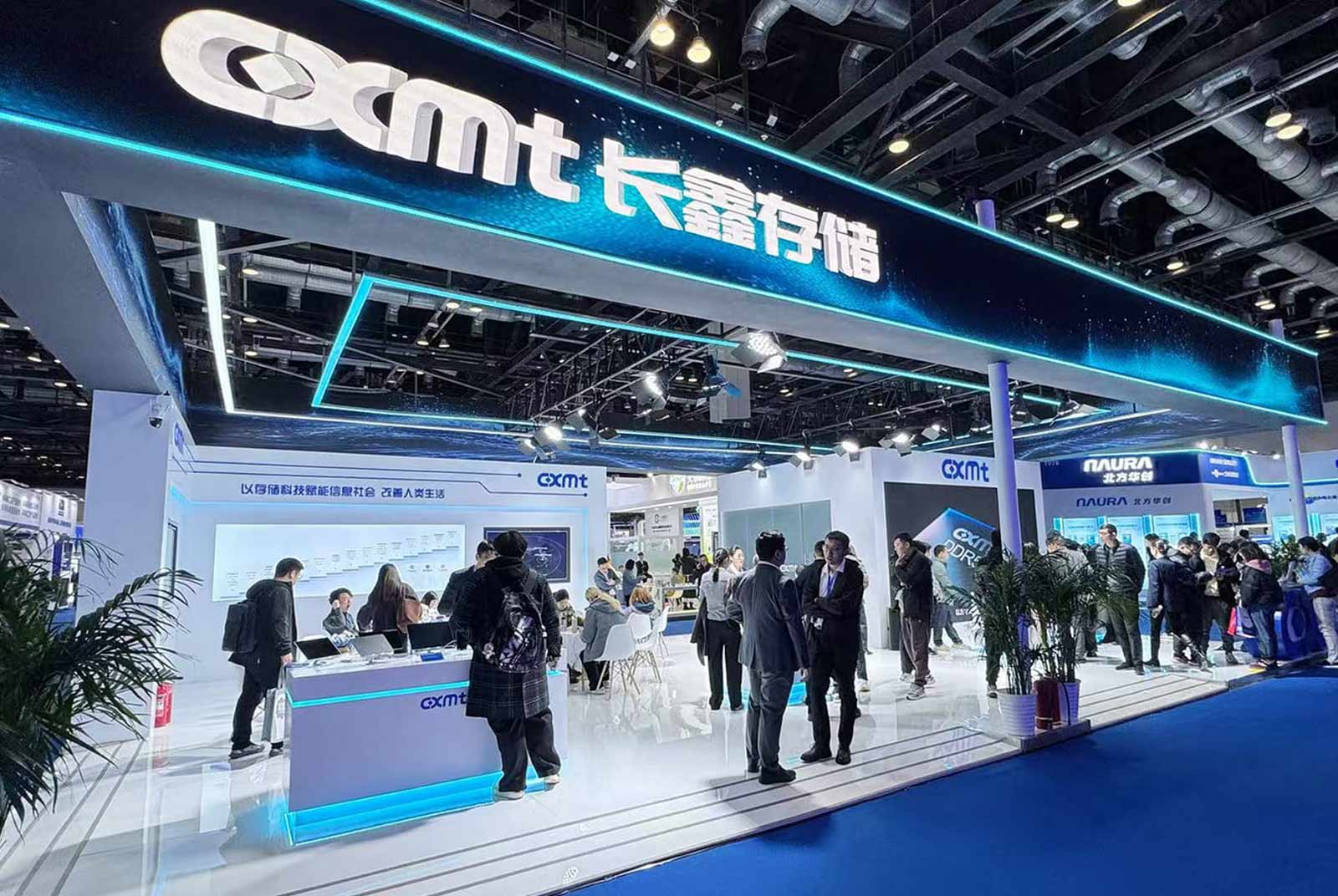
Source:CXMT
Once overlooked as a little-known Hefei startup, China's CXMT has emerged as the country's leading DRAM maker and a key player in its AI ambitions. As the company prepares for a record-breaking IPO, one question stands out: how did it narrow the technology gap with Micron without access to EUV?
Views
How China's DRAM Maker CXMT Caught Up With Micron Without EUV
By Liang-rong Chenweb only
Located in Hefei, the capital of Anhui Province, CXMT has been viewed as China’s best hope for DRAM. When it was founded a decade ago, it had already made headlines in Taiwan—but under a different name.
At the end of 2016, Inotera Memories(華亞科技), then Taiwan’s most advanced DRAM manufacturer, was acquired by Micron. Shortly afterward, prosecutors in Taoyuan announced they had uncovered a major trade secret theft involving Chinese companies. Five Inotera managers were accused of stealing confidential company documents before joining YMTC, under Tsinghua Unigroup(紫光集團), and Hefei Changxin Integrated Circuit Co.(合肥智聚集成電路公司), a company established by the Hefei municipal government.
At the time, Tsinghua Unigroup, seen as the standard-bearer of “red capital,” was at the height of its influence, and YMTC attracted virtually all the attention.
By contrast, Hefei Changxin Integrated Circuit, newly established by the Hefei government with registered capital of just RMB 10 million, drew little notice.
CXMT’s IPO makes it China’s most closely watched semiconductor company
Ten years later, after two name changes and a sweeping capital restructuring, Hefei Changxin has transformed itself into CXMT.
When it debuts on Shanghai’s STAR Market next Monday (July 27), amid the largest memory shortage in history, it will become China’s most closely watched semiconductor company.
The IPO is expected to raise more than RMB 57.9 billion, surpassing the record RMB 53.2 billion that SMIC raised when it returned to Shanghai’s STAR Market from the New York Stock Exchange in 2020.
The company is expected to be valued at as much as US$85 billion, roughly two-thirds of SMIC’s valuation.
CXMT is uniquely positioned at the intersection of two major AI trends.
First, because the United States has restricted exports of high-bandwidth memory (HBM) to China, CXMT—which has already begun limited production of HBM3E—has become China’s best hope for building an independent AI ecosystem.
Second, as surging AI demand has pushed DRAM prices to unprecedented levels, investors are closely watching how aggressively CXMT expands capacity. Can China’s memory industry repeat the history of the “red supply chain,” turning another industry into a brutal price war? That has unexpectedly become one of the key questions in this memory supercycle.
There have also been reports that Apple is considering using CXMT’s products, although they remain unconfirmed.
To be honest, I had never paid much attention to CXMT.
The “Hefei model,” which transformed an inland provincial capital into what many now call China’s fifth technology hub, has long been famous.
When I visited Hefei, however, my focus was its booming AI industry.
………
(To read this exclusive story in full, visit the Tech Taiwan Substack)
Have you read?
- Record 18 Nations Flock to Taiwan for SEMICON. What Are They Really After?
- TSMC’s $100B Arizona Expansion Triggers Massive Supply Chain Shift to the US
- How TSMC Helped SK Hynix Overtake Samsung in the AI Memory Race
Uploaded by Ian Huang
Views

Subscribe to CWE Newsletter (every Thursday)
Stay abreast of what's happening in Taiwan with our weekly digest.
Keywords: