Chips, Capital, and Civil Society: The Case for a Deeper EU-Taiwan Partnership

Source:Shutterstock
The EU is Taiwan's largest source of foreign investment, ahead of the US and Japan combined, yet the relationship rarely gets discussed that way. Lutz Güllner, head of the EU's trade office in Taipei, argues the partnership runs deeper than chip supply: German machinery needs Taiwanese silicon, and Taiwanese fabs depend on European tools and materials. He walks through Chips Act 2.0, Foxconn's European joint ventures, and where Taiwan and Europe might cooperate on countering information warfare.
Views
Chips, Capital, and Civil Society: The Case for a Deeper EU-Taiwan Partnership
By Taiwanologyweb only
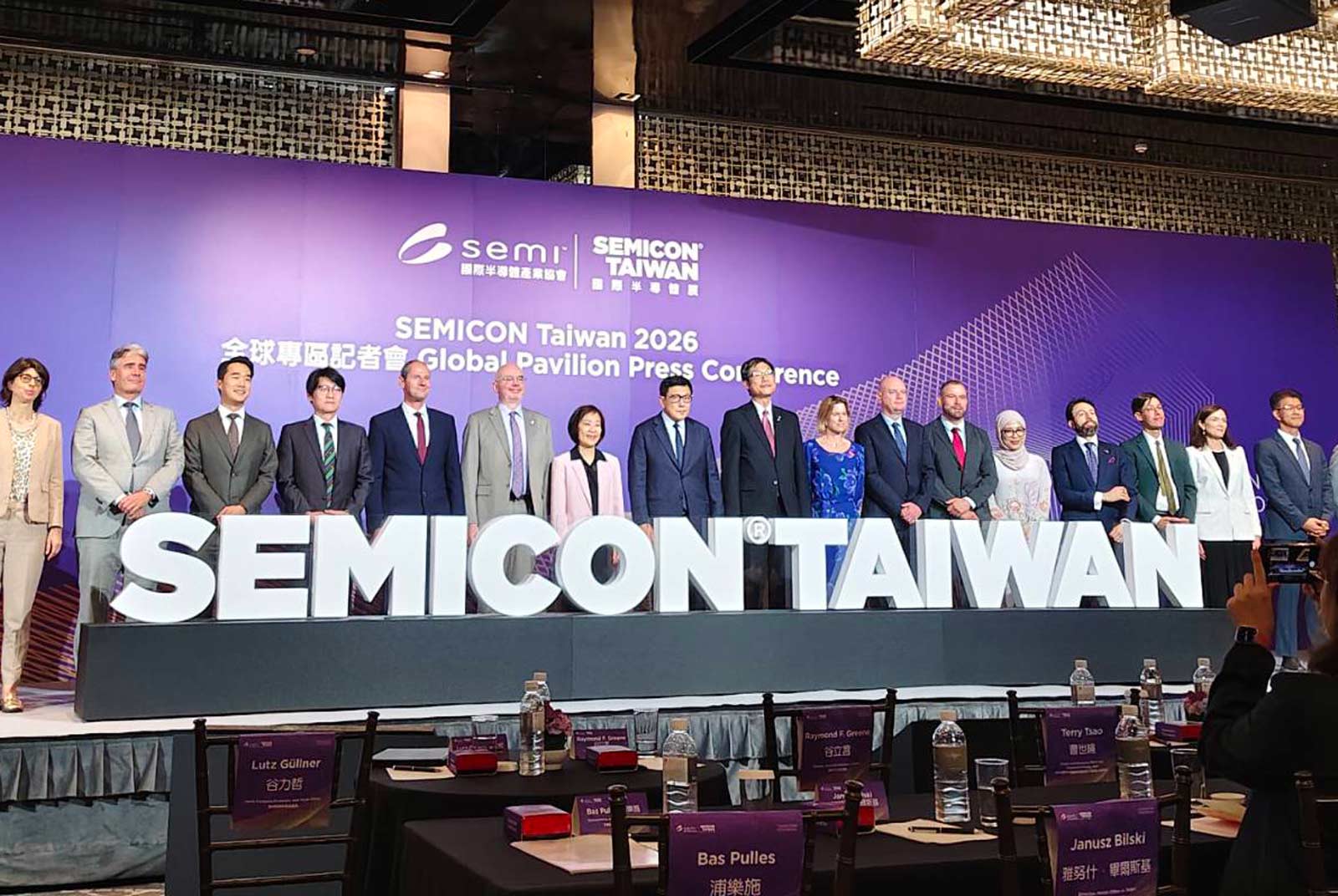
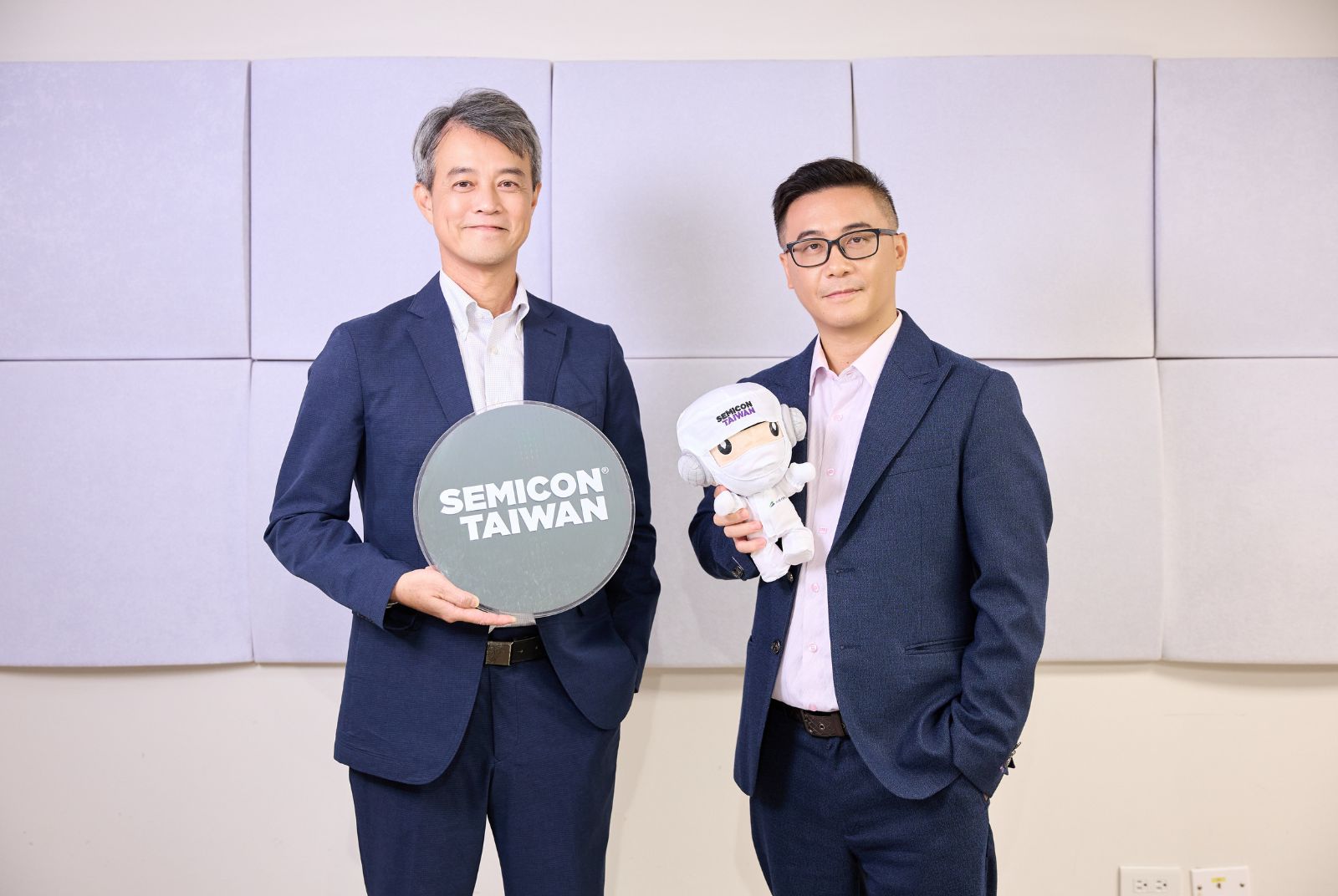
The following is the transcript of the latest episode of the Taiwanology podcast. It was produced by CommonWealth Magazine, hosted by Kwangyin Liu, Deputy Managing Editor of CommonWealth Magazine, and was first aired on July 28, 2026. The guest was Lutz Güllner, Head of the European Economic and Trade Office (EETO) in Taiwan—the EU's de facto embassy in Taipei—and a senior career diplomat in the European External Action Service specializing in economic, trade, and security affairs.
Listen to the episode: Europe's Widening Case for Taiwan, From Chips to Information War【Taiwanology Ep. 62】
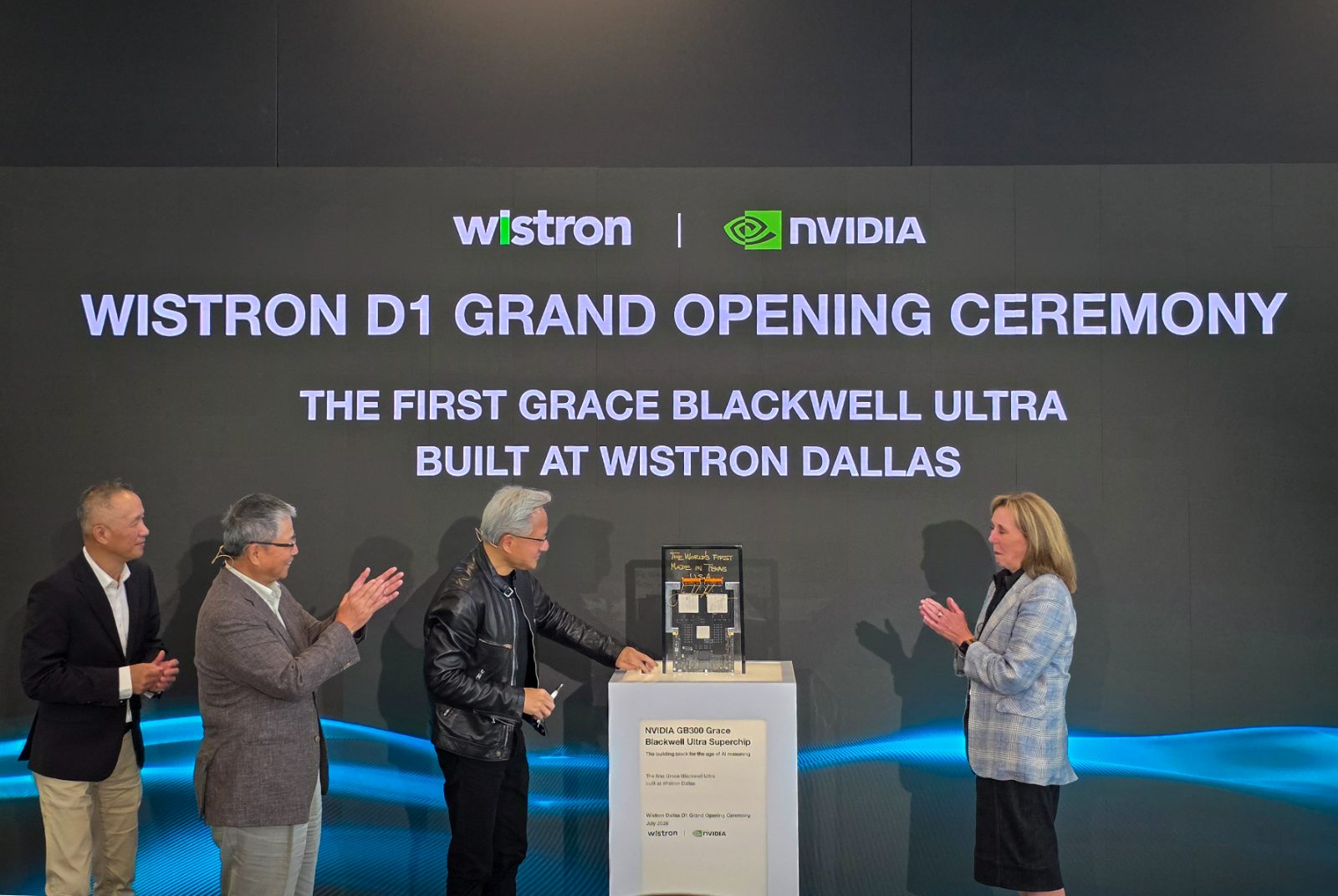
TSMC is building a fab in Dresden. Foxconn has entered a joint venture with France's Thales and Radiall on a €250 million advanced packaging facility in Bordeaux. A decade ago, none of this would have been plausible—and the scale is larger than the coverage suggests. The EU is Taiwan's single largest source of foreign direct investment, accounting for more than a quarter of the total, while Taiwan is the EU's twelfth-largest trading partner worldwide.
Lutz Güllner took up the EU's top post in Taipei in September 2024, after six years working on how the information environment gets weaponized as a foreign policy tool—first by Russia in Europe, then, he says, by China.
The Number Nobody Cites
Kwangyin Liu (Host): "Some people would argue EU-Taiwan relations are at their best ever. Where do you think they are now?"
Lutz Güllner: "At their most intense in any case. But there were three catalysts."
The first was COVID, which pulled Taiwan out of the category of places Europeans confused with Thailand. The second was Beijing's reaction to Speaker Nancy Pelosi's 2022 visit—and what that triggered in Brussels.
LG: "For the first time ever, the European Council—all our heads of state and government—issued conclusions which put Taiwan clearly on the map, and to which all 27 member states agreed. A moment where we realized that any destabilization or conflict in the straits also matters to the European Union as a whole."
The third was the EU's Indo-Pacific strategy. But the catalysts, he says, are secondary to a driver that is not political at all.
LG: "The most important driver is Taiwan's amazing journey into becoming an indispensable partner—not in the semiconductor business, but in the AI business as a whole. As the European Union, our 27 member states have actually invested more in Taiwan than the United States and Japan combined."
That sentence should have traveled, and mostly hasn't. Taiwan's public conversation about industrial alignment runs almost entirely through Washington and Tokyo.
LG: "It's a good basis to intensify. But it's on both sides. Taiwanese companies still need to discover a lot about Europe, and Europeans still need to discover a lot about Taiwan."
The Traffic Runs Upstream, Too
KL: "Could you name a recent example that exemplifies the growing importance of this relationship?"
LG: "Everybody speaks about the TSMC investment in Dresden. But what is less known is that big European companies are investing in Taiwan not only in traditional areas, to sell cars or machinery, but actually to support the Taiwanese semiconductor ecosystem."
His example is Merck, the German pharmaceutical company turned specialty chemicals supplier, which has put half a billion euros into a Kaohsiung plant producing the chemicals and films TSMC's advanced nodes depend on.
LG: "Taiwan is not only an interesting partner in the downstream, in the chips. This is not just a black box producing chips that we need or not. This is a partner you want to engage with across the entire ecosystem, including upstream—the components, sometimes the raw material, or at least the processed materials."
The point cuts against how the relationship is usually framed. Taiwan is habitually cast as supplier and Europe as customer, but the dependency runs both ways—as with imec, the Belgian nanoelectronics institute whose shareholders include both ASML and TSMC.
LG: "TSMC wouldn't be able to produce what they're producing without ASML. I fully understand there's a lot of focus on the United States traditionally in Taiwanese economic, political and security thinking. But what I'm pleading for, also from a Taiwanese perspective, is: look at the other interesting partners as well. It's in your interest, but it's also in our interest."
Chips Act 2.0: The Correction
KL: "With Chips Act 2.0, what's the difference from the first version?"
LG: "A very simple one. In the first, we focused very much on the supply side, on production. We said, 'If only we have more TSMCs in Europe producing a lot of output, that will solve our challenge.' But we have realized the key issue is also the demand side. Where are the industry solutions? Where do we need these chips?"
This is, in effect, an admission that the first Chips Act asked the wrong question—and a signal about where Europe now believes its advantage lies. Not in replicating Taiwanese or American fabs, but in the industrial applications that consume advanced silicon.
LG: "We do not want to duplicate what the United States are doing. Europe is the leading player in machinery solutions, high precision. I come from a country, Germany, which is proud of precision in machinery. But machinery without the artificial intelligence element will be problematic."
For Taiwanese firms, the implication is that waiting for subsidies is the wrong posture entirely.
LG: "The opportunity is not only at the end of this chain. It's now. It's planning together, going into partnerships. It's exactly what Foxconn is doing in Poland, going into a joint venture on electric vehicles. Also with Thales on satellites. Semiconductor will always be the centerpiece, but this goes beyond. Chips Act is a framework. It does not give the subsidies already—it gives the clusters, and the next step is to fill it with clear projects, clear figures."
Why "FIMI" Beats "Disinformation"
KL: "You're an expert in FIMI—Foreign Information Manipulation and Interference. What could Taiwan and the EU collaborate on?"
LG: "You gave me the perfect hint by using the word misinformation. Is this about how a society deals with a quickly changing information landscape, where some things are right and some are not? That is not the real problem. The real problem is that the informational environment has become weaponized—used as another tool of interfering into the societal and political areas of an adversary."
The distinction is not academic. It determines whether a democracy is arguing about speech, which it cannot resolve, or about foreign state operations, which it can regulate. His illustration is Crimea in 2014.
LG: "What Russia did was not to deploy its army, but to deploy what is called the little green men—soldiers without insignia that suddenly appeared. And the whole operation on the information side was, 'This has nothing to do with Russia. This is what the people of Crimea want.' It's delicate for democracies, because we believe in free speech, and neither the European Union nor Taiwan wants to regulate what people can say. But these are not opinions of people. This is a state activity that is organized, coordinated, financed, with a very clear political aim. That is why the abbreviation FIMI works much better than disinformation."
KL: "What have you seen work in Taiwan?"
LG: "The most important element Taiwan has is its very vibrant and strong civil society actors. There are excellent NGOs dedicated to analysis, to uncovering, to engaging with different parts of the population. It's something Taiwan should be and can be proud of. The challenge is how you connect the authority side and the civil society side. There's no easy fix, that is for sure."
What Chiayi Taught the Ambassador
Güllner spends a striking amount of time in cities and counties where the EU has no obvious business being.
LG: "Sometimes there is this perception that there is an island in the Pacific Ocean, they have an opinion—and 'they' meaning one unique, clear opinion. Of course that's not the case. My Chinese is really, really bad, so I feel very inhibited, but I get a lot out of understanding what keeps them busy, what is their worry."
KL: "Where did you go yesterday?"
LG: "Chiayi. I've been through on my way to Alishan like many others, but this time to speak to farmers and politicians. Chiayi is now the hub of Taiwanese drone research and development. To see where world politics and very local issues meet—who's certifying the drones, how Chunghwa Telecom deals with a possible overload of the 5G or 6G net—is extremely interesting."
He meets both governing and opposition politicians in every county. The result surprised him.
LG: "I find it quite amazing how often the views are actually converging. Even in these two years I've seen a harsher tone, a rougher way of debate. But at the same time I see how many things are still very much in common, that might be politicized in the short or medium term, but where Taiwan as a whole has really an interest in moving ahead."
LG: "Geographically Europe and Taiwan are very far away—9,000 miles, I think. But if we look a little bit closer, there's a lot we have in common, and this is what we want to build on."
The Ask
Güllner is careful never to frame this as a choice. He is not asking Taiwan to trade Washington for Brussels, and he knows the comparison is not a fair one: the American relationship arrives bundled with security guarantees that Europe cannot offer and does not pretend to.
What he is competing for is something narrower and, in a sense, harder to win—attention. The capital is already here. The industrial complementarity is already real: European precision machinery needs Taiwanese silicon and AI integration, and Taiwanese fabs need European tools, chemicals, and research institutions. What is missing is the habit of looking. Taiwan's strategic imagination is trained on one axis, and the second one has been building quietly underneath it for years.
The Chips Act 2.0 timing makes that a live question rather than an abstract one. The framework exists; the projects and figures come next. Whether Taiwanese companies are at the table when those get written—as partners in the planning, not suppliers at the end of the chain—is the difference between the relationship Güllner describes and the one he is trying to build.
Views

Subscribe to CWE Newsletter (every Thursday)
Stay abreast of what's happening in Taiwan with our weekly digest.
Keywords: