Wistron's Nvidia-Only Texas Plant Is Really About Winning Engineering Talent
Source:Hung Ta Lin
Wistron's new Texas AI factory is about more than building Nvidia servers—it signals a broader strategy to move closer to the heart of the AI ecosystem. But can its U.S. expansion help transform Wistron into a higher-margin technology company?
Views
Wistron's Nvidia-Only Texas Plant Is Really About Winning Engineering Talent
By Hung Ta Lin, Meng-hsuan Yangweb only
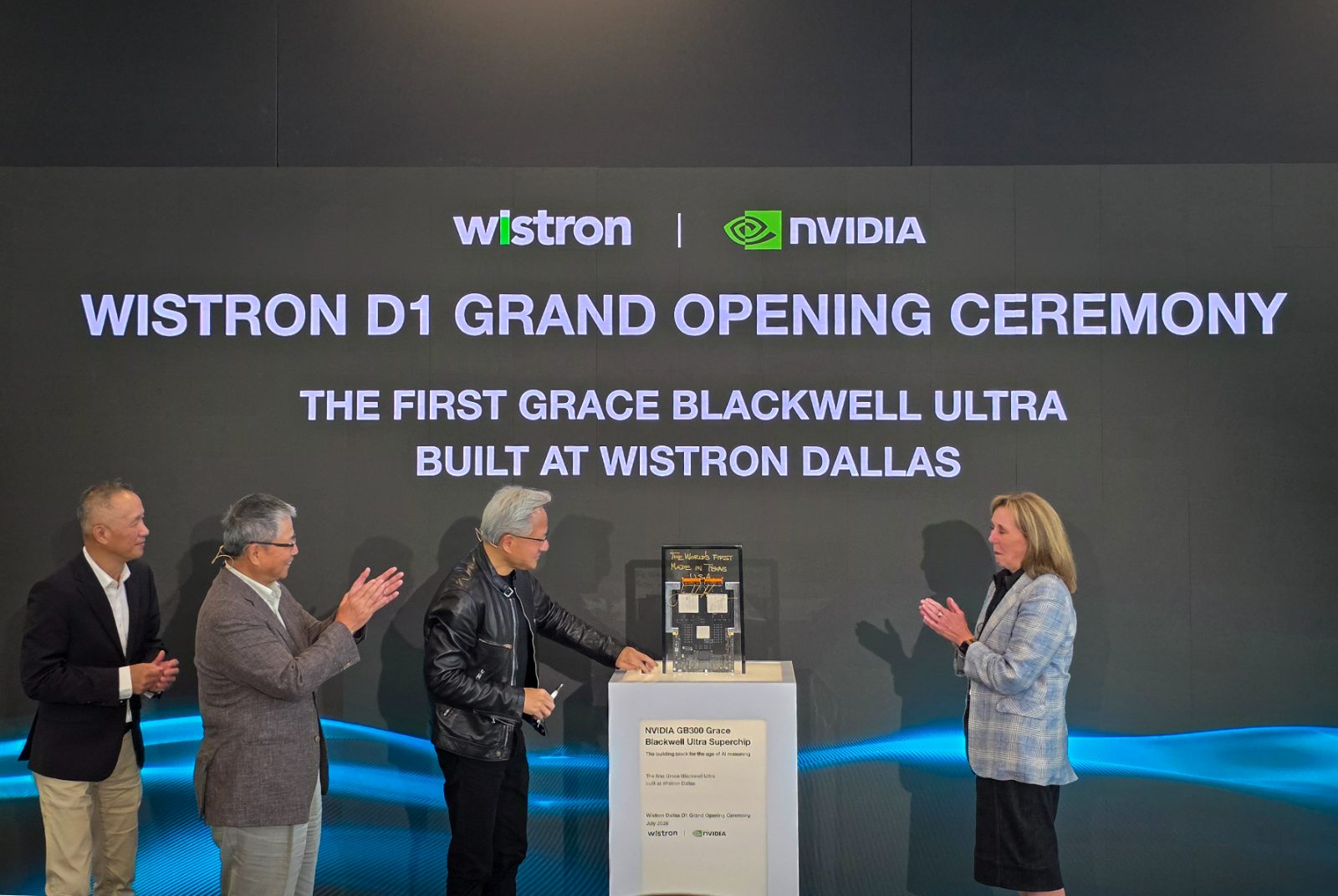
On July 21, Wistron officially opened its US$700M D1 AI facility near Fort Worth, Texas, becoming the first company capable of producing the baseboards for Nvidia's GB300 AI supercomputers in the United States.
The D1 plant is Wistron's third new production line built using digital twin technology. "The time required to set up a new plant can be shortened by five or six months," notes Wistron chairman and chief strategy officer (CSO), Simon Lin. During construction, the project encountered various regulatory challenges, including local requirements that many utility lines in electronics factories remain exposed. The company later realized that "new electronics factories haven't been built in the US in a long time, and many of the regulations are outdated," Lin said. After redesigning the facility, the site has retained enough space to accommodate two additional production lines.
Responding to concerns over the high cost of manufacturing in the United States, Lin cited the numbers.
"In 2020, we had over 100,000 employees and generated less than NT$1 trillion in revenue. Today, we have 60,000 employees and more than NT$2 trillion in revenue." The D1 plant currently employs around 500 staff, which will be expanded to around 1000 employees before year's end, resulting in exceptionally high revenue per employee.
The D1 plant is currently dedicated exclusively to serving Nvidia, chiefly providing L6-Level server manufacturing. Nvidia CEO Jensen Huang has expressed the intention to promote Level-11 manufacturing in the United States. Asked whether Wistron would secure those orders, Simon Lin replied, "That's up to the customer." Wistron has already established its D2 facility nearby, twice the size of the D1 plant. "Other customers will be assigned to D2," relates Lin. The plant is also expected to offer L10- and L11-level services in the future.
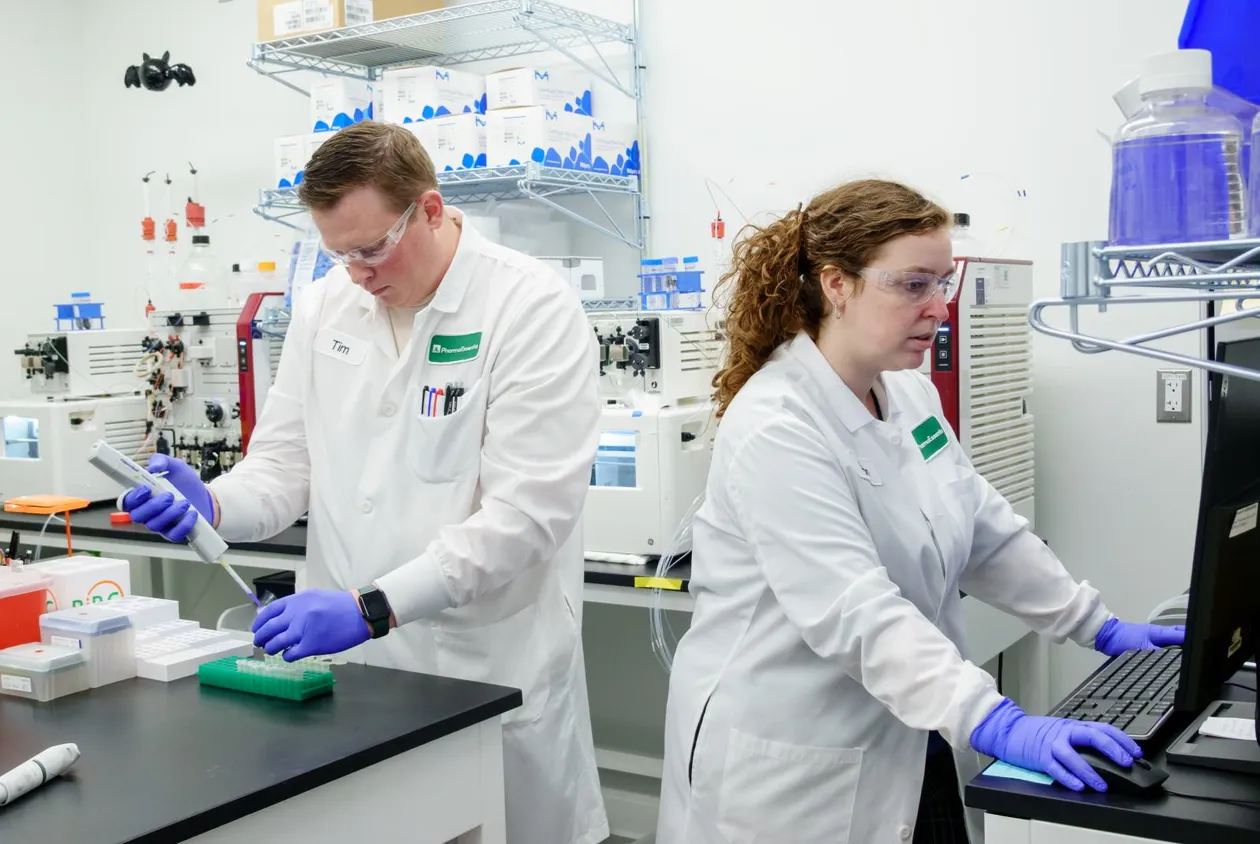
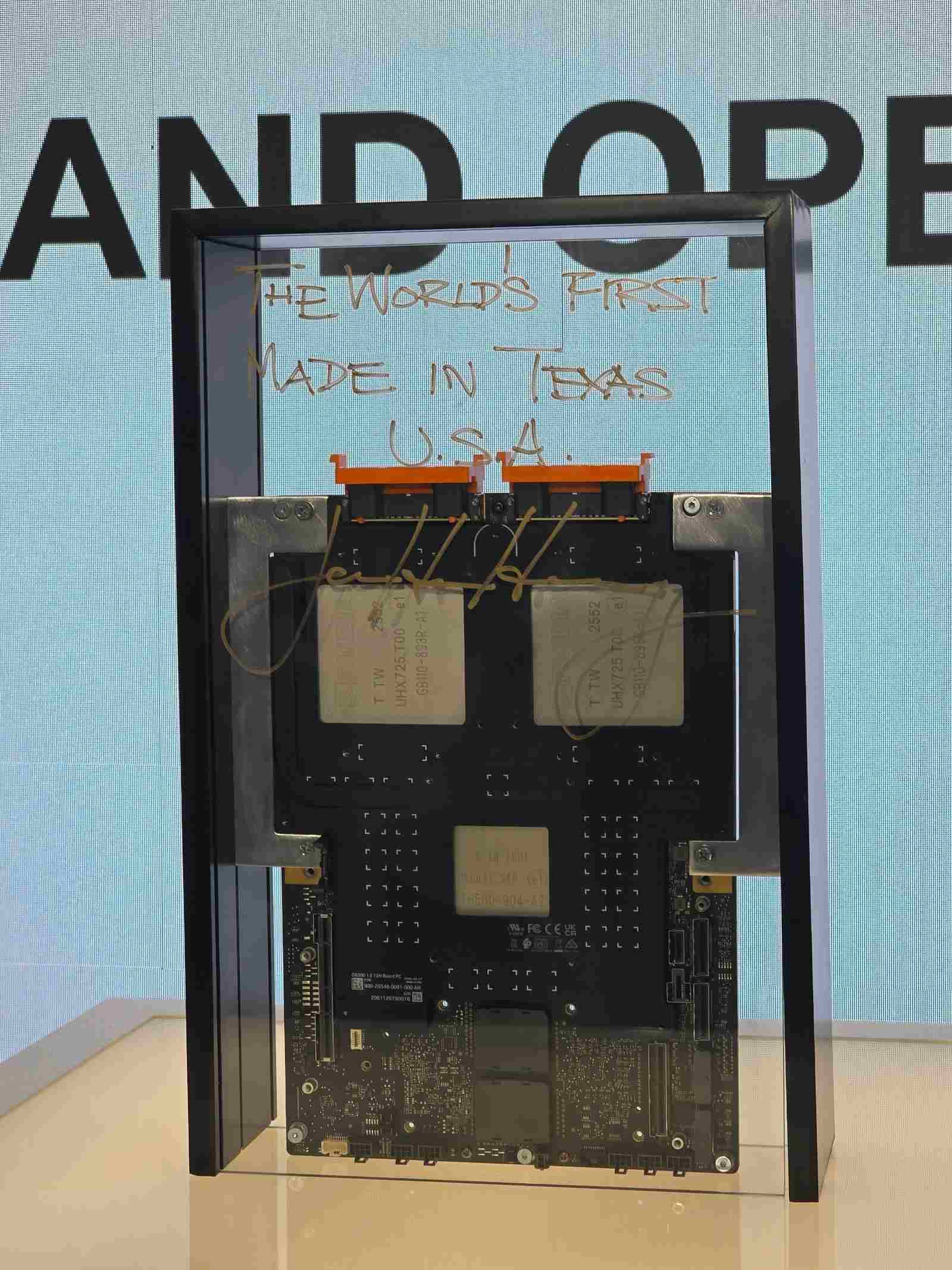 Wistron showcases the first Nvidia GB300 AI supercomputer baseboard manufactured in the United States. (Photo: Hung Ta Lin)
The AI wave has driven a surge in Wistron's revenues. Founded 22 years ago, the company saw additional revenue of NT$1.1 trillion in 2025 alone, surpassing Quanta for the first time and ranking second behind only Foxconn.
Wistron's capital expenditures this year will reach NT$60 billion. Simon Lin stresses that Taiwan remains Wistron's primary manufacturing base. A new facility in Kaohsiung is scheduled to begin operations by the end of the year.
"If we were not constrained by land and power availability, our expansion in Taiwan would be even larger," he asserts.
Wistron's new Vietnam facility will focus on general-use servers; the Mexico plant provides Level-10 and Level-11 manufacturing; the Malaysian facility serves as the company's industrial computer production base; and production continues apace in China because of the country's cost competitiveness.
As for the company's investments in US-based production, Lin said, "It serves our interests, and it serves American interests. As long as both sides share interests in common, everything is easier to move forward." Looking ahead, he expects the supply chain to consist of both regional and long-distance sourcing, with Asia continuing to supply printed circuit boards (PCB) and semiconductors, and packaging materials and metal components sourced locally.
Lin also dismissed concerns over New York State's decision to delay environmental permits for certain large-scale data centers, noting that Texas has abundant energy resources and that AI data center construction there continues at a rapid pace. He added that the industry's transition from air cooling to liquid cooling for servers will make future data center site selection less dependent on climate.
Beyond manufacturing, Lin described the Texas investment as part of a broader strategic initiative. Although Wistron has grown significantly in recent years, he acknowledged that the company's gross margins have remained largely unchanged. Investing in the United States is intended to help attract high-end engineering talent.
"If we become a major user of tokens, we may have another operation with high gross margins," he said.
Wistron has already established R&D teams in California and Texas, working directly with Nvidia's engineering team to develop new products. As the company expands, pressure on recruitment and hiring is mounting. According to Lin, Wistron plans to hire 5,000 new employees in Taiwan this year, up from 3,000 last year.
The opening of the D1 facility marks the starting point of Wistron's broader transformation strategy. The company's long-term success will depend not only on expanding its manufacturing capacity, but also on whether it can develop higher-margin business models and increase the value it creates amid the continuing growth of the AI industry.
Have you read?
- How China's DRAM Maker CXMT Caught Up With Micron Without EUV
- Record 18 Nations Flock to Taiwan for SEMICON. What Are They Really After?
- TSMC’s $100B Arizona Expansion Triggers Massive Supply Chain Shift to the US
Translated by David Toman
Uploaded by Ian Huang
Views

Subscribe to CWE Newsletter (every Thursday)
Stay abreast of what's happening in Taiwan with our weekly digest.
Keywords: