Taiwan's "K-Shaped" Economy Leaves Young Workers Behind the AI Boom

Source:Kuan Hsieh
Taiwan's AI boom has fueled economic growth but also widened the gap between high-income tech workers and everyone else. As many young people face stagnant wages, rising debt, and growing financial pressure, experts are asking how Taiwan can ensure the AI era creates opportunities for all, not just a privileged few.
Views
Taiwan's "K-Shaped" Economy Leaves Young Workers Behind the AI Boom
By Matthew HsiaoCommonWealth Magazine
The rapid growth of AI has widened Taiwan's wealth gap. The resulting K-shaped economy has made this generation the one with the widest developmental gap. Is there a way to fix this?
25-year-old legislative assistant Ting-i Lin (林廷屹) cycled through ten jobs in the span of two years. His monthly salary has long hovered around NT$35,000. He has received unemployment subsidies and is saddled with credit card debt on top of NT$300,000 in student debt. Once, he held a new job for barely a month before he was fired for arriving at work late. "I sat on my scooter and cried."
The Directorate-General of Budget, Accounting and Statistics at the Executive Yuan reports that 30 years ago, the top 20% Taiwanese households were 16.7 times richer than the bottom 20%. In 2021, the top 20% was 66.9 times richer than the bottom 20%.
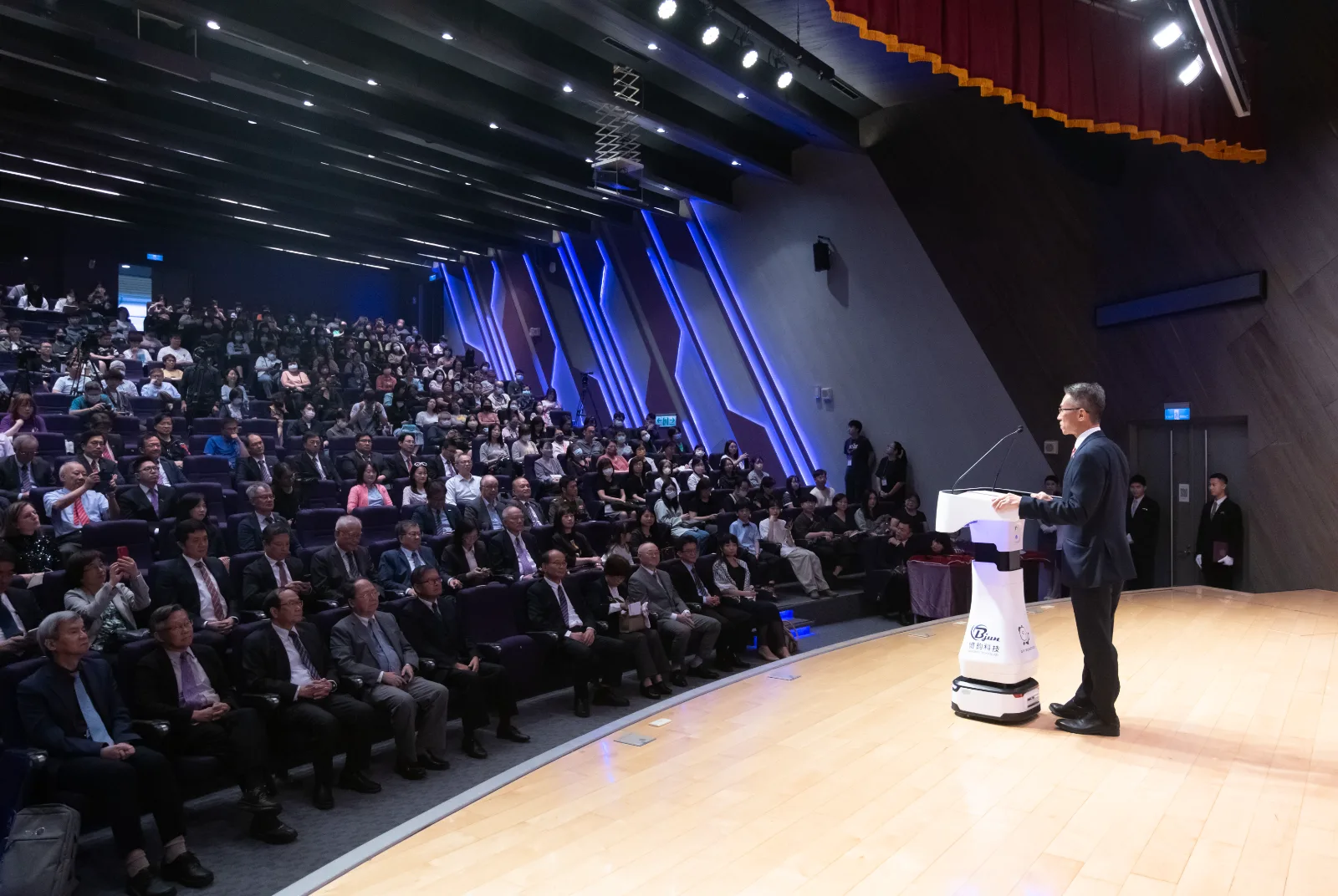
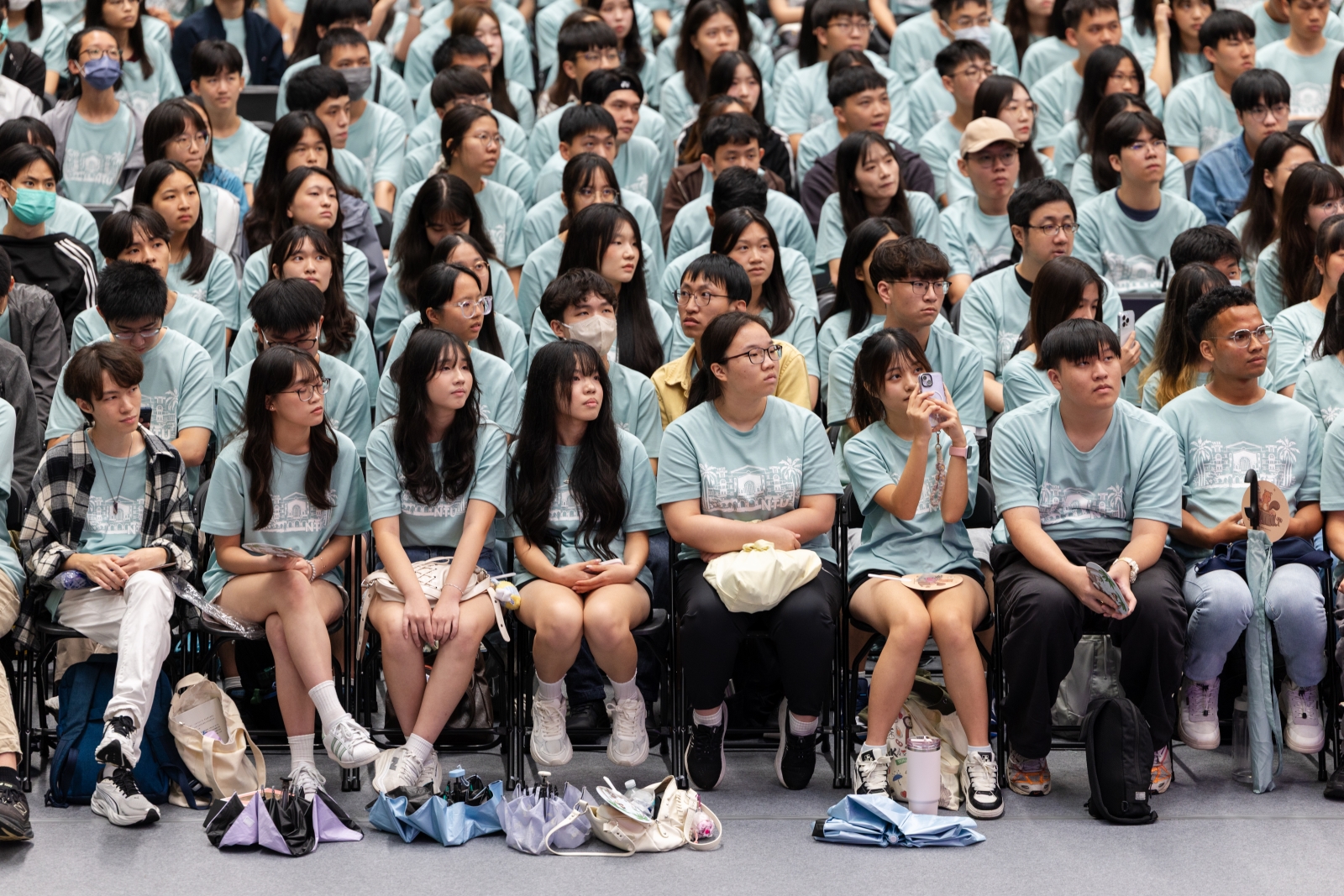 The rapidly changing world is testing young people’s judgment as they navigate their career choices. Pictured is this year’s opening ceremony at National Taiwan University. (Photo: Kuan Hsieh)
Hsien-Ming Lien (連賢明), President of the Chung-Hua Institution for Economic Research, compares TSMC's entry-level annual salary of NT$1.6 million to just under NT$0.6 million at other industries. If the AI boom is a boon for the electronics sector, that's still less than 10% of Taiwan's workforce. The Directorate-General estimated in August that nearly 70% of workers make less than the country's average monthly salary of NT$49,000—in other words, a historically high ratio of workers are underpaid.
Writer and social activist Liao Ting-hui (廖庭輝) notes that "life is always on the brink of collapse" for the demographic represented by the lower prong of the K-shaped economy, since they are perpetually underpaid, cannot amass wealth, and have limited ability to mitigate risk.
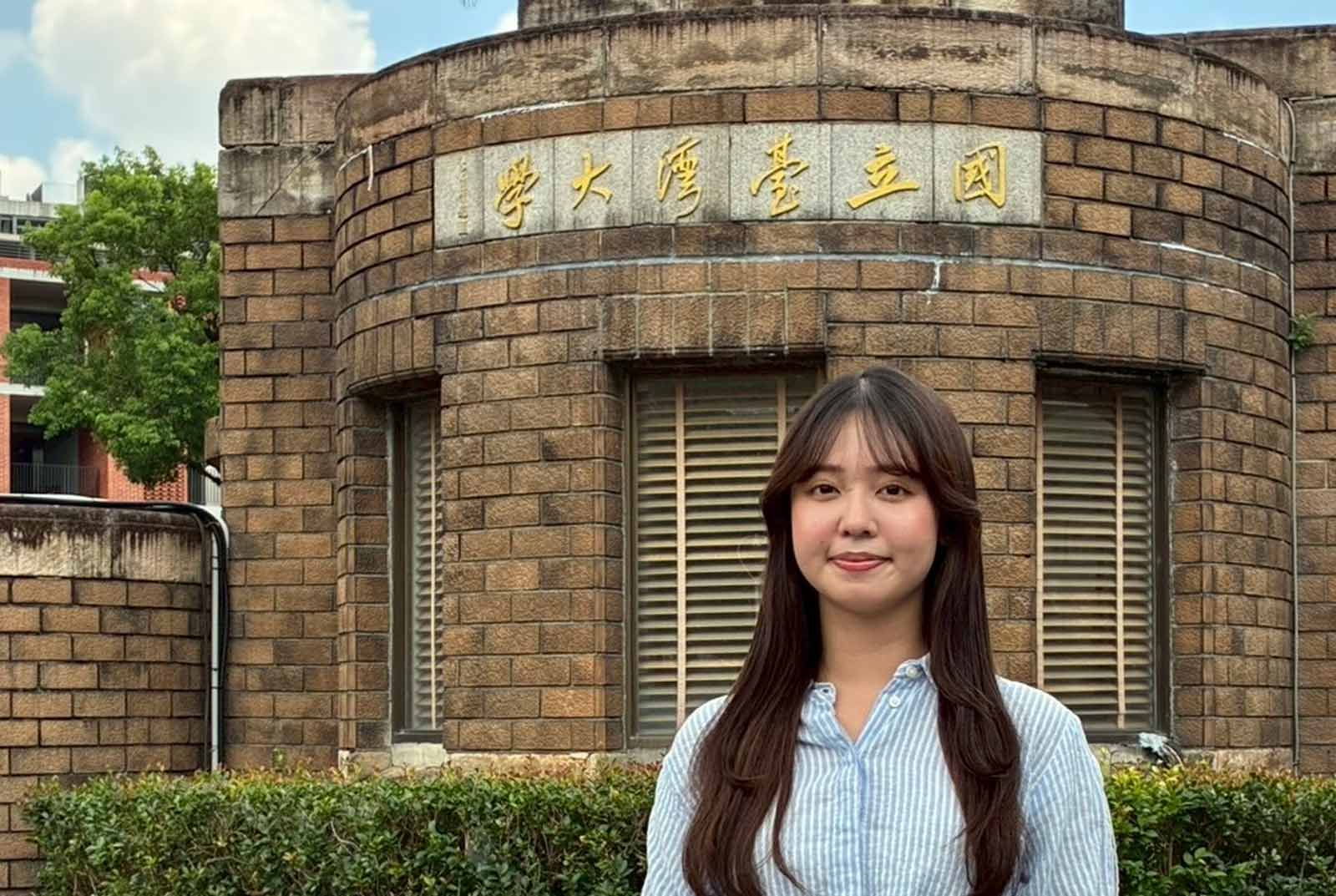
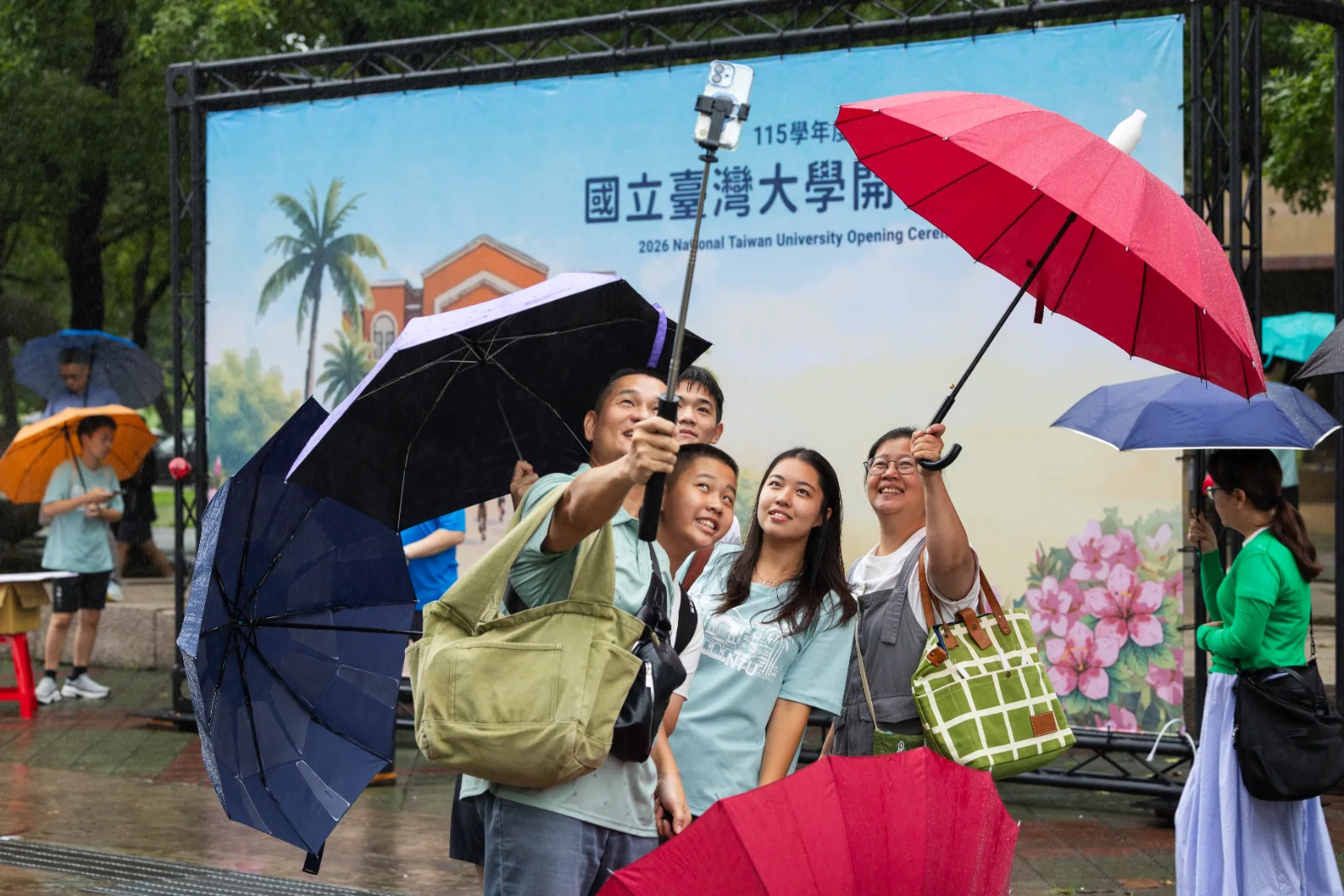 The younger generation faces a vastly different social environment from that of their parents, and family support has become a key factor in whether they can afford to buy a home. Pictured is National Taiwan University’s opening ceremony. (Photo: Kuan Hsieh)
Thung-Hong Lin (林宗弘), research fellow at the Institute of Sociology at Academia Sinica, opines that although Taiwan's young enjoy material conditions surpassing previous generations, social media amplifies the sense of relative deprivation. A survey of 1,600 respondents conducted by Academia Sinica in 2024 found that relative deprivation affects happiness and familial relationships.
The British Journal of Psychiatry (BJPsych) pointed out in a 2025 report that the perception of economic inequality in young adults is associated with elevated risks of depressive symptoms and suicidal ideation. Yung-chin Wang (王詠斳), executive secretary at Taiwan Digital Nomad Association, recounts three to four thirtysomething friends who left the workforce due to depression.
Eddy Lin (林彥廷), chairman of Taiwan Youth Association for Democracy, describes the Gen Z mentality as "untethered, resigned, and anxious": "The previous generation could afford a car, a house, a family, and trips abroad. We can at least go on trips abroad."
Jean Twenge, author of Generations, writes that Gen Z is more pessimistic and believes success is rooted in luck and connections. An Ernst & Young survey of youths in ten countries found that Gen Z is more focused on mental health and familial relationships, but skeptical of traditional milestones such as buying a house or retiring.
However, technology may offer a chance for change.
The Ernst & Young report calls Gen Z the first "global generation", capable of job-hunting across borders. At the same time, AI can help to lower professional thresholds.
25-year-old Coco Chiu (邱俐智) comes from a liberal arts background but founded a company that engages in long-distance marketing. She makes over NT$200,000 a month.
"With work, you are rewarded for your effort, unlike grades or relationships." She says too many liberal arts majors possess strong expertise and soft skills, but they limit themselves unnecessarily.
 Coco Chiu enjoys working from her home in Taoyuan, cafés, or parks, earning a globally competitive salary while working remotely. (Photo: Kuan Hsieh)
Software engineer Cheng-Wei Hu (胡程維) set a goal for himself to join the Silicon Valley startup scene; he eventually joined Y Combinator. Junior college graduate Yun Wu (吳昀) became a highly paid registered nurse in Australia based on exceptional English skills. These are all examples of real achievers who succeeded by having a sophisticated worldview and the resolve to take action.
Lien's recommendation is that the government can subsidize youths to purchase tech stocks and enjoy dividends from the AI boom over the long term. Alternatively, it can issue "tokens" for youths to use to learn how to work with AI.
Thung-Hong Lin says salaries in key professions, such as defense and healthcare, should be raised so more young professionals will sign up and help elevate the national average. This will also prevent a talent shortage or one-sided economic development.
How to ensure Taiwan's youths aren't stuck on the sidelines watching helplessly as the rich get richer is a test Taiwan must confront directly.
Have you read?
- Taiwan Boasts Stellar GDP Figures, but Wealth Reaches Few
- Why Does Taiwan's Tax System Favor Stock Market Investors, Penalize Workers?
- Taiwan’s GDP Per Capita Forecast to Overtake Japan and South Korea
Translated by Jack Chou
Uploaded by Ian Huang
Views

Subscribe to CWE Newsletter (every Thursday)
Stay abreast of what's happening in Taiwan with our weekly digest.
Keywords: