What Is Taiwan’s “Silicon Shield”—and Does It Still Protect Taiwan in 2026?
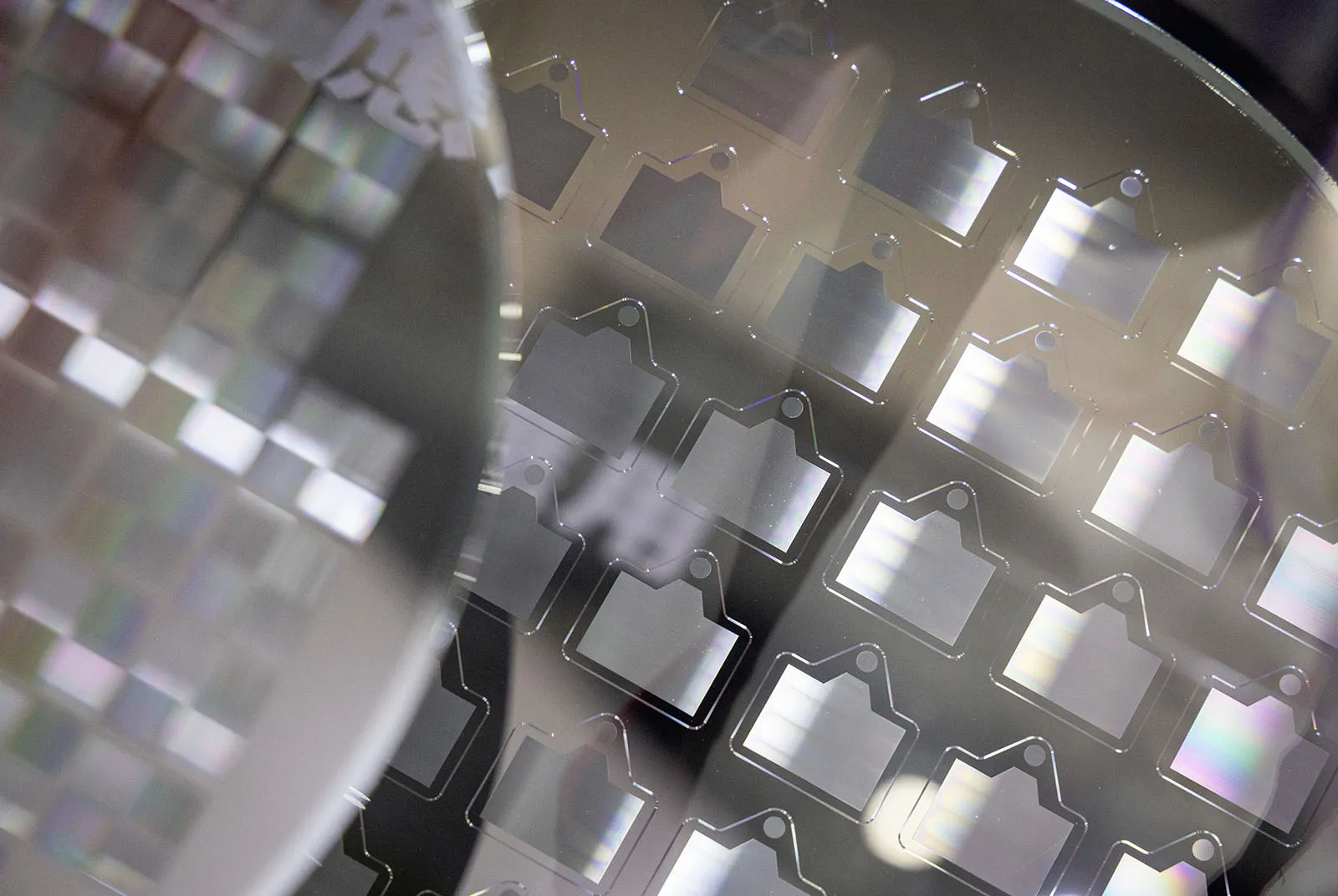
Source:Chien-Tong Wang
Taiwan’s dominance in advanced semiconductor manufacturing has long been described as a “silicon shield”—the idea that the world’s dependence on Taiwanese chips raises the cost of conflict in the Taiwan Strait. But as TSMC expands overseas and Taiwan faces new energy and security vulnerabilities, how much protection does that shield really provide?
Views
What Is Taiwan’s “Silicon Shield”—and Does It Still Protect Taiwan in 2026?
By CommonWealth Magazineweb only
What is Taiwan’s “silicon shield”?
Taiwan’s “silicon shield” refers to the idea that the island’s central role in the global semiconductor supply chain makes a military conflict over Taiwan extraordinarily costly—not only for Taiwan and China, but for economies around the world.
The term dates back to 2000, when American technology commentator Craig Addison published an op-ed in the International Herald Tribune titled “A ‘Silicon Shield’ Protects Taiwan from China.” The idea later became an increasingly prominent way of explaining Taiwan’s strategic importance to the global semiconductor industry.
More than two decades later, the logic behind the theory has become even more important as advanced semiconductors have become indispensable to artificial intelligence, cloud computing, smartphones, defense systems and other critical technologies.
At the center of the shield is Taiwan Semiconductor Manufacturing Company, or TSMC, the world’s largest contract chipmaker.
But the “silicon shield” is not simply about one company. Taiwan has developed an unusually dense semiconductor ecosystem encompassing chip design, fabrication, advanced packaging and testing, equipment, materials and highly specialized engineering talent.
How could semiconductors deter a conflict over Taiwan?
The basic argument behind the silicon shield is economic interdependence.
A war, quarantine or blockade that stopped Taiwan’s semiconductor production would send shock waves through industries around the world. AI data centers, smartphones, automobiles and defense systems all rely on chips produced within an extremely complex international supply chain.
China itself is also part of that system.
A military operation against Taiwan could therefore damage semiconductor supply chains that Chinese manufacturers and the wider Chinese economy also rely on.
For the United States, Japan, Europe and other economies, Taiwan’s importance creates another incentive: keeping the Taiwan Strait stable is not simply a political or security issue. It is also an economic-security issue.
This gives Taiwan strategic value far beyond its geographic size.
But strategic value is not the same thing as a security guarantee.
Does TSMC actually protect Taiwan from China?
The silicon shield theory has prominent critics.
In 2025, former U.S. National Security Council official Matt Turpin directly rejected the idea that semiconductors determine Beijing’s intentions toward Taiwan.
Turpin argued that Beijing’s calculations are rooted in political and strategic considerations that go far beyond the semiconductor industry.
The distinction is important.
Semiconductors can increase the economic cost of conflict without necessarily outweighing the political and strategic considerations that shape Beijing’s Taiwan policy.
The silicon shield is therefore better understood as one layer of deterrence, rather than an impenetrable shield.
Taiwan’s semiconductor industry may make instability substantially more expensive for the international community. It cannot by itself prevent coercion, blockade or invasion.
Is TSMC’s overseas expansion weakening the silicon shield?
This has become one of the most important questions surrounding the theory.
TSMC is expanding rapidly outside Taiwan, particularly in the United States. Its Arizona expansion is also drawing Taiwanese semiconductor suppliers and parts of the broader supply chain toward the United States.
At first glance, overseas expansion might appear to weaken Taiwan’s importance.
If more advanced chips can eventually be produced elsewhere, would the world become less dependent on Taiwan?
That question has become more important as the United States, Japan and Europe encourage semiconductor production closer to home, raising concerns that semiconductor reshoring could gradually reduce Taiwan’s strategic importance.
The answer, however, is more complicated than simply counting fabs.
Overseas manufacturing can make semiconductor supply chains more resilient by reducing geographical concentration.
But reproducing a semiconductor fab is not the same as reproducing Taiwan’s semiconductor ecosystem.
Taiwan’s competitive advantage includes not only fabrication plants but also suppliers, engineers, packaging and testing companies, equipment specialists and the institutional knowledge needed to move new technologies rapidly into mass production.
Even as the global chip industry becomes more geographically diversified, Taiwan remains particularly difficult to replace in leading-edge semiconductor technologies.
The result may therefore be a more geographically distributed semiconductor network with Taiwan still at its technological center, rather than a straightforward relocation of the silicon shield.
AI may be making Taiwan more important—not less
The global artificial-intelligence boom has reinforced Taiwan’s importance.
AI accelerators require not only leading-edge semiconductor manufacturing but also advanced packaging, memory, servers, networking equipment, power-management components and sophisticated electronics manufacturing.
Taiwan has developed significant capabilities across much of this hardware stack.
As a result, the AI boom has helped drive extraordinary growth in Taiwan’s technology exports and economy.
It also means the silicon shield itself is evolving.
The original theory focused heavily on semiconductor fabrication. Taiwan’s strategic importance today increasingly rests on a broader AI hardware ecosystem extending from advanced chips and packaging to servers and supporting infrastructure.
That could make Taiwan more difficult to replace.
But it also creates new vulnerabilities.
Energy is becoming a weakness in the silicon shield
Semiconductor manufacturing requires enormous quantities of reliable electricity.
That creates a paradox: the industry that makes Taiwan strategically indispensable also increases the island’s dependence on a stable energy supply.
Taiwan’s heavy reliance on imported energy has created what has been described as a “silicon shield energy paradox”: the industry that makes Taiwan strategically indispensable also requires enormous amounts of reliable electricity.
Taiwan imports most of its energy, while liquefied natural gas has become an increasingly important part of electricity generation. Unlike oil or coal, LNG is comparatively difficult to stockpile for long periods.
In a prolonged maritime blockade, Taiwan could therefore face two interconnected challenges.
Its semiconductor factories would become more important to the global economy precisely when maintaining the electricity supply needed to operate those factories could become more difficult.
The future of the silicon shield consequently depends not only on semiconductor technology, but also on electricity generation, energy reserves, infrastructure resilience and Taiwan’s ability to keep critical supply chains functioning during a crisis.
Energy is not the only vulnerability. Taiwan’s ability to withstand a prolonged disruption also depends on issues such as food security and broader supply resilience.
Taiwan is trying to move beyond the “silicon shield”
Taiwanese policymakers themselves have increasingly questioned whether Taiwan should think of its semiconductor advantage as a passive shield.
In a 2026 CommonWealth interview, Foreign Minister Lin Chia-lung explicitly rejected that framing: “I don't like the term ‘silicon shield’, it's too defensive, as if we can only hide behind semiconductors and hope no one attacks us.”
Instead, Lin advocates using Taiwan’s technological strength to deepen economic relationships with other countries and make them more directly invested in Taiwan’s success.
The distinction matters.
A traditional interpretation of the silicon shield assumes that Taiwan is so important that other countries cannot afford a disruption.
A broader economic-security strategy asks a different question:
How can Taiwan make other countries active participants in its continued success?
That could mean semiconductor investment, AI cooperation, supply-chain partnerships and technology alliances that bind Taiwan more deeply into major economies.
So, does the silicon shield still protect Taiwan in 2026?
Yes—but not in the simple sense that the phrase sometimes suggests.
Taiwan remains extraordinarily important to global semiconductor and AI supply chains. A major disruption to production on the island would have consequences far beyond the Taiwan Strait.
That dependence raises the economic cost of conflict and gives countries around the world a strong interest in maintaining stability.
But the silicon shield cannot guarantee Taiwan’s security.
TSMC’s overseas expansion is gradually reducing some geographic concentration. Beijing’s strategic calculations extend far beyond chips. And Taiwan’s dependence on imported energy exposes vulnerabilities that semiconductor dominance cannot solve.
The silicon shield is therefore best understood not as a force field around Taiwan, but as economic leverage created by technological indispensability.
Its strength in the coming years will depend on whether Taiwan can remain difficult to replace while simultaneously becoming more resilient.
That means maintaining its lead in advanced semiconductors and AI hardware—but also strengthening energy security, infrastructure resilience and international partnerships.
The question is no longer simply whether Taiwan still has a silicon shield.
It is whether Taiwan can transform that shield into a broader and more durable system of economic security.
FAQ
What does “silicon shield” mean?
The silicon shield is the theory that Taiwan’s importance to the global semiconductor industry raises the economic cost of a conflict over the island and therefore contributes to deterrence.
Why is TSMC important to Taiwan’s security?
TSMC manufactures many of the world’s most advanced chips. Disruption to semiconductor production in Taiwan could affect technology and manufacturing supply chains worldwide, giving other economies a strong interest in stability in the Taiwan Strait.
Does TSMC prevent China from invading Taiwan?
No. Semiconductor dependence may increase the economic cost of military action, but it is only one factor in Beijing’s broader political and strategic calculations.
Is TSMC moving out of Taiwan?
TSMC is expanding manufacturing overseas, including in the United States, Japan and Europe. But overseas expansion does not automatically reproduce the dense semiconductor ecosystem Taiwan has developed over decades.
Does overseas semiconductor production weaken Taiwan’s silicon shield?
It could reduce some dependence on production physically located in Taiwan. At the same time, overseas expansion can strengthen the resilience of a global semiconductor network in which Taiwan continues to play a central technological role.
What are the biggest weaknesses of Taiwan’s silicon shield?
Energy security is one major vulnerability. Taiwan’s semiconductor industry requires large and reliable electricity supplies, while the island remains heavily dependent on imported energy. Food, infrastructure and maritime supply-chain resilience are also relevant to Taiwan’s ability to withstand a prolonged crisis.
Have you read?
- How MediaTek Built a New Team With Intel and Apple Veterans
- Why Taiwan Got Micron to Break Precedent on Payouts
- ASML, TSMC Push 12-Inch Photomasks as High-NA EUV Enters Next Phase
Uploaded by Ian Huang
Views

Subscribe to CWE Newsletter (every Thursday)
Stay abreast of what's happening in Taiwan with our weekly digest.
Keywords: