
Why Taiwan's AI Boom Pits Inflation Control Against Inequality
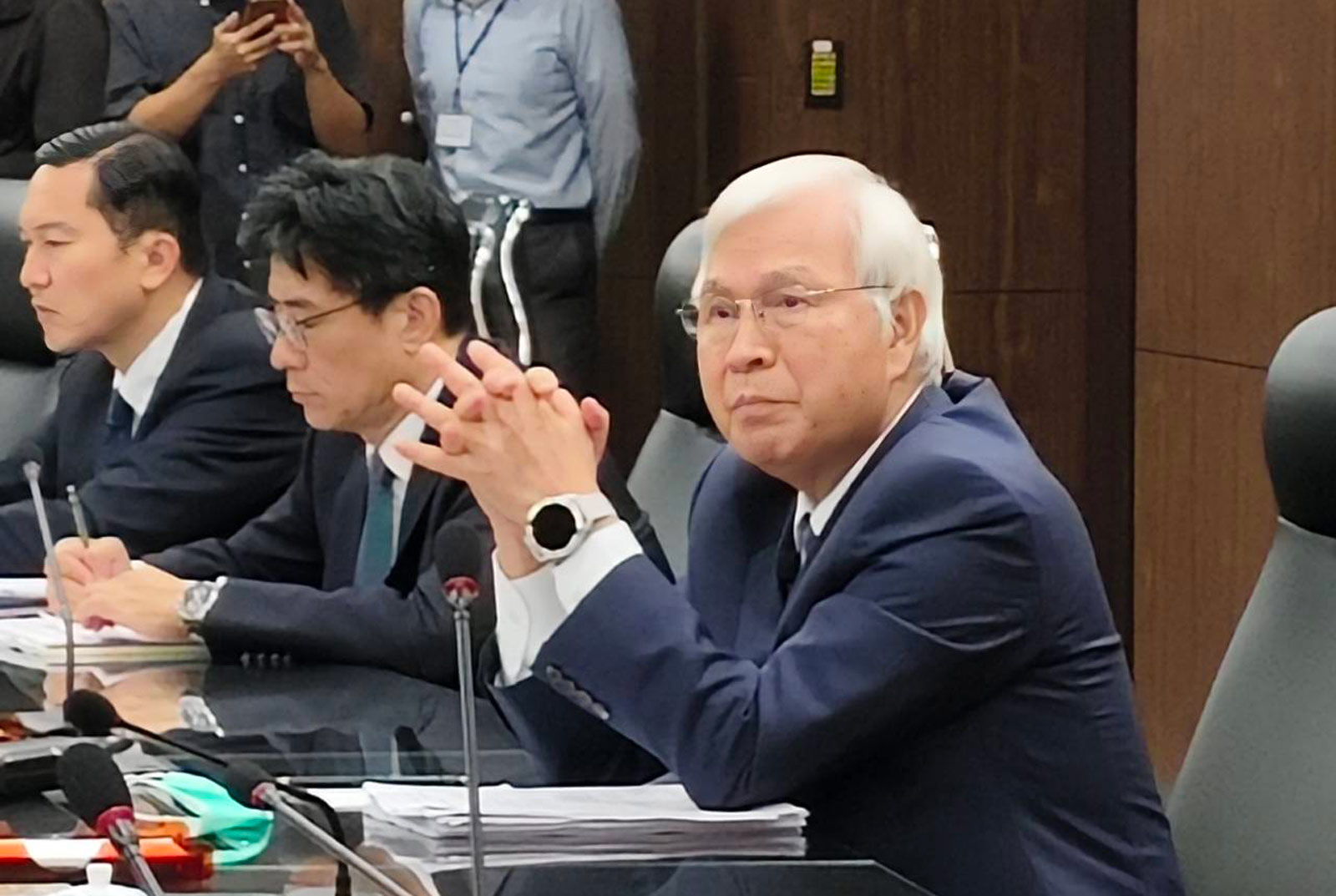
Source:Judy Lin
AI Boom Deepens the K-Shaped Divide; Taiwan Central Bank Chose to Tighten Money Supply Without Raising Interest Rates.
Views
Why Taiwan's AI Boom Pits Inflation Control Against Inequality
By Judy Linweb only
Despite the Federal Reserve’s hawkish move to raise interest rates by 0.25 percentage points a day earlier, Taiwan’s central bank decided not to follow suit, leaving domestic interest rates unchanged. The reason: Taiwan’s increasingly K-shaped economy is making monetary policy more difficult to calibrate.
Central Bank Governor Yang Chin-long told reporters that an interest rate hike was not the preferred policy tool this time, because using higher rates to curb inflation of around 2% could impose a disproportionate burden on traditional industries and small and medium-sized enterprises.
Following its third-quarter Board of Directors and Supervisors meeting, the central bank forecast Taiwan’s headline inflation rate at 2.03% for 2026, with core inflation at 2.16%. Gross Domestic Product (GDP) growth rate is projected at 11.48%.
“Interest rates are most useful when incomes are normally distributed,” Yang said. “However, as I have repeatedly emphasized, our economy is in an uneven situation, and that poses a challenge for monetary policy.... After all, we need to take small and medium-sized enterprises and traditional industries into consideration.”
Taiwan’s AI boom has fueled rapid economic growth, but the benefits have been distributed unevenly, with the technology sector significantly outperforming many traditional manufacturing sectors.
Rather than raising interest rates, the central bank has sought to manage monetary conditions through reserve money, indirectly influencing the money multiplier and M2 money supply. In 2026, growth in both reserve money and the money multiplier slowed, suggesting monetary conditions have tightened compared with the pandemic period.
Could a widening interest-rate differential between the United States and Taiwan accelerate capital outflows? Yang acknowledged the concern but said foreign-investor outflows have been driven primarily by the realization of stock-market gains, with dividend payments accounting for a significant portion.
According to the Taiwan Stock Exchange, foreign investors recorded NT$1.27 trillion in net stock sales during the first eight months of 2026. In July alone, foreign investors reported net outward remittances of NT$955 billion, or US$29.57 billion. The direction reversed sharply in August, however, when net inward remittances reached US$16.7 billion.
Despite the divergence in monetary policy between Taiwan and the United States, UBS Securities remains positive about Taiwan’s equity outlook over the next two years, largely because the AI boom continues to drive strong corporate earnings growth.
 Ally Chen (Left 1). (Photo: Judy Lin)
“Corporate earnings are being upwardly revised at a pace that may outweigh the negative impact of higher interest rates,” UBS Securities strategist Ally Chen said at a press conference on September 16. “Deleveraging risks also appear limited: although bank borrowing has reached record levels, it remains low relative to individuals’ stock holdings.”
The earnings revisions have been striking. According to MSCI, Taiwanese listed companies are now projected to deliver 65% year-on-year earnings growth in 2026, compared with an initial forecast of around 20% made in the third quarter of last year.
“Next year, we still expect annual growth of 31%, despite the high base,” Chen said.
The contrast captures the dilemma facing Taiwan’s central bank: the AI-driven technology sector is generating extraordinary growth and earnings, while traditional industries and smaller businesses remain much more vulnerable to higher borrowing costs. A conventional rate hike applied across the entire economy could therefore hit the weaker side of Taiwan’s K-shaped expansion hardest.
Taiwan’s IMF Membership?
On a side note, Yang also addressed a separate geopolitical question: Taiwan’s admission to the International Monetary Fund (IMF).
The proposal was raised by Young Kim, chair of the U.S. House Foreign Affairs Subcommittee on East Asia and the Pacific, urging Washington to support Taiwan’s admission to the International Monetary Fund (IMF) and encouraging Taipei to apply as soon as possible.
“It would certainly be a good thing if Taiwan could become a member of the IMF,” Yang said. “However, an application would have to go through the IMF’s Executive Board and win the approval of its existing members.”
“I don’t think that would be any easier than gaining membership in the World Health Organization,” he added.
Have you read?
- Taiwan's "K-Shaped" Economy Leaves Young Workers Behind the AI Boom
- Taiwan Boasts Stellar GDP Figures, but Wealth Reaches Few
- Why Does Taiwan's Tax System Favor Stock Market Investors, Penalize Workers?
Uploaded by Ian Huang
Views

Subscribe to CWE Newsletter (every Thursday)
Stay abreast of what's happening in Taiwan with our weekly digest.
Keywords: