How a Retired Professor Rallied 400 Farmers to Grow Durians in Taiwan
Source:Kuan Hsieh
A retired professor in Pingtung has helped spark Taiwan’s homegrown durian boom, bringing together hundreds of farmers and adapting tropical cultivation methods to the island’s climate.
Views
How a Retired Professor Rallied 400 Farmers to Grow Durians in Taiwan
By Johann Tsaiweb only
It was once common knowledge among farmers that durians didn't grow in Taiwan. But for the past five years, there's been a homegrown durian boom in southern Taiwan.
One of the key architects is Morris Wei (魏德昌), owner of Mory Durian Farm in Pingtung. He estimates that over 1,000 farmers and 300 hectares of farmland are devoted to domestically produced durians, with Pingtung accounting for the largest share.
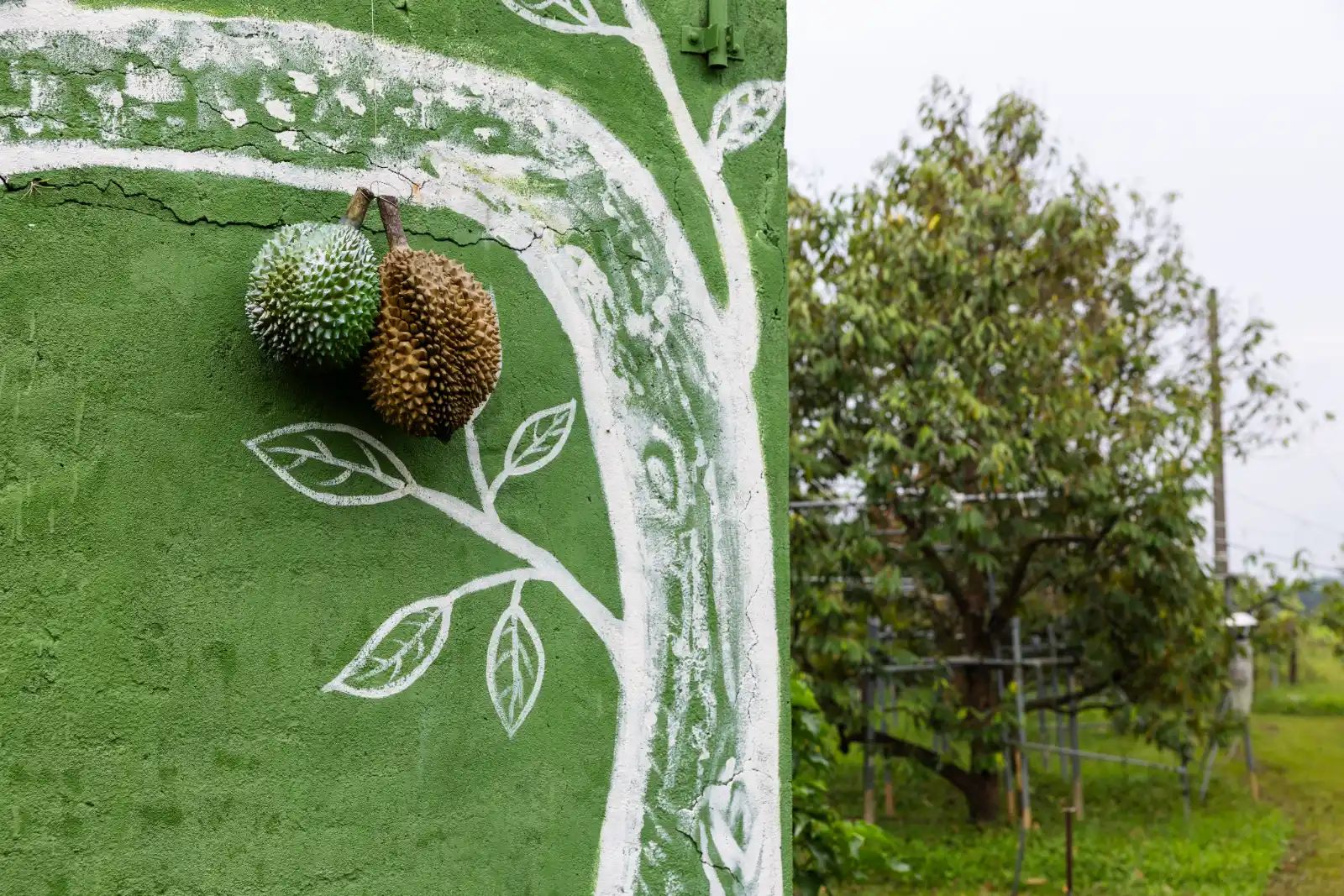 Durians are difficult to grow in Taiwan. Some farmers lost half their trees in the first year and sold only a dozen or so fruits this year, but successful harvests are already inspiring neighboring growers to give it a try. (Photo: Kuan Hsieh)
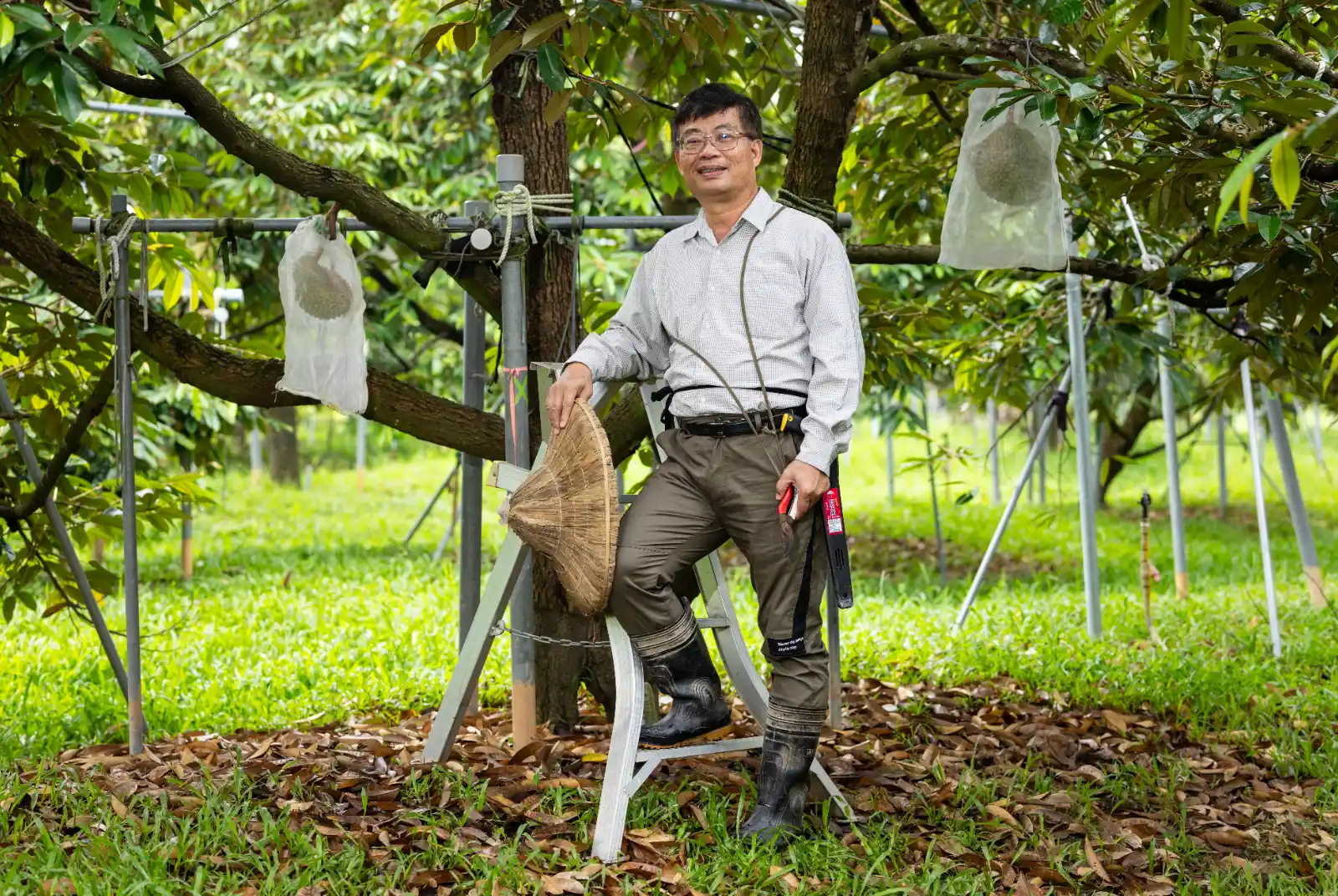
Wei, who grew up in Pingtung, was an associate professor with the Department of Electrical Engineering at Asia Eastern University of Science and Technology. In 2014, he decided to try cultivating durians on land he had bought in Pingtung, because "scarcity drives value."
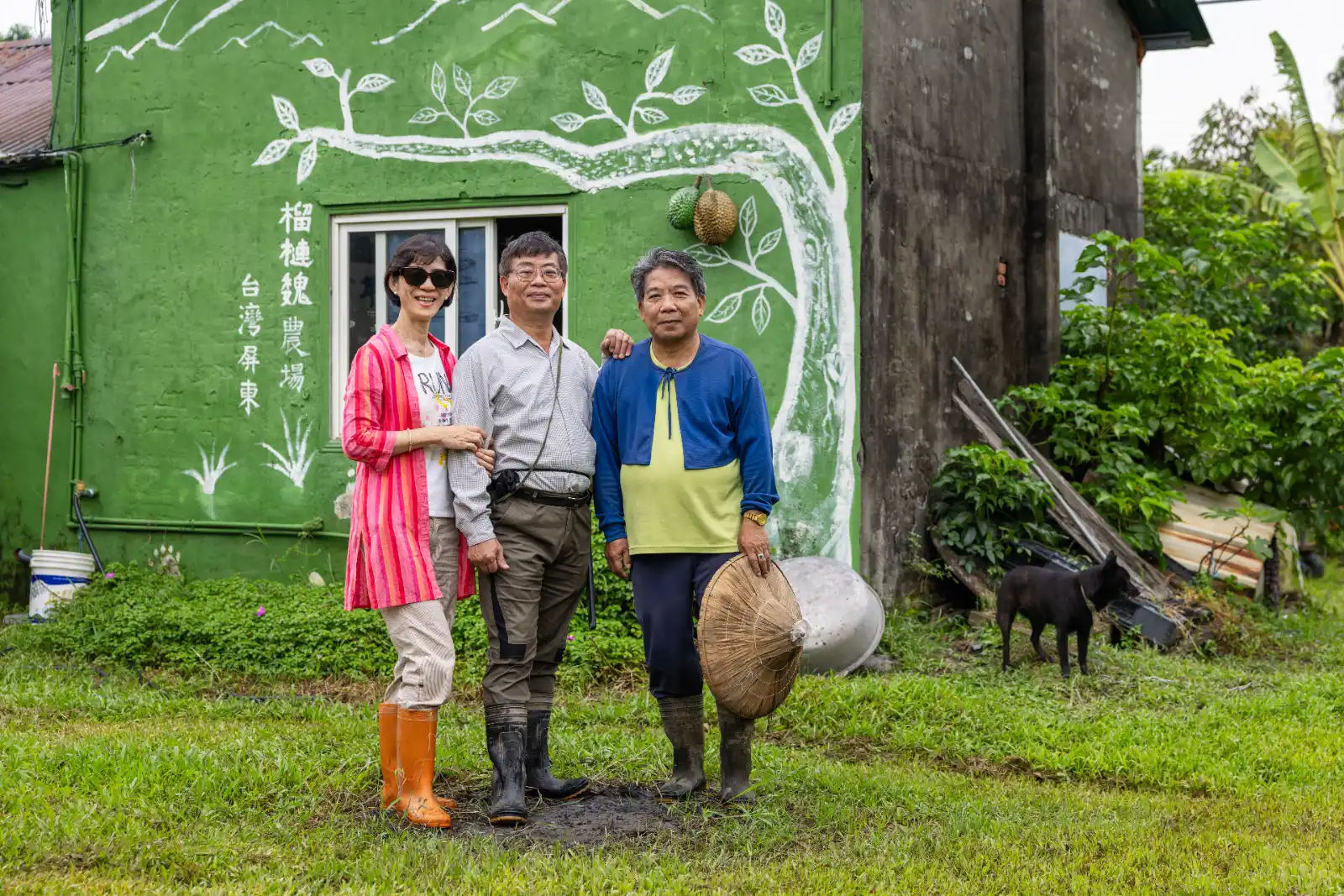 Taiwanese farmers are embracing durian cultivation, with Pingtung native Morris Wei (center) playing a key role in the trend. He built his durian orchard from scratch with his wife (left) and brother (right). (Photo: Kuan Hsieh)
Together with his wife, Wei commuted every week between Taipei and Pingtung, building an orchard out of nothing with the help of his brother. He was not the first durian planter in Taiwan, but he was the first to grow them at commercial scale. He founded a durian growers' group that now has more than 400 members. His orchard holds about 260 trees per hectare, mostly Musang King and Black Thorn, the world's most popular varieties.
The main challenge is the climate. Pi-Chuan Liou (劉碧鵑), Associate Researcher at the Ministry of Agriculture's Fengshan Tropical Horticultural Experiment Branch, explains that Taiwan's large day-night temperature swings and clear distinction between seasons are unfavorable for tropical fruit trees.
Also, tropical fruit trees have a long juvenile period, generally taking five or even ten years to bear fruit.
Wei scoured the internet for information and learned to graft by watching videos. "No one has killed more durian trees in Taiwan than me," he says self-deprecatingly. It was 2020 before his trees bore fruit. Wei decreased the distance between trees, set up sunshades and struts, and reduced the height of the trees to protect them from typhoons.
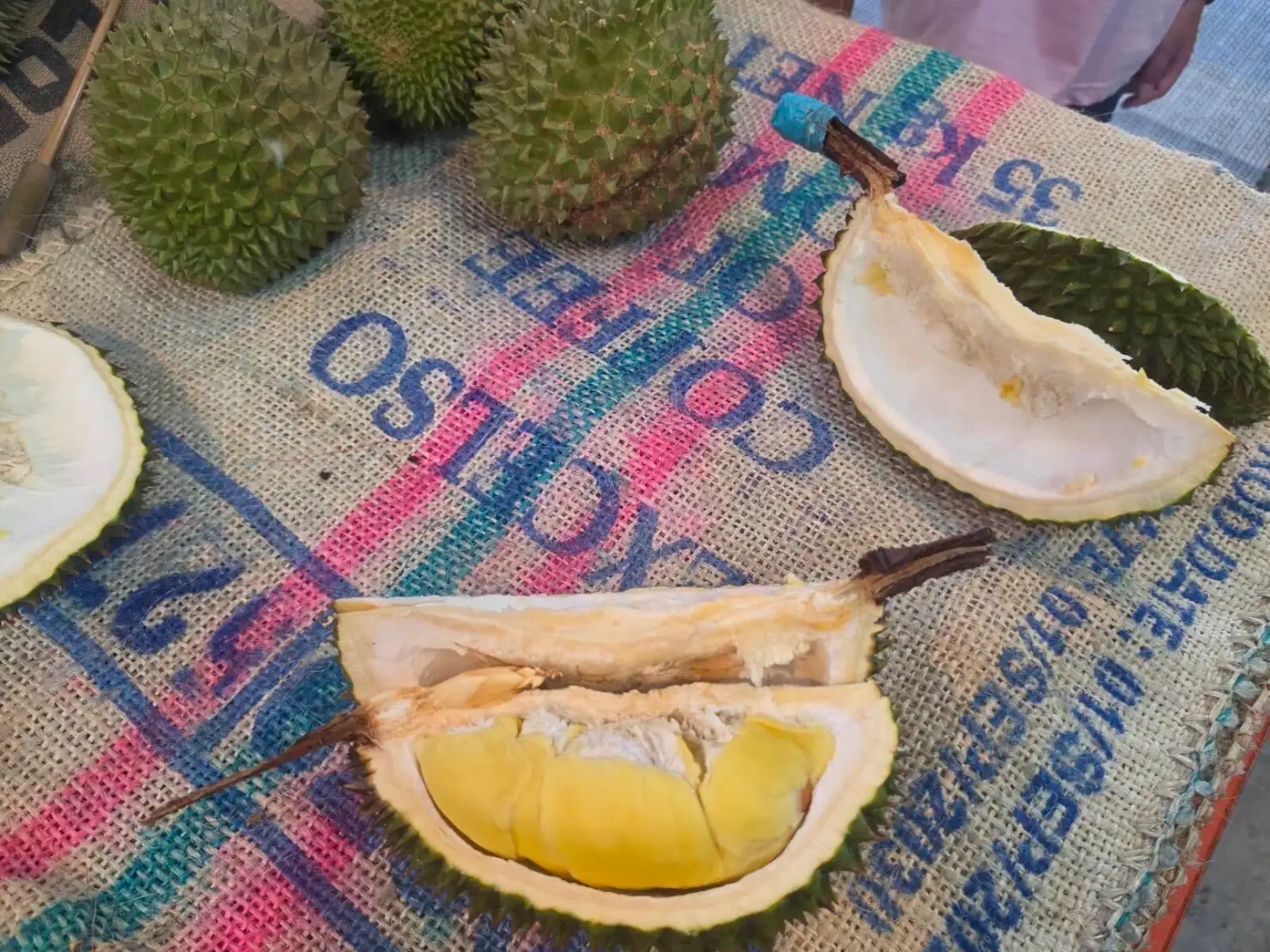 Taiwan-grown Musang King durians are challenging to cultivate, but their freshness and pesticide-free production have won over even some skeptics. (Source: Morris Wei)
The Fengshan branch's director, Wen-Li Lee (李文立), advised him to grow without pesticides. Wei was skeptical at first, but came to see it as the key to setting domestic durians apart. "Some customers prefer safe over cheap." A class-A durian from his farm sells for about US$ 47 to US$ 63.
Most of the farmers who followed his lead grew durians as a side business, and quite a few converted former betel nut plantations.
Wei's farm has attracted visitors from Japan and Southeast Asia. A Chinese national once offered him free land to grow durians in China instead, but he turned it down.
The advantage of the domestic durian is that it ripens on the tree. Imported durians are mostly harvested at 70–80% ripeness for the long sea voyage. Taiwan-grown durians are picked only after they drop fully ripe from the tree, and arrive on the customer's plate in three to five days.
However, supply is still limited, so domestic durians are unlikely to replace imports, a market worth about US$31 million a year, any time soon. Wei is working with the Taiwan Agricultural Research Institute to turn his orchard into Taiwan's durian germplasm repository, with more than 20 cultivars already planted.
Have you read?
- The young professor who discovered a dinosaur fossil in Taiwan
- Taiwanese Engineer Makes Programming a Tool for Social Progress
- Off the Grid: An Architect’s Journey Without Google Maps
Translated by Jack Chou
Uploaded by Ian Huang
Views

Subscribe to CWE Newsletter (every Thursday)
Stay abreast of what's happening in Taiwan with our weekly digest.
Keywords: