Trump-Xi Summit 2026: What They Agreed On, and What Was Said About Taiwan
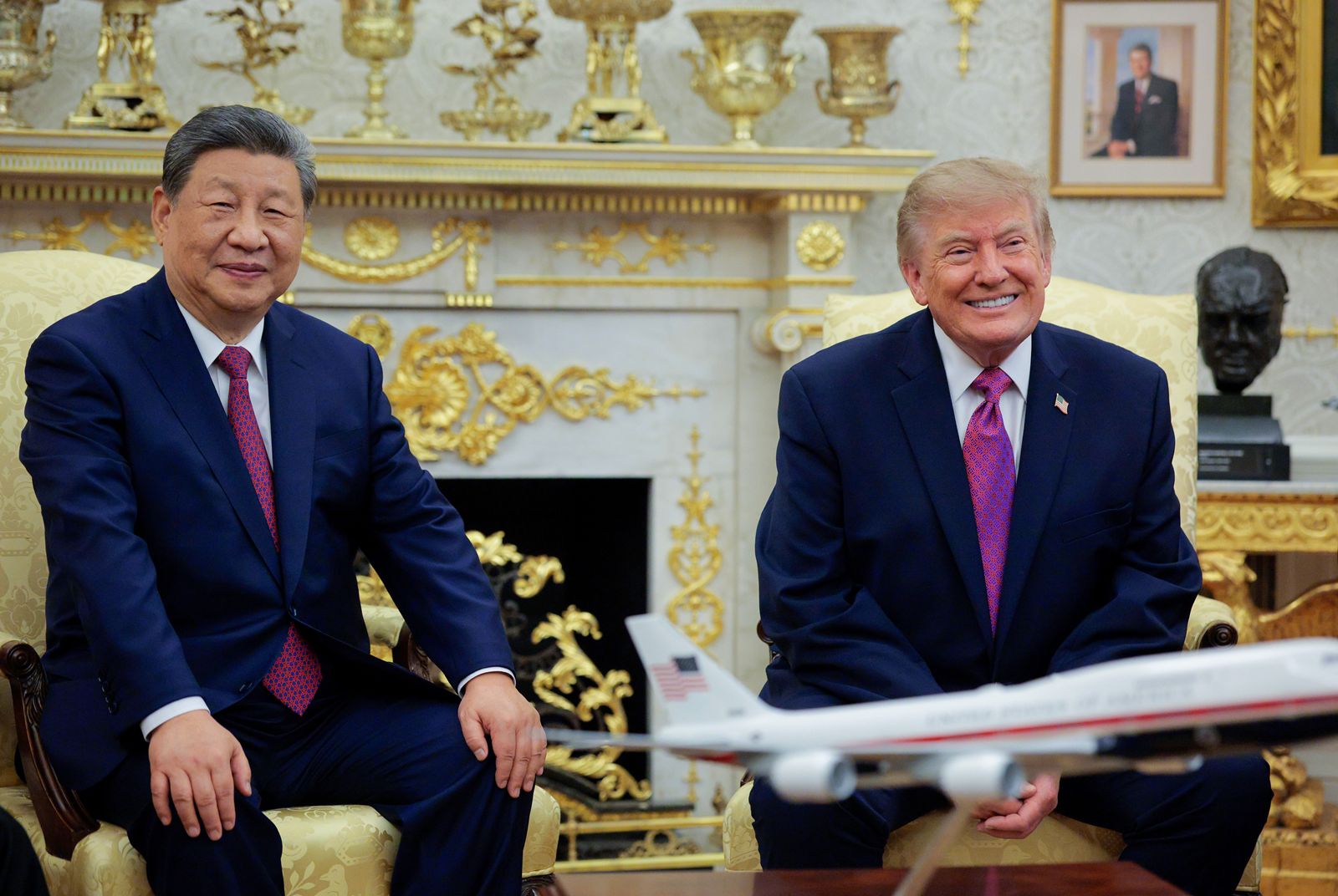
Source:Getty Images
Donald Trump and Xi Jinping ended their second summit of 2026 with agreements on trade, critical minerals and a new AI dialogue. Taiwan, however, appeared very differently in the official U.S. and Chinese accounts of the meeting. Here is what each side actually said.
Views
Trump-Xi Summit 2026: What They Agreed On, and What Was Said About Taiwan
By CommonWealth Magazineweb only
Chinese President Xi Jinping arrived in Washington for a three-day state visit from September 23 to 25, his first visit to the White House in more than a decade and the reciprocal visit following U.S. President Donald Trump’s trip to Beijing in May.
The summit produced several concrete agreements, but no broad settlement of the most difficult issues separating the world’s two largest economies.
The White House’s official post-summit fact sheet focused on trade, critical minerals, fentanyl, energy, artificial intelligence and global security. China’s official account covered many of the same areas, but also included an explicit request from Xi regarding Taiwan.
That difference is particularly important for Taiwan.
What did Trump and Xi agree on?
On trade, the United States and China agreed to move forward with mechanisms created during their May summit.
The White House said the two sides reached consensus on recommending more favorable tariff treatment for US$30 billion of non-sensitive goods in each direction. For U.S. exports, these include agricultural goods, seafood, timber, cosmetics and medical devices; Chinese exports include consumer goods such as small appliances and toys.
China also agreed to import at least 10 million metric tons of U.S. coal in both 2027 and 2028, while the two countries formally established a bilateral Board of Investment. Talks will continue over rare earths and other critical minerals.
Reuters reported that the existing U.S.-China trade truce was extended for another two months, leaving larger disputes over tariffs, technology controls, agricultural purchases and rare earth supplies unresolved.
The result was therefore more an extension of the existing framework than a comprehensive new trade agreement.
AI became a formal area of U.S.-China dialogue
Artificial intelligence was another notable area of agreement.
The White House said the two leaders agreed to establish a U.S.-China “Super Intelligence” Dialogue to discuss the risks and benefits of advanced AI technologies. The next exchange is expected by November 2026, and the two countries will also create a bilateral communication channel for AI-related incidents.
China’s official account similarly said the two countries should continue dialogue on AI risks and benefits and work together to prevent misuse.
Xi said: “AI must be kept under human control.”
The agreement does not resolve the much larger competition between Washington and Beijing over AI chips, computing infrastructure and technology restrictions. It does, however, create a formal channel for managing some of the risks surrounding that competition.
Taiwan appeared in China’s readout, but not the White House fact sheet
Taiwan produced the clearest difference between the two governments’ public accounts.
China’s Ministry of Foreign Affairs said Xi explicitly raised Taiwan during the meeting and called on Washington to change the way it frames Taiwan independence.
According to Beijing’s official English-language readout, Xi said he hoped the United States would: “adhere to the correct position of opposing ‘Taiwan independence,’ and handle the Taiwan question with caution.”
The wording matters because Washington has traditionally said that it “does not support” Taiwan independence, rather than saying that it “opposes” it.
Reuters reported that Beijing has sought precisely this stronger formulation from the Trump administration. As of the summit, there was no public indication that Washington had agreed to make that change.
The White House’s official September 25 fact sheet, meanwhile, does not mention Taiwan at all. It lists the summit’s outcomes on trade, fentanyl, energy, critical minerals, international security and AI, but contains no Taiwan-related agreement or policy announcement.
The two official accounts therefore establish that Xi raised Taiwan, but they do not establish that Trump accepted Beijing’s requested language.
Did U.S. policy on Taiwan change after the summit?
No change has been publicly announced by the U.S. government.
U.S. Ambassador to China David Perdue told CNBC after the summit that the Trump administration’s Taiwan policy had not changed, including its approach under the Taiwan Relations Act. Reuters reported the comments on September 26.
Trump himself had not publicly detailed his Taiwan discussions with Xi as of September 26, nor announced what he would do with a pending arms package for Taiwan.
Taiwan’s Ministry of Foreign Affairs responded directly to Beijing’s description of the summit, rejecting China’s characterization of Taiwan’s political status.
The ministry said: “Taiwan’s future can only be determined by the Taiwanese people through democratic means.”
Taipei also said it would continue working with the United States and other partners to maintain peace and stability across the Taiwan Strait.
The unresolved question: U.S. arms sales to Taiwan
One issue remains especially important after the summit.
Following his May meeting with Xi in Beijing, Trump said he was holding a proposed Taiwan arms package worth roughly US$14 billion in abeyance and described the package as a negotiating chip.
No decision on that package was announced during the Washington summit.
Taiwan Deputy Foreign Minister François Wu told reporters after the meeting that continued U.S. weapons sales and Taiwan’s ability to defend itself were also U.S. interests.
National Cheng Kung University political scientist Wang Hung-jen told Reuters that the summit outcome was less damaging to Taiwan than some observers had feared because Taiwan did not dominate the talks and there was no apparent agreement restricting U.S. arms sales. That was Wang’s assessment in an interview with Reuters, rather than an official government conclusion.
What should Taiwan watchers look at next?
The summit itself did not resolve the major disputes surrounding Taiwan.
More useful evidence may come from what happens next.
The first test is the pending U.S. arms package. Another is whether Washington continues using its established language that it “does not support” Taiwan independence, rather than adopting Beijing’s preferred formulation.
The next U.S.-China meetings will also matter. Trump and Xi are expected to meet again around the APEC and G20 summits later in 2026, giving Beijing further opportunities to raise Taiwan.
For now, the public record shows three different positions.
Beijing says Washington should oppose Taiwan independence. Taipei says Taiwan’s future can only be decided by its people. Washington’s official post-summit documents announce new U.S.-China cooperation in several areas but no change in Taiwan policy.
The next indication of whether the summit altered the strategic environment around Taiwan may therefore come not from another communiqué, but from U.S. policy decisions that follow it.
Have you read?
- Why Taiwan's AI Boom Pits Inflation Control Against Inequality
- Taiwan's "K-Shaped" Economy Leaves Young Workers Behind the AI Boom
- Taiwan Boasts Stellar GDP Figures, but Wealth Reaches Few
- Why Does Taiwan's Tax System Favor Stock Market Investors, Penalize Workers?
Uploaded by Ian Huang
Views

Subscribe to CWE Newsletter (every Thursday)
Stay abreast of what's happening in Taiwan with our weekly digest.
Keywords: