The Puma Shen Wave – Building a Brand in a 198-Day Taipei Mayoral Campaign
Source:Kai-Cheng Chuang
Puma Shen is trying to turn Taipei’s mayoral race into a 198-day branding campaign, softening his anti-China image and focusing on policy, social media and younger voters. As the gap with incumbent Chiang Wan-an narrows, turnout could decide not only the election, but also Chiang’s political future.
Views
The Puma Shen Wave – Building a Brand in a 198-Day Taipei Mayoral Campaign
By Chun-Chieh Yang, Hans Liuweb only
The “Yang Wave” in the Taipei mayoral race is the product of a brand campaign waged by the team of Democratic Progressive Party (DPP) lawmaker and Taipei City mayoral candidate Puma Shen (沈伯洋). The name refers to an ocean current, a pun on the third character “yang” in his Chinese name, which means ocean.
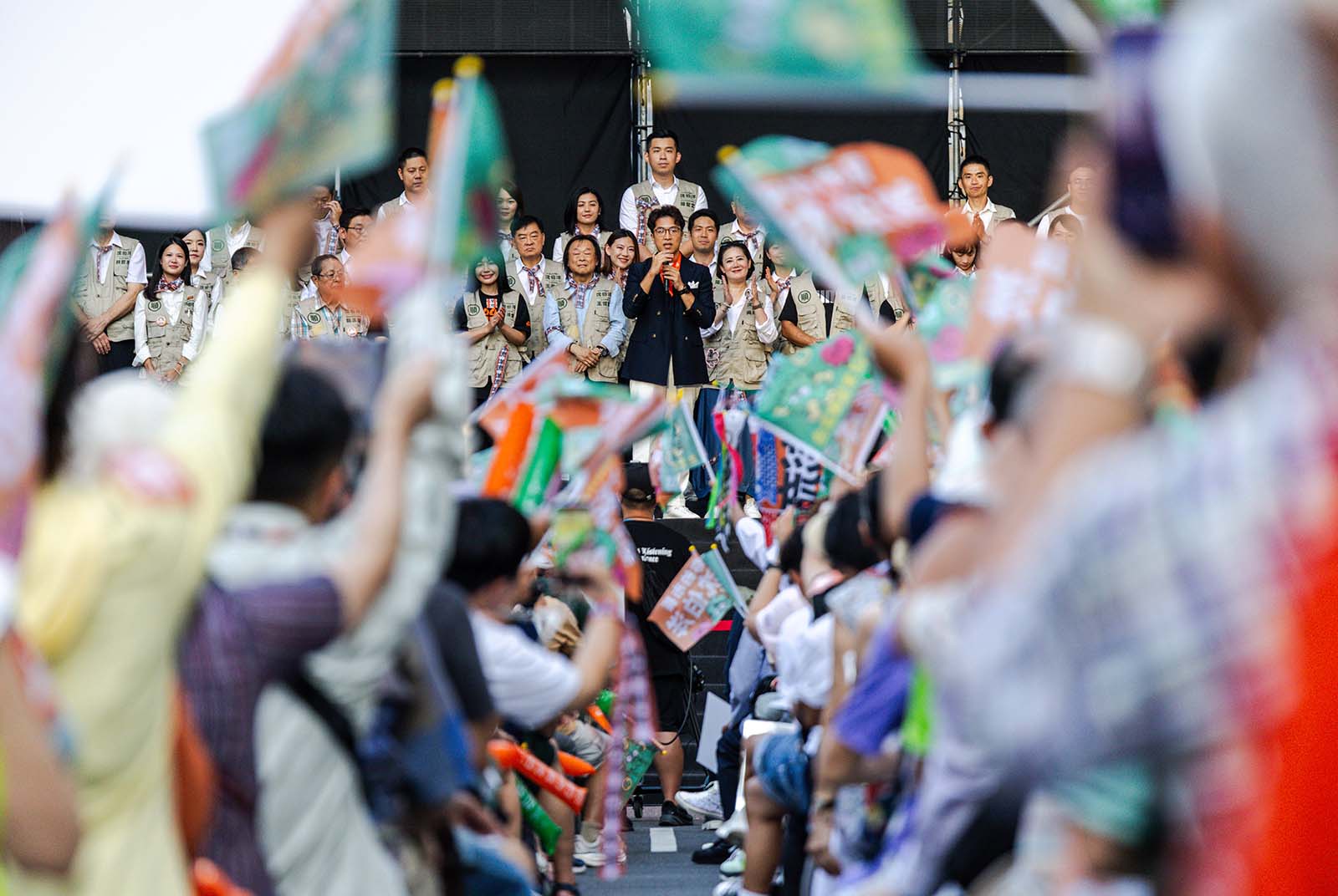
When Shen inaugurated his election headquarters in downtown Taipei on October 4, the nearby streets were packed. The event’s moderator announced that more than 120,000 people had come to see Shen in action.
Tsai Jung-hsiang (蔡榮祥), political science professor at National Chung Cheng University, observes that the audience included a broad spectrum of voters ranging from traditional DPP supporters, those who supported last year’s civic movement for the recall of several KMT lawmakers, young and prime-working-age adults, as well as swing voters who detest negative electioneering.
When Shen was nominated May 13, most voters remembered him only for the hardline “resist China, protect Taiwan” image he projected in the Legislative Yuan, Taiwan’s parliament, and during the mass recall campaign, including his passionate fight against parliamentary reform bills backed by the opposition parties.
“This is a marketing campaign that was launched with the nomination and will run 198 days. We need to run a campaign that differentiates the brand,” notes an official from the green camp.
The campaign team’s assessment is that Shen’s strongest support comes from voters aged 35 to 49, and that Taipei voters are tired of mudslinging. Therefore, Shen’s campaign focuses on downplaying the showdown between the green (DPP) and blue (KMT) camps, centering instead on policy. Consequently, Shen’s tough anti-China image has moved to the background as he has gradually come to be seen as what campaign planners describe as “the well-behaved grandson Taipei’s grandparents dote on.”
Social media have become a highly efficient tool for building momentum behind Shen’s campaign. In August, when his platform proposal to set up “sports stations,” where people could change clothes and drop off baggage, was criticized by incumbent Taipei Mayor Chiang Wan-an (蔣萬安), runners immediately rallied behind the idea. As campaign managers concluded that Taipei voters care about everyday life issues, they continued to propose hiking and sports policies. After the blue camp accused Shen of “empty talk,” he switched to presenting each platform item in a concise 90-second video-clip format.
Turnout among younger voters will be crucial for Shen’s prospects. In the 2022 Taipei mayoral election, turnout among voters 55 and older stood at more than 70 percent, whereas just over 50 percent of those under 34 cast their ballots. “If voter turnout tops 70 percent, the gap (between Chiang and Shen) will narrow,” says KMT Taipei City Councilor Chung Hsiao-ping (鍾小平).
In May Chiang had a 28-percentage-point lead over Shen, according to an opinion poll by TV station TVBS. Recently, however, internal polling from both camps shows that the gap has narrowed to about 10 points. Generally, the blue-leaning electorate in Taipei City is larger than the green-leaning share. The DPP’s Chen Shui-bian (陳水扁) won the mayoral election in 1994 because the field was split among three candidates. And in 2014 then independent candidate Ko Wen-je (柯文哲) prevailed over his KMT rival. The DPP has never won the capital when the blue camp was not split.
Chung points out that 15 percent of the 25 percent vote share that TPP-backed independent candidate Huang Shan-shan (黃珊珊) garnered in 2022 now belongs to swing voters. Whoever manages to win them over will have the edge.
Based on the current situation, he predicts that Chiang should take around 55 percent of the vote and Shen at least 45 percent. However, the higher the voter turnout, “the closer the call will get.”
Political scientist Chang Yuan-hsiang (張元祥), adjunct assistant professor at Soochow University, sees Shen’s candidacy in a different light. In Chang’s view, the ruling DPP regards Chiang as its presumed rival in the 2028 presidential race. Voters might judge Chiang’s presidential credentials based on how he compares against Shen. So even if Chiang wins reelection, as long as he is kept off the ballot in 2028, “the DPP would have won a substantial victory.”
Have you read?
- Exclusive: AmCham Veterans Recall the Fight to Preserve US-Taiwan Ties in 1979
- How a Retired Professor Rallied 400 Farmers to Grow Durians in Taiwan
- Trump-Xi Summit 2026: What They Agreed On, and What Was Said About Taiwan
Translated by Susanne Ganz
Uploaded by Ian Huang
Views

Subscribe to CWE Newsletter (every Thursday)
Stay abreast of what's happening in Taiwan with our weekly digest.
Keywords: