What Only Taiwan and Canada Can Sell Together

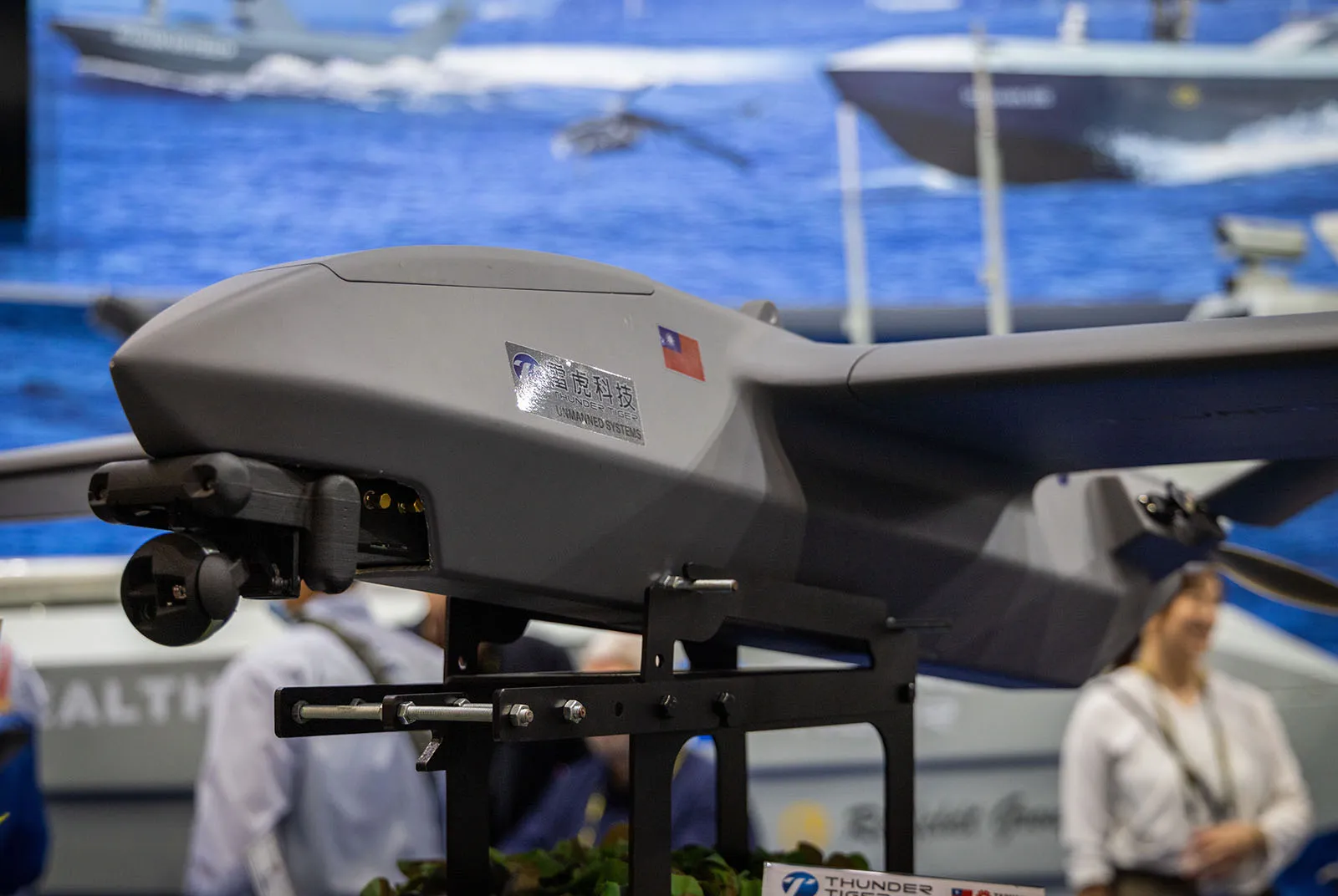
Source:Shutterstock
Taiwan and Canada often describe their economies as complementary. But beyond semiconductors, AI and energy, their real advantage may lie in something more specific: combining Taiwan’s hardware strengths with Canada’s access to both European and U.S. defence markets—and its abundant power for sovereign AI infrastructure.
Views
What Only Taiwan and Canada Can Sell Together
By Al Vigierweb only
When President Lai Ching-te met Judy Sgro’s cross-party delegation of Canadian MPs on October 14, he called the two economies complementary: Taiwan strong in semiconductors and IT, Canada in AI, energy and critical minerals.
He’s right. The trouble is that the word fits almost any partnership Taiwan has, from Japan to Arizona. The question that matters is narrower: what can a customer buy from a Taiwan-Canada team that it can’t get from Taiwan alone, or from Taiwan and someone else?
I’ve spent the past few months inside one of these partnerships. Caseway, the Vancouver company I run, is building counter-drone and maritime AI with MiTAC Advance Technology, a main member of Taiwan’s drone “national team.” I see two answers. Only one of them turns up in the speeches.
The one that doesn’t is market access. In February, Canada signed up for Security Action for Europe (SAFE), the EU’s €150 billion defence loan instrument. It was the first non-European country to do so. Canadian content can make up as much as 80 percent of a SAFE-funded procurement. Other non-European suppliers, American ones included, are held to 35 percent.
The first contract for a Canadian company came in June. Montreal’s Marconi Technologies will build tactical radios for Polish Cyber Command, working with a Polish partner and nearly 100 Canadian suppliers.
Poland should ring a bell in Taipei. It’s one of the biggest buyers of Taiwanese drones, and those exports went from 3,472 units in 2024 to 122,726 in 2025, then 191,373 in the first half of this year. Yet DSET, the government-funded think tank, reported in September that no stable foreign government demand sits behind the boom, and that European orders tied to the war in Ukraine won’t last. Flight software and core components still come from overseas.
Here’s where Canada stops being one partner among many. It has been part of the US National Technology and Industrial Base since the early 1990s, and its firms have counted as domestic sources for Pentagon Defense Production Act funding since 1992. Britain, also in that club, walked away from SAFE talks last November over the price. No other country holds both. An American partner can get a Taiwanese product into the Pentagon’s supply base, then run into Europe’s 35 percent ceiling, while a Polish partner has the reverse problem. Canada works both sides of the Atlantic.
For a Taiwanese drone or sensor maker, the more of a product’s value that originates in Canada, the more European tenders it can enter. The airframe can stay in Taiwan. But the engineering split, including where the AI and integration work happens, has to be settled before the first pilot. Moving it later is slow and expensive.
Taiwanese readers have a fair objection. In January, two Liberal MPs cut short a Taiwan visit on Ottawa’s advice just before Prime Minister Mark Carney flew to Beijing. Ottawa’s China policy will keep shifting. The advantages I’m describing sit in signed agreements with Brussels and Washington, which is sturdier ground. And in October, Sgro’s delegation came despite a public warning from China’s ambassador.
The second answer is electricity, and here the speeches got it right. Taiwan assembled roughly 90 percent of the world’s AI servers last year but struggles to power large AI data centres at home. For nearly three years Taipower refused new grid connections for data centres of 5 megawatts or more in Taoyuan and the north. Official projections have the nighttime reserve margin staying under 15 percent through 2029 and dipping to 7.1 percent. The ban only started easing in July, for designated sites.
Canada is the world’s third-largest producer of hydroelectricity, which supplies about 60 percent of its power. In January, Ottawa invited proposals for sovereign AI data centres larger than 100 megawatts, twenty times Taipower’s northern limit.
Carney has said Canada is working with like-minded democracies on AI so it won’t be forced to choose between “hegemons and hyperscalers.” His AI minister, Evan Solomon, wants those projects built with Canadian partners and supply chains.
That’s a product neither side can sell alone: Taiwanese racks running on Canadian power, owned and operated in Canada with software that keeps the data under Canadian law. The sovereignty Ottawa wants is hard to buy from an American cloud provider, and the racks were coming from Taiwan either way.
None of this turns into revenue by itself. The partner whose country opens the door should own the customer relationship in that market. The Canadian side leads in Warsaw and Ottawa, and the Taiwanese partner holds Taipei and the rest of Asia. Each keeps its own intellectual property and the revenue is shared, which is close to the joint development and licensing DSET recommends.
Pilots need rethinking too. A demo proves the product works. A contracting officer in Warsaw also needs the content calculation and the export approvals before she can sign.
Lai wants the trade cooperation framework agreement signed soon. Nobody has to wait for it. Marconi already has its SAFE contract, and Canada’s seat in the American industrial base is more than 30 years old.
So here’s a test for the next Taiwan-Canada announcement. Ask whether the customer could have bought the same thing from either country alone. If it could, it’s a photo opportunity.
(This piece reflects the author's opinion, and does not represent the opinion of CommonWealth Magazine.)
CommonWealth Magazine welcomes op-ed submissions. Please send your article proposals to [email protected]
About the author:
Al Vigier is the founder and CEO of Caseway, a sovereign Canadian decision-support software company, and a Canadian Army veteran.
Have you read?
- Taiwan’s Resilience Procurement Is Measuring the Wrong Output
- Why Latin America Is Becoming a More Complicated Economic Bet for China
- Promise or Proof? The KMT Chair’s Washington Visit and the Question of Political Trust
Uploaded by Ian Huang
Views

Subscribe to CWE Newsletter (every Thursday)
Stay abreast of what's happening in Taiwan with our weekly digest.
Keywords: