From Nanjing to Shenzhen: Taiwan’s Place in China-Hosted APEC
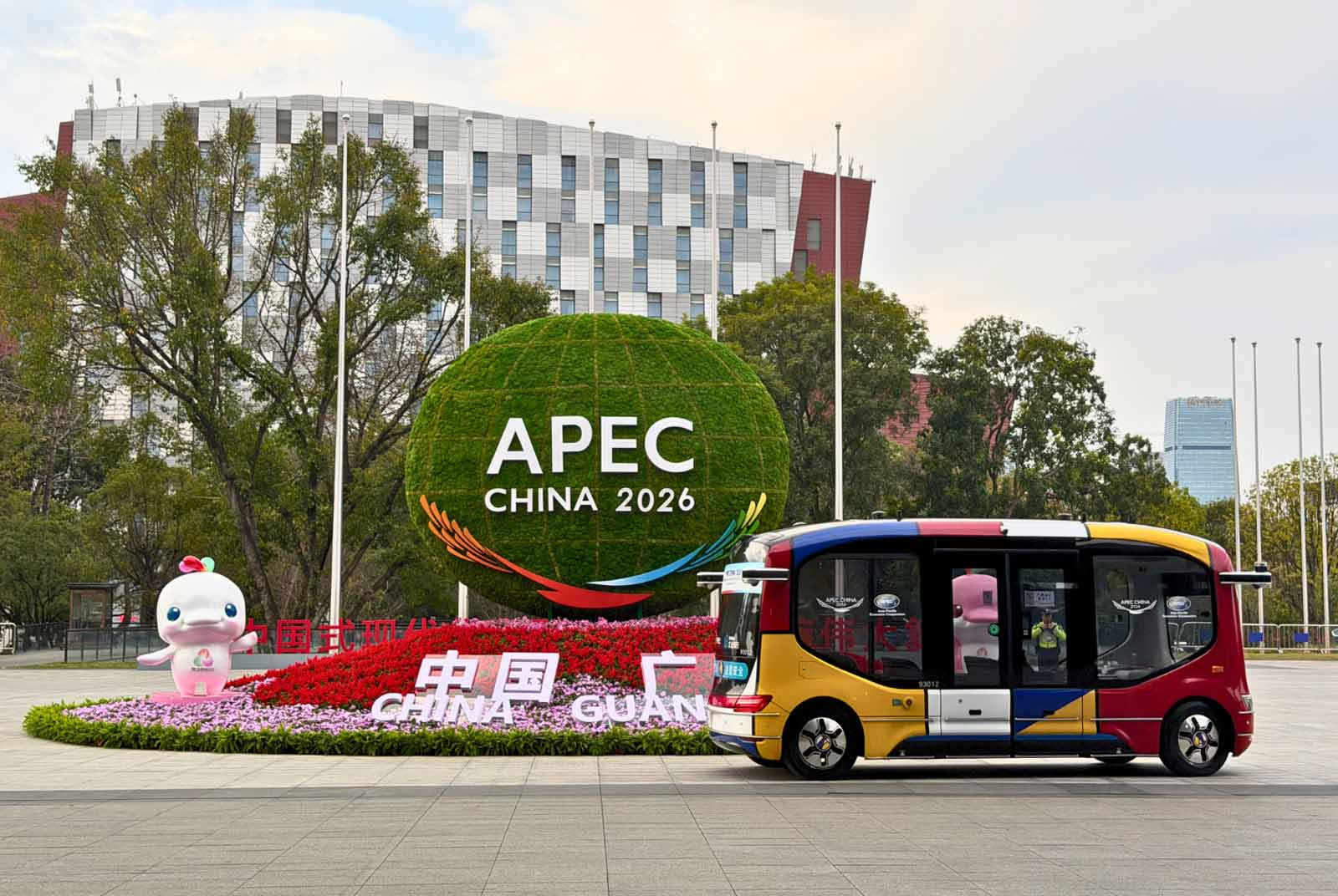
Source:APEC
As China hosts APEC in 2026, Taiwan’s participation is testing the limits of Beijing’s influence. From Nanjing to the upcoming Shenzhen summit, the key question is not whether Taiwan can take part, but how far China can reshape the terms of its participation.
Views
From Nanjing to Shenzhen: Taiwan’s Place in China-Hosted APEC
By Anna Dorozhkinaweb only
On September 21, Taiwan Labor Minister Hung Sun-han attended an APEC ministerial meeting in Nanjing, becoming the first head of a ministry in President Lai Ching-te’s administration to visit China. He represented Chinese Taipei, one of APEC’s 21 member economies, and sat behind a nameplate bearing that designation. Taiwan’s Ministry of Labor said the delegation’s participation proceeded smoothly and that the Chinese side made the relevant arrangements in accordance with APEC practices and rules. The meeting therefore provided a partial answer to the question surrounding China’s 2026 host year: how far can Beijing use its role to shape the established terms of Taiwan’s participation?
For Taipei, Hung’s attendance was consistent with Chinese Taipei’s equal standing in APEC, while Beijing maintains that Taiwan’s participation must be handled in accordance with the one-China principle. Nanjing did not resolve this contradiction, but Chinese Taipei took part in the ministerial meeting under the established APEC arrangements.
For decades, Beijing has challenged Taiwan’s efforts to maintain an independent presence in international organizations. In APEC, however, Chinese Taipei is already a member economy. This shifts the dispute from whether Taiwan can participate to how much China can shape the terms of that participation — through APEC procedures, wording and rules.
Within APEC, decisions are reached by consensus, on the basis of non-binding commitments, open dialogue and equal respect for the views of all participants. No member can impose a new decision alone, but any member can withhold agreement. Equal standing, therefore, does not eliminate opportunities for pressure.
A prime example is APEC’s first dedicated healthcare sub-fund, established this year at the initiative of Chinese Taipei. Taiwan contributed $1.5 million, with the funds earmarked for projects covering primary care, digital health and telemedicine, aging, and chronic disease. According to Jonathan Sun, director-general of the Ministry of Foreign Affairs’ Department of International Organizations, it is the first large-scale initiative Taiwan has launched within APEC in a decade. During the review process, China offered “advice and suggestions,” some of which Sun described as “not that reasonable.” In total, approval took 10 months, which Sun said was considerably longer than the average approval period for initiatives proposed by other APEC members.
Although the Taiwanese project ultimately received approval, the episode shows how Beijing can shape the process when a new initiative requires every member’s consent. In Nanjing, Chinese Taipei took part under arrangements that APEC members had already agreed.
APEC’s history suggests that the most sensitive issue is not Taiwan’s participation itself, but its representation at APEC Economic Leaders’ Meetings. In 2001, when China hosted the forum in Shanghai, Taipei took part at ministerial level but was not represented at the subsequent leaders’ meeting following a dispute over the nomination of former Vice President Li Yuan-tsu. Beijing argued that the proposed nominee did not conform to the relevant APEC agreements and established practice. Taipei, in turn, said the Chinese side had refused to issue the invitation. The outcome was different in 2014, when China hosted APEC again: former Vice President Vincent Siew participated in the leaders’ meeting as the representative of Chinese Taipei.
In 2026, despite strained relations between Beijing and Taipei, China has largely adhered to established APEC practice while continuing to frame Taiwan’s role through the one-China principle. In May, Taiwan’s Ministry of Foreign Affairs noted that the designation “Chinese Taipei” and the delegation’s status were consistent with equal participation. That same month, a Taiwanese delegation led by trade negotiator Yang Jen-ni attended a ministerial meeting in Suzhou. In August, representatives from all 21 economies gathered for the SOM3 series of meetings in Dalian.
In Nanjing, China controlled the logistical and protocol arrangements but did not change Chinese Taipei’s designation or level of representation. The ministers also issued a joint Nanjing Statement.
A more consequential moment will come in November during APEC Leaders’ Week in Shenzhen — precisely the level of representation that has historically been most sensitive for relations between Beijing and Taipei. In 2025, China reaffirmed equal participation at Leaders’ Week under APEC’s hosting guidelines and conventions.
Taipei’s chosen representative will still need an invitation from Beijing. If China attempts to impose additional political conditions, Taiwan can ask other APEC economies to uphold the terms of participation they have collectively endorsed. According to Taiwan’s Foreign Ministry, Beijing also gave written assurances in 2024 concerning the safety of participants from all member economies and their entry into and exit from China.
For all the influence China can exert through APEC procedures, its own proposals still need Taiwan’s agreement before the forum can adopt them. Taiwan’s Foreign Ministry has already identified consensus as a means of resisting pressure on participation. In talks with Beijing, Taipei could therefore make clear that restrictions on its representation would put agreement on China’s own proposals at risk.
(This piece reflects the author's opinion, and does not represent the opinion of CommonWealth Magazine.)
CommonWealth Magazine welcomes op-ed submissions. Please send your article proposals to [email protected]
About the author:

Anna Dorozhkina is a specialist in international economic relations with more than 15 years of experience in economic cooperation with Taiwan.
Have you read?
- Taiwan's Next Test in Tech Sovereignty Comes After the Sale
- Taiwan’s Resilience Procurement Is Measuring the Wrong Output
- China Treats AI as Comprehensive Strategy and That Makes a Big Difference
- Taiwan's Drone Problem Is Replenishment, Not Production
Uploaded by Ian Huang
Views

Subscribe to CWE Newsletter (every Thursday)
Stay abreast of what's happening in Taiwan with our weekly digest.
Keywords: