From Sugar to Semiconductors: The Price Taiwan Keeps Getting Wrong

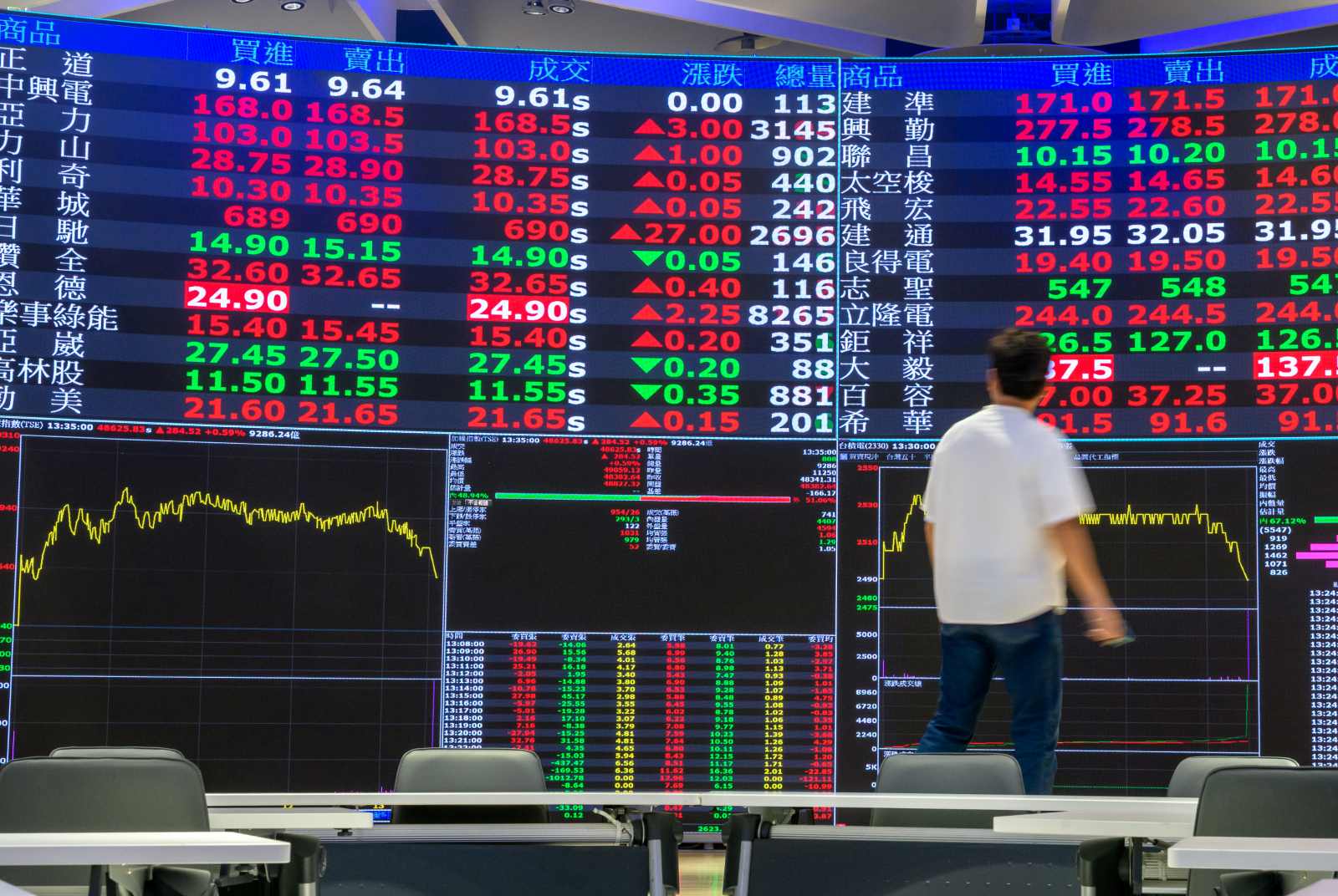
Source:Shutterstock
Taiwan’s exchange-rate policy helped build its export economy, but economist Chang-Tai Hsieh argues it has also created a web of distortions—from low wages and soaring housing prices to Taipower losses and life insurers’ currency risks. Drawing a parallel with Taiwan’s economic crisis of the 1950s, he warns that fixing the wrong price only becomes harder as more institutions come to depend on it.
Views
From Sugar to Semiconductors: The Price Taiwan Keeps Getting Wrong
By Chang-tai Hsiehweb only
Taiwan economist Wu Tsong-Min (吳聰敏)’s new book, Institutions and Economic Growth in Taiwan, covers four hundred years of Taiwan’s economic history. His analysis of 1945 to 1960 is, for me, the most illuminating part of the book, and the most relevant for Taiwan today. Most Taiwanese associate this period with 2/28 and the White Terror. Wu makes clear it was also an economic disaster.
The KMT arrived in Taiwan in 1945 with one goal in mind: to extract resources from Taiwan. It did this by taxing Taiwan’s main exports — sugar, tea, and rice — through an overvalued exchange rate. Over this period, Taiwanese exporters received about a third of the world price for their products, and the gap was remitted to China to finance the civil war.
What is most illuminating in Wu’s account is what followed from the export tax, even after 1949. The initial distortion generated others, one leading to the next. Ultimately, this accumulation of distortions led to the economic disaster that followed.
Take the Taiwan Sugar Corporation. The exchange rate controls meant that the price it received for sugar was substantially less than the cost of producing it. Put simply, as is the case with Taipower today, it incurred enormous losses.
The government’s response was not to remove the exchange rate controls. Instead, it tried to “help” TSC by imposing another distortion: forcing sugarcane farmers to sell to TSC at prices about half the market price. Farmers responded by reducing planting, and sugarcane harvests fell to levels not seen since the early 1900s.
When this didn’t work, TSC covered its deficits through loans from the Bank of Taiwan, the predecessor of the Central Bank of the Republic of China. The Bank financed its lending by issuing currency. Inflation accelerated, which further widened the gap between the fixed official exchange rate and the market rate.
To “save” TSC, the government introduced yet another distortion: it banned sugar imports and awarded TSC a domestic monopoly. This solved TSC’s deficits, but the costs were entirely borne by Taiwanese consumers. More importantly, the accumulation of distortions, not just in sugar but also in tea and rice, meant that production stagnated and exports and manufacturing could never take off.
The correction, when it came in 1961, dissolved the foreign exchange shortage almost immediately. The export miracle followed within the decade. The distortion had been manufacturing the crisis it was supposed to solve.
Taiwan’s economy today is nothing like the disaster of the 1950s. But in one critical respect, it is repeating the same tragedy. Then, the original sin was an overvalued exchange rate used to tax exports. Today, it is an undervalued exchange rate used to subsidize them.
For at least the last two decades, the CBC has kept the NT dollar undervalued. The immediate beneficiaries are exporters. The invisible losers are Taiwanese households, whose real wages and purchasing power are suppressed.
But the exchange rate was not the only distortion. It never is.
The first distortion is to compensate for low wages by holding down the price of essential commodities. Taipower is an example. With wages low and import prices high, the government cannot afford to let electricity prices rise. So Taipower sells below cost and can only survive through large subsidies from the government. A Taipower that only survives through subsidies cannot build the power infrastructure that AI and semiconductor expansion demand.
But this is not the only distortion. An undervalued exchange rate requires interest rates to also be low. Without low interest rates, the currency would appreciate and the undervaluation would correct itself.
Low interest rates have two consequences. First, they have been a main driver of housing prices. Taiwan’s house-to-income ratio is now among the highest in the world. Second, they also mean that domestic assets yield too little for life insurance companies to meet their obligations.
Taiwan’s excess savings — the gap between what the country saves and what it invests domestically — have exceeded NT$3 trillion annually for six consecutive years. That money had nowhere to go domestically. It flowed into life insurance products, and life insurers invested it abroad. Taiwan’s life insurance companies accumulated over $700 billion in foreign currency assets — almost the same as GDP.
The problem is that their liabilities are in NT dollars — they owe policyholders in NT dollars — but their assets are in US dollars. As long as the NT dollar stays weak, the dollar assets are worth enough to cover the NT dollar obligations. If the NT dollar appreciates, the dollar assets shrink in NT dollar terms and the gap between assets and liabilities widens.
This is why the NT dollar surge in 2025 was so consequential. Mark-to-market losses threatened the solvency of the sector. The FSC’s response was to suspend mark-to-market accounting for foreign currency assets. The effect is to make Taiwan’s financial system increasingly dependent on the undervaluation continuing — just as the Bank of Taiwan’s balance sheet became dependent on TSC’s borrowing in 1947.
The telltale signs are visible in the macro accounts. Then: chronic trade deficits and negative foreign exchange reserves. Now: a current account surplus of nearly 20% of GDP and foreign exchange reserves among the largest in the world.
By 1954, when American advisers arrived and identified the exchange rate as the root problem, the entire architecture of the economy had been built around sustaining it. The Bank of Taiwan’s balance sheet depended on state enterprise lending. TSC’s operating model depended on the domestic monopoly. The Trade Bureau, which enforced the import monopoly, had become a major source of fiscal revenue. Reforming the exchange rate meant dismantling all of it simultaneously.
The same is true today. Correcting the exchange rate would simultaneously reduce CBC remittances — which average 7% of the government’s revenue — force Taipower prices up, deflate the housing market, and expose life insurance losses. No single actor has an incentive to move first.
When The Economist ran a cover story last November calling it the “Formosan flu” — identifying the undervalued exchange rate as a hidden risk — Taiwan’s Minister of Economic Affairs was unmoved. In a meeting, he said that those who talk about the Taiwan disease themselves have a disease.
Wu documented the same pattern in 1954. The Americans pushed. Taiwanese officials responded not by simplifying the system but by making it more complex — sixteen different exchange rates by 1955. A unified rate was not achieved until 1961.
The same logic is at work today. In response to US pressure over Taiwan’s large trade surpluses, Taiwan is offering to move its factories to America. The $500 billion investment pledge and the plan to export Hsinchu science parks abroad may solve Taiwan’s political problem with Washington. But they add yet another distortion.
The wrong price remains. So does everything built around it.
About the author

Chang-Tai Hsieh is the Phyllis and Irwin Winkelried Professor of Economics and PCL Faculty Scholar, University of Chicago Booth School of Business.
Have you read?
- Why W. John Kao Went to Hawaii for a Job Interview
- The AI Boom’s Hidden Victim: Taiwan’s Fragile Insurance Sector
- America’s Threat to Taiwan
Uploaded by Ian Huang
Views

Subscribe to CWE Newsletter (every Thursday)
Stay abreast of what's happening in Taiwan with our weekly digest.
Keywords: