How Taiwan’s Stock Market Got Too Big for Its Central Bank
Source:Chien-Ying Chiu
Taiwan’s stock market has grown into one of the world’s largest, but the surge in foreign ownership is creating a new challenge: capital flows may now be too large for the Central Bank to manage. A record October sell-off exposed how quickly foreign investors can move money—and how vulnerable the Taiwan dollar could become when that tide reverses.
Views
How Taiwan’s Stock Market Got Too Big for Its Central Bank
By Eri Hsieh, Lisa Linweb only
On Oct. 15th, foreign investors offloaded more than NT$302.5 billion in the Taiwan stock market (TAIEX), a record-shattering sell-off. More shockingly still, foreign investors moved the money out of Taiwan.
On the day of the sell-off, combined trading volume across the Taipei foreign exchanges totaled over $9.1 billion—an all-time single-day record.
“Nobody expected volume to explode like that in a single day,” says a senior currency trader. Even though the Central Bank intervened, the Taiwan dollar weakened by NT$0.192 against the U.S. dollar that day. In just October alone, the Taiwan dollar has depreciated 1.96%, making it the weakest among the Asian currencies.
All this goes to show that the Taiwan stock market has grown far larger than it once was.
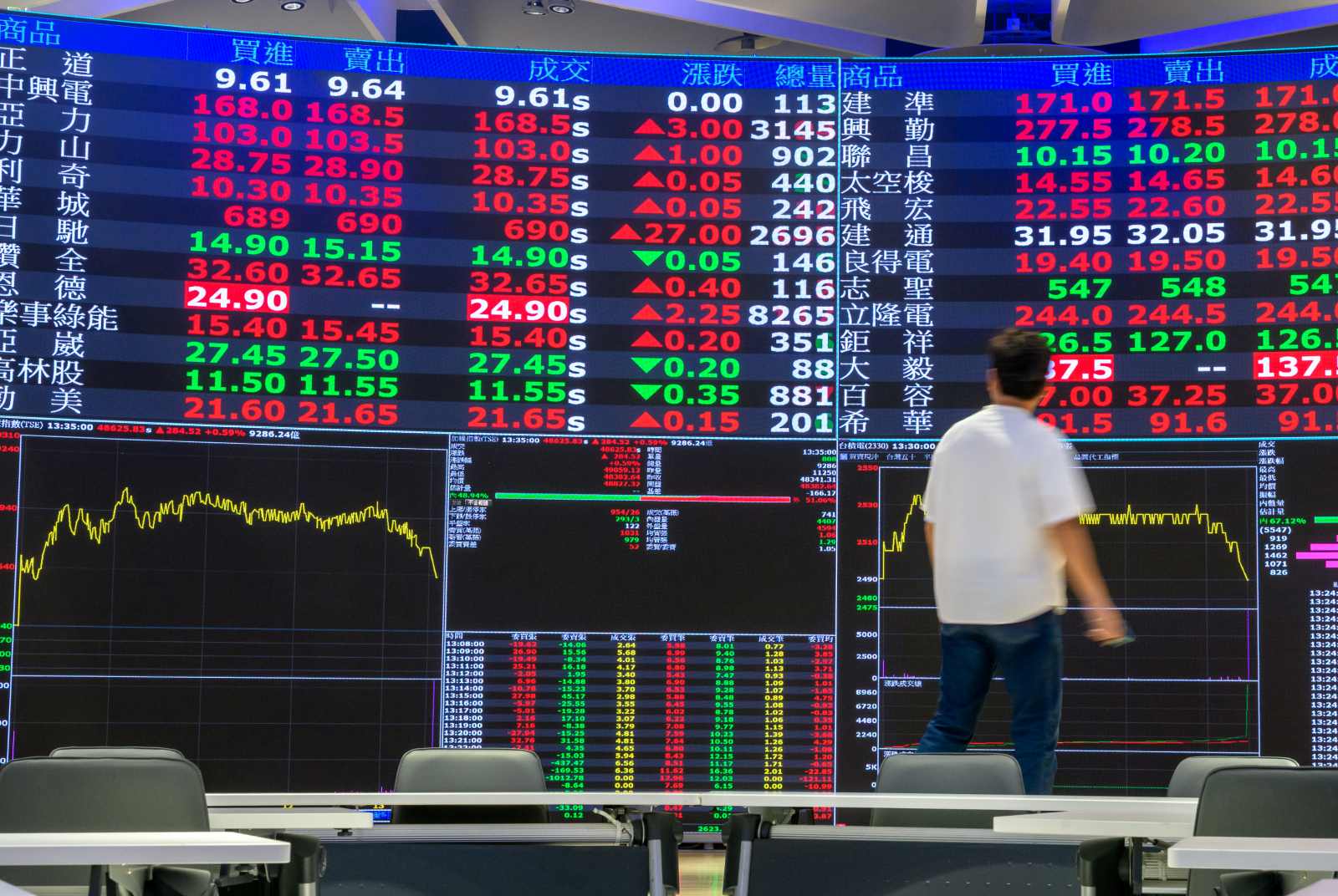
Over 2026, TAIEX grew from under 30,000 to a whopping 50,000 points, overtaking France, Britain, Korea, Canada, and India to become the world’s fourth-largest stock market. Foreign investors held nearly half of the market’s capitalization, with a total value of nearly NT$80 trillion.
“Two years ago, when foreign investors moved 1% of their holdings, it amounted to NT$ 250 billion. Now, it’s NT$ 800 billion,” says a senior manager at a large financial firm. TAIEX also ranks the highest in terms of weight-by-country on the MSCI Emerging Markets Index—which means that whenever emerging-market funds face redemptions, Taiwan is hit first and hardest.
Two major reasons led to the exit of foreign capital. One, many funds close their fiscal year at the end of October and needed to lock in profits. Two, while the AI boom is driving up prices in the stock market, bond prices are falling. With equities now too heavy in their portfolios, foreign investors had to sell stocks and buy U.S. Treasuries.
This doesn’t mean that investors have lost confidence in AI. According to Jeff Chang (張錫), former chairman of Cathay Securities Investment Trust, “Foreign investors’ holdings grew by more than NT$ 20 trillion this year, so selling NT$ 2 trillion is nothing.”
Many in financial circles believe the Central Bank is comfortable with a weaker Taiwan dollar. But foreign money flows both ways. When foreign investors start buying Taiwanese stocks again, the Taiwan dollar will rapidly rebound in value.
The problem is, foreign investors hold the equivalent of $1.9 trillion in Taiwanese stocks and bonds, which is 3.21 times Taiwan’s $600 billion in foreign exchange reserves. A manager at a large financial firm warns that under extreme circumstances, even if the Central Bank were to exhaust its foreign exchange reserves to stabilize the currency, “it is no longer a question of willingness, but of capability.”
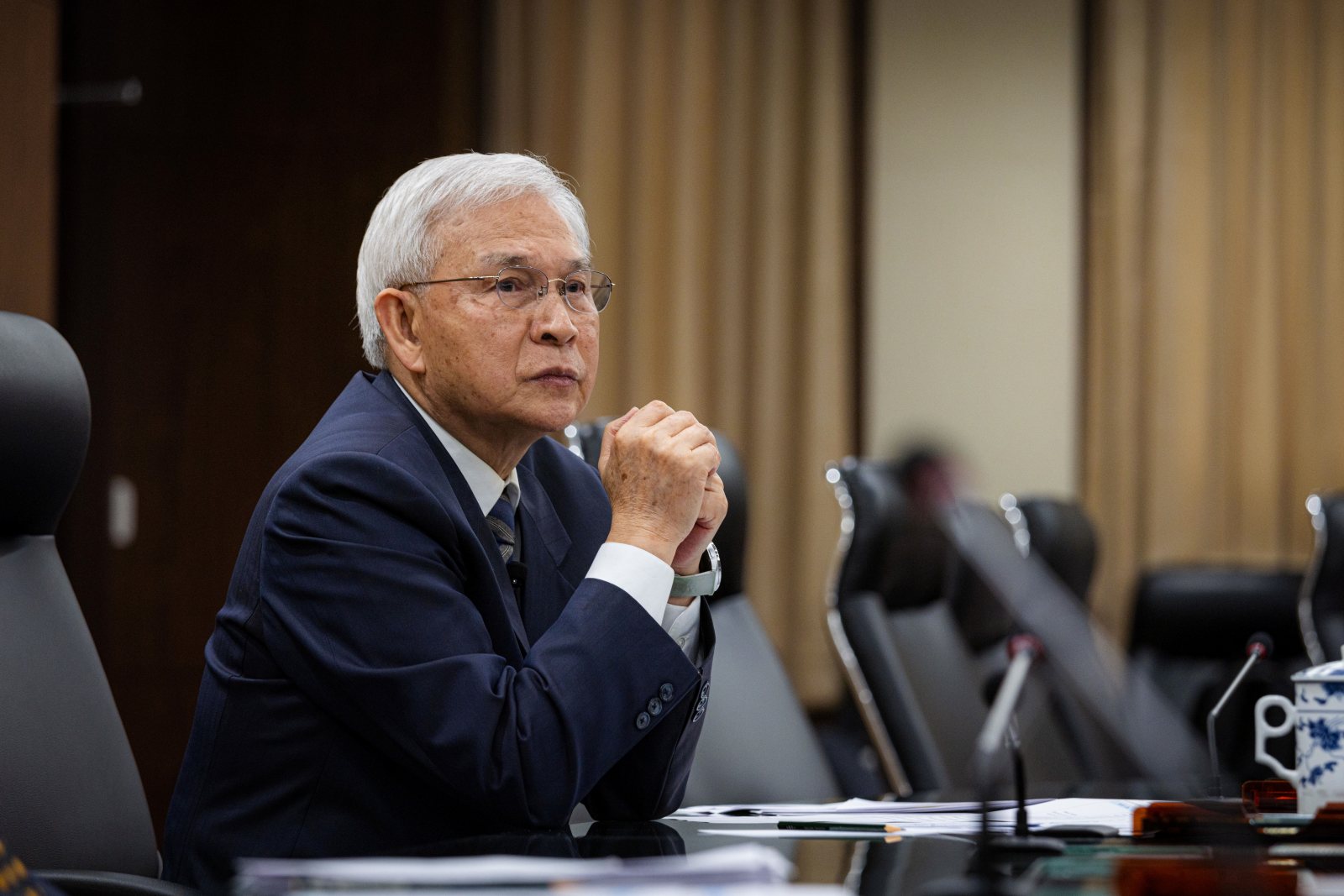 Foreign investors’ holdings of Taiwanese stocks and bonds have surged to more than three times Taiwan’s foreign exchange reserves, posing a new challenge for the Central Bank when it intervenes in the currency market. (Photo: Chien-Tong Wang)
Taiwan’s foreign exchange rate has long been under scrutiny by the U.S. Treasury. The Americans use three criteria to determine if a trading partner is a currency manipulator. Taiwan has met two of them for years; if it is found to be engaging in “persistent, one-sided intervention in the foreign exchange market,” it may face trade sanctions.
“Out of the world’s ten largest stock markets, only China, India, and Taiwan still manage their exchange rates,” says a foreign exchange expert at a private bank.
Because the Central Bank keeps Taiwan’s foreign exchange rate on a tight leash, companies and investors have gotten used to the invisible safety net and do not hedge seriously.
Take the life insurance industry. The new accounting rules allow foreign exchange gains and losses to be amortized over a number of years. One life insurer has parked over NT$30 billion in unamortized foreign exchange gains under other liabilities in the first half of this year. If the Taiwan dollar were to rise in value, these gains would become massive paper losses.
In 2025, Taiwan and the U.S. reached an agreement to disclose the Central Bank’s foreign exchange interventions on a quarterly basis. An economist opines there’s a good chance that Taiwan will move to monthly disclosure in the near future, like Korea, leaving the Central Bank less and less room to intervene.
The question Taiwanese enterprises and investors must ask themselves is this: are they ready to work with the Taiwan dollar once it’s deprived of its safety net?
Have you read?
- Overleveraged: Is Taiwan's Soaring Stock Market a National Security Risk?
- Day-trading in College: Portent of a Brewing Financial and National Security Crisis?
- The AI Boom’s Hidden Victim: Taiwan’s Fragile Insurance Sector
Translated by Jack Chou
Uploaded by Ian Huang
Views

Subscribe to CWE Newsletter (every Thursday)
Stay abreast of what's happening in Taiwan with our weekly digest.
Keywords: