
Can Foreigners Buy Property in Taiwan? Rules, Taxes and Restrictions Explained
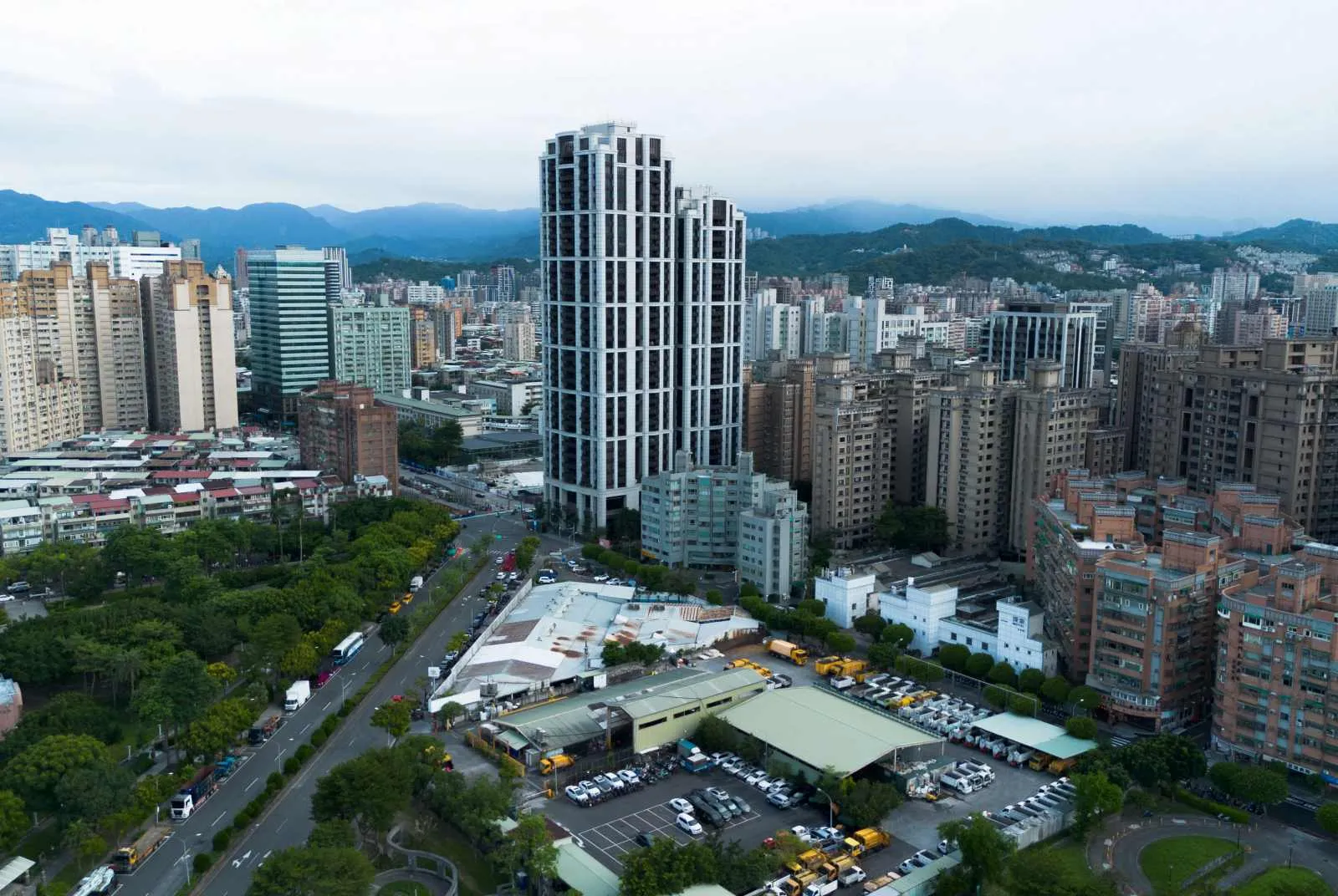
Source:Kai-Cheng Chuang
Foreigners can buy homes in Taiwan, but eligibility depends on nationality, reciprocal property rights, land-use restrictions and government approval. Here's what international buyers need to know before purchasing an apartment or house in Taiwan.
Views
Can Foreigners Buy Property in Taiwan? Rules, Taxes and Restrictions Explained
By CommonWealth Magazineweb only
Can foreigners buy property in Taiwan? Yes, but not everyone qualifies. Taiwan allows eligible foreign nationals to purchase residential property, including apartments and houses, provided their home countries grant Taiwanese citizens equivalent property rights.
This requirement, known as the principle of reciprocity, is the foundation of Taiwan's foreign property ownership rules.
Foreign buyers must also comply with restrictions on certain types of land, permitted property uses and local government approval procedures.
Buying property does not automatically grant the owner residency, permanent residency or Taiwanese citizenship.
For foreign professionals, international graduates and overseas investors considering a home in Taiwan, understanding these rules is essential before signing a purchase agreement.
Who can buy property in Taiwan?
Under Article 18 of Taiwan's Land Act, foreign nationals may acquire land rights in Taiwan only when Taiwanese nationals are entitled to equivalent rights under the laws of the buyer's home country or an applicable treaty.
This means eligibility is determined primarily by nationality and the relevant legal arrangements, rather than simply by whether someone lives or works in Taiwan.
Taiwan's Ministry of the Interior maintains a list of countries and jurisdictions recognized as providing reciprocal property rights.
However, reciprocity can be subject to conditions.
For example, the rules may vary between states or other jurisdictions within the same country. Buyers should not assume that every citizen of a particular country enjoys identical rights.
If a nationality is not included in the published reciprocity list, the applicant may be required to provide authenticated evidence demonstrating that Taiwanese nationals enjoy equivalent property rights in the buyer's home country.
The Ministry of the Interior's official guidance explains the documentation requirements.
The key question is not simply whether foreigners can buy property in Taiwan, but whether a particular foreign national is legally eligible to acquire the specific property.
Do foreigners need an ARC or permanent residency to buy a house?
An Alien Resident Certificate (ARC) or Alien Permanent Resident Certificate (APRC) is not, by itself, the fundamental legal requirement for foreign property ownership.
The Land Act focuses on nationality, reciprocity, land classification, permitted use and government approval.
Consequently, foreign nationals should not assume that they must first obtain permanent residency before becoming eligible to purchase property.
Conversely, holding an ARC or APRC does not override restrictions applicable to a buyer's nationality.
Residence status can nevertheless affect practical matters, including identity verification, banking arrangements, mortgage applications and tax treatment.
A foreign buyer living outside Taiwan may face additional documentation or financing requirements.
Most importantly, purchasing a home does not provide an independent immigration status. Owners must still qualify separately for any visa or residence permit.
Which types of property can foreigners buy in Taiwan?
Eligible foreign nationals may acquire residential property and certain other categories of real estate.
Article 19 of the Land Act permits qualifying acquisitions for specified purposes, including residences, business premises, offices, shops, factories and certain public-interest uses.
Other permitted categories include hospitals, churches, schools for foreign children, diplomatic facilities and cemeteries.
Certain investments connected to major infrastructure, economic development, agriculture or animal husbandry require approval from the relevant central government authority.
But not all land is available to foreign buyers.
Article 17 restricts foreign acquisition of specified land categories, including:
- Forest land
- Fishery and hunting land
- Salt and mineral land
- Water-source areas
- Land in designated military, fortress and border areas
Buyers must also comply with applicable zoning rules and local restrictions on property location and area.
For someone purchasing an apartment, the legal review should cover both the building and the underlying land rights.
A property marketed as residential is not automatically eligible for acquisition by every foreign national.
Can Chinese nationals buy property in Taiwan?
Property acquisitions by people from mainland China are governed by a separate legal framework.
They should not be treated as identical to purchases by other foreign nationals under the Land Act's general reciprocity rules.
According to Taoyuan City Government's guidance, mainland Chinese applicants are subject to Article 69 of the Act Governing Relations between the People of the Taiwan Area and the Mainland Area and related real estate permission regulations.
These rules impose separate eligibility requirements and approval procedures.
People from Hong Kong or Macau may also face distinct rules depending on their legal status and the applicable regulations.
Applicants should therefore verify the rules for their specific status rather than assuming that all non-Taiwanese passport holders follow the same procedure.
How can foreigners buy a house in Taiwan?
Foreign buyers generally follow a property transaction process similar to that of Taiwanese buyers, but with additional eligibility checks and government approval.
The following steps provide a practical overview.
Step 1: Confirm nationality and reciprocity
Before making a binding commitment, buyers should check the Ministry of the Interior's reciprocal-country list and consult the land office responsible for the property.
If their country is not listed, they may need to obtain official proof of reciprocal rights.
Step 2: Verify the property and land classification
Buyers should confirm the registered owner, permitted use, zoning designation and whether any legal restrictions affect the property.
They should also check mortgages, liens and other registered encumbrances.
Step 3: Arrange financing and review the contract
Buyers should establish whether they will pay in cash or apply for a mortgage.
A purchase agreement should clearly address payment deadlines, registration, government approval and what happens if the buyer is not legally permitted to complete the acquisition.
Step 4: Prepare the required documents
According to the Ministry of the Interior, the required documents generally include:
- Land registration application
- Identification documents
- Purchase and sale agreement
- Relevant tax payment or exemption documents
- Evidence of reciprocity, where required
- Land-use or zoning documentation, where applicable
- Existing ownership certificate
- Power of attorney, if an authorized representative applies
- Other documents required by the land administration authorities
Step 5: Obtain local government approval
The application is submitted through the land registration office, which reviews the documents and forwards the case for approval by the relevant city or county government.
Under Article 20 of the Land Act, the local government is generally required to decide within 14 days of receiving the application.
That 14-day period is not a guarantee that the entire property transaction will be completed in two weeks.
Document preparation, financing, registration and other procedures may take additional time.
Step 6: Complete ownership registration
Once the required approval has been granted and the transaction requirements have been satisfied, the ownership transfer can be registered.
The buyer becomes the registered owner only after the applicable registration procedures are completed.
Can foreigners get a mortgage in Taiwan?
Yes. Foreign nationals may be eligible for mortgage financing from Taiwanese banks, but approval is not automatic.
Lenders assess factors such as income, employment stability, existing debt, credit history, residency documentation and the property offered as collateral.
Foreign buyers may face different lending conditions from Taiwanese citizens, depending on the bank and the applicant's circumstances.
A buyer without a stable income history in Taiwan may find financing more difficult to obtain.
Mortgage terms, down payment requirements and interest rates vary by lender and can change over time.
As CommonWealth's Taiwan banking FAQ explains, foreign nationals can apply for mortgages from local banks, which assess repayment capacity and other outstanding financial obligations.
Prospective buyers should obtain financing confirmation before making commitments that depend on receiving a loan.
What taxes do foreigners pay when buying property in Taiwan?
Foreign property buyers should distinguish between taxes paid when purchasing, taxes incurred during ownership and taxes that may apply when selling.
Foreign nationality does not automatically exempt someone from Taiwan's real estate taxes.
| Stage | Main taxes | General treatment |
|---|---|---|
| Buying | Deed tax | Generally 6% of the assessed taxable deed value for a building sale, not necessarily 6% of the market purchase price |
| Buying | Stamp tax | Generally 0.1% on qualifying taxable real estate instruments |
| Owning | House tax | Based on the assessed taxable house value and applicable use-based rates |
| Owning | Land value tax | Based on the applicable taxable land value and land-use classification |
| Selling | Land value increment tax | Generally applies to taxable increases in land value |
| Selling | House-and-land transaction income tax | Depends on the applicable regime, holding period and tax residency status |
Taiwan's official government property-tax guide explains these taxes and the relevant filing procedures.
A particularly important distinction is that the tax base used for deed tax, house tax or land value tax is not necessarily the property's actual market price.
Buyers should therefore avoid calculating all property taxes simply as a percentage of the purchase price.
Tax benefits for owner-occupied homes may also require specific conditions, including household registration, actual occupancy or other statutory requirements.
Foreign owners should not assume they qualify for preferential rates merely because they live in the property.
What happens when a foreigner sells property in Taiwan?
Foreign nationals may sell property they legally own, but the transaction must comply with the applicable approval, registration and tax rules.
Article 20 of the Land Act also addresses subsequent transfers of property acquired under the foreign ownership framework.
For income tax purposes, a crucial distinction is whether the seller is treated as a Taiwan tax resident or nonresident in the year of sale.
According to Taiwan's Ministry of Finance, the rates under the current house-and-land transaction income tax system for nonresident individuals generally include:
| Holding period | Nonresident tax rate |
|---|---|
| Two years or less | 45% |
| More than two years | 35% |
Tax residents are subject to a different rate schedule based on the holding period and applicable qualifications.
Some transactions fall under special provisions or exemptions.
Because property taxation can depend on acquisition date, residence status, ownership structure and other factors, sellers should verify their obligations before completing a transaction.
Does buying property in Taiwan give foreigners residency?
No. Owning an apartment or house does not automatically entitle a foreign national to an ARC, APRC or Taiwanese citizenship.
Property ownership and immigration eligibility are governed by different legal frameworks.
A foreign professional may qualify for residency through employment, a Gold Card or another immigration category.
A qualifying long-term resident may later become eligible to apply for permanent residency.
But these pathways do not arise merely from buying property.
Likewise, a person who already holds permanent residency must still comply with the property acquisition rules applicable to their nationality.
Is buying property in Taiwan a good investment?
Legal eligibility is only one consideration.
Foreign buyers also need to evaluate local property prices, financing costs, rental yields, transaction taxes, maintenance expenses and the potential difficulty of selling.
Taiwan's property market varies considerably by location.
Taipei's housing market differs from those of Taichung, Kaohsiung and smaller cities, while technology-related employment growth can influence demand in places such as Hsinchu.
In an analysis published by CommonWealth, economist Chang-Tai Hsieh examined the relationship between housing prices, rents and household income, arguing that rising home prices alone do not fully explain housing affordability.
The analysis also highlighted the financial risks faced by households with substantial mortgage debt if property values decline.
For foreign buyers, these considerations are particularly relevant because borrowing conditions, tax treatment and resale procedures may differ from those experienced by Taiwanese citizens.
Purchasing property should therefore be evaluated as a financial decision, not as a substitute for securing long-term residence rights.
FAQs
Can foreigners legally buy a house in Taiwan?
Yes. Eligible foreign nationals can purchase residential property if they meet Taiwan's reciprocity requirements, comply with land-use restrictions and obtain the necessary government approval.
Can Americans buy property in Taiwan?
American buyers may qualify, but reciprocity conditions can depend on the applicable US state laws. Buyers should verify their specific eligibility with Taiwan's land administration authorities.
Can foreigners buy property in Taiwan without an ARC?
An ARC is not itself the basic ownership requirement under the Land Act. However, buyers must satisfy nationality, reciprocity, documentation and approval rules. Residency status can affect financing and practical procedures.
Can foreigners buy land in Taiwan?
Yes, eligible foreign nationals may acquire certain types of land for legally permitted purposes. Forest, water-source, designated military and other restricted categories cannot generally be acquired by foreigners.
Can foreigners get a mortgage in Taiwan?
Yes. Taiwanese banks may provide mortgages to eligible foreign buyers, subject to credit assessment, documentation and the lender's policies.
Can mainland Chinese nationals buy property in Taiwan?
Applications involving mainland Chinese nationals are governed by separate cross-strait regulations and approval procedures, rather than solely by the general foreign-national reciprocity framework.
Does buying a house in Taiwan give you permanent residency?
No. Property ownership does not automatically confer residency, permanent residency or citizenship.
Do foreigners pay property taxes in Taiwan?
Yes. Applicable taxes can include deed tax, stamp tax, house tax, land value tax and taxes associated with selling property. The exact treatment depends on the transaction and the owner's circumstances.
Can a foreigner rent out a property they own in Taiwan?
Rental use must comply with the property's permitted use, the conditions of acquisition and applicable rental and tax laws. Owners should verify whether the intended use is allowed under their approval and property classification.
The Bottom Line
Foreigners can buy property in Taiwan, but the process is more restrictive than simply choosing a home and signing a contract.
The decisive factors are nationality, reciprocity, property type, permitted use and government approval.
For international residents considering homeownership, the first step should be confirming legal eligibility with the relevant land office, followed by a review of financing, taxes and transaction requirements.
Owning property can provide a place to live or an investment asset, but it does not independently create a right to remain in Taiwan.
Have you read?
Uploaded by Ian Huang
Views

Subscribe to CWE Newsletter (every Thursday)
Stay abreast of what's happening in Taiwan with our weekly digest.
Keywords: