France’s New Man in Taipei: Europe’s Chip Sovereignty Runs Through Trusted Partners Like Taiwan
Source:Taiwanology
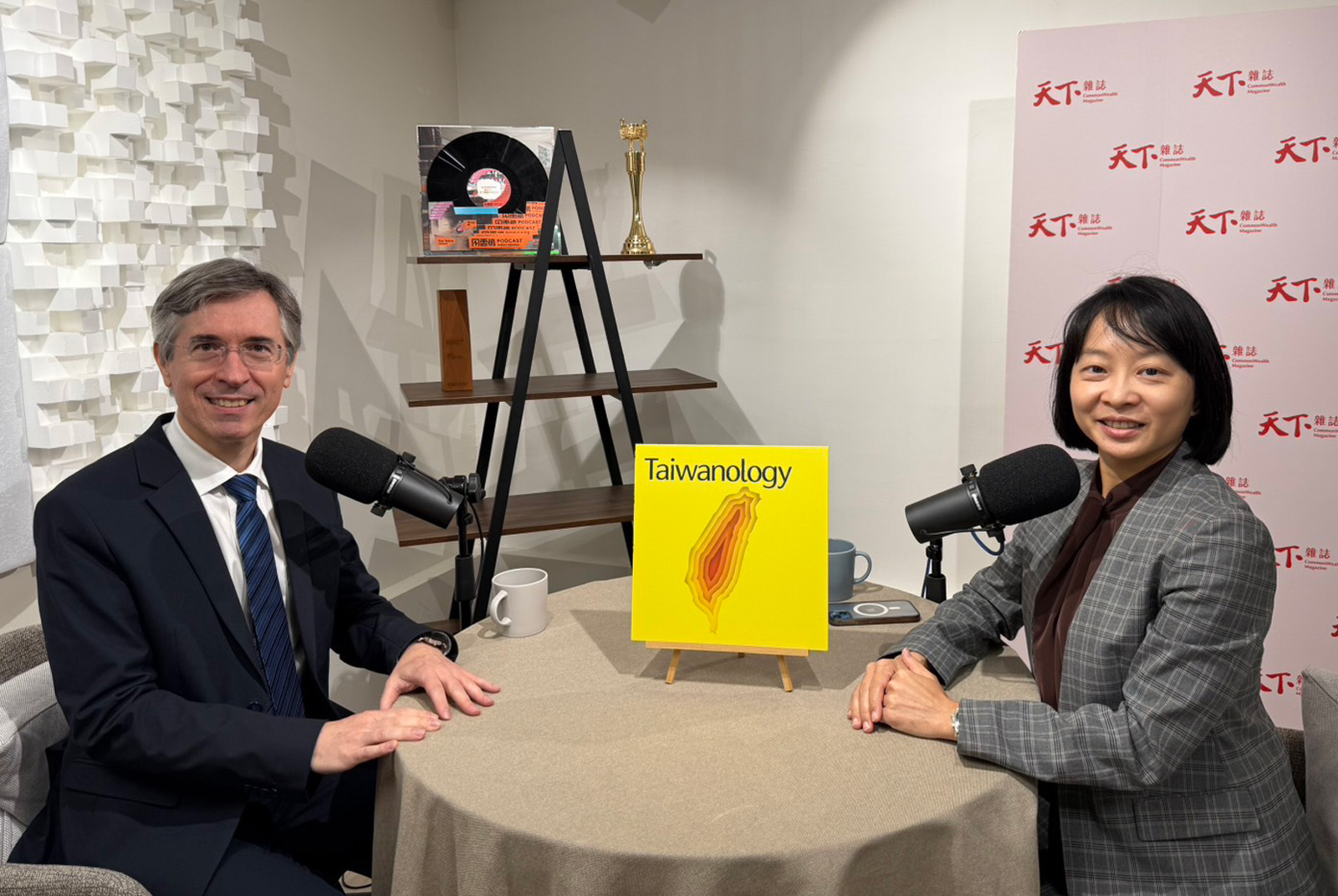
On this exclusive Taiwanology podcast interview, Frédéric Laplanche, France’s new top envoy in Taipei, argues that Europe’s push for semiconductor sovereignty means building an “ecosystem of trust” with partners like Taiwan. He returned this August for his fourth stint on the island since his student days in 1995. In conversation with CommonWealth, he explains why the dependence runs both ways.
Views
France’s New Man in Taipei: Europe’s Chip Sovereignty Runs Through Trusted Partners Like Taiwan
By Leah Dillonweb only
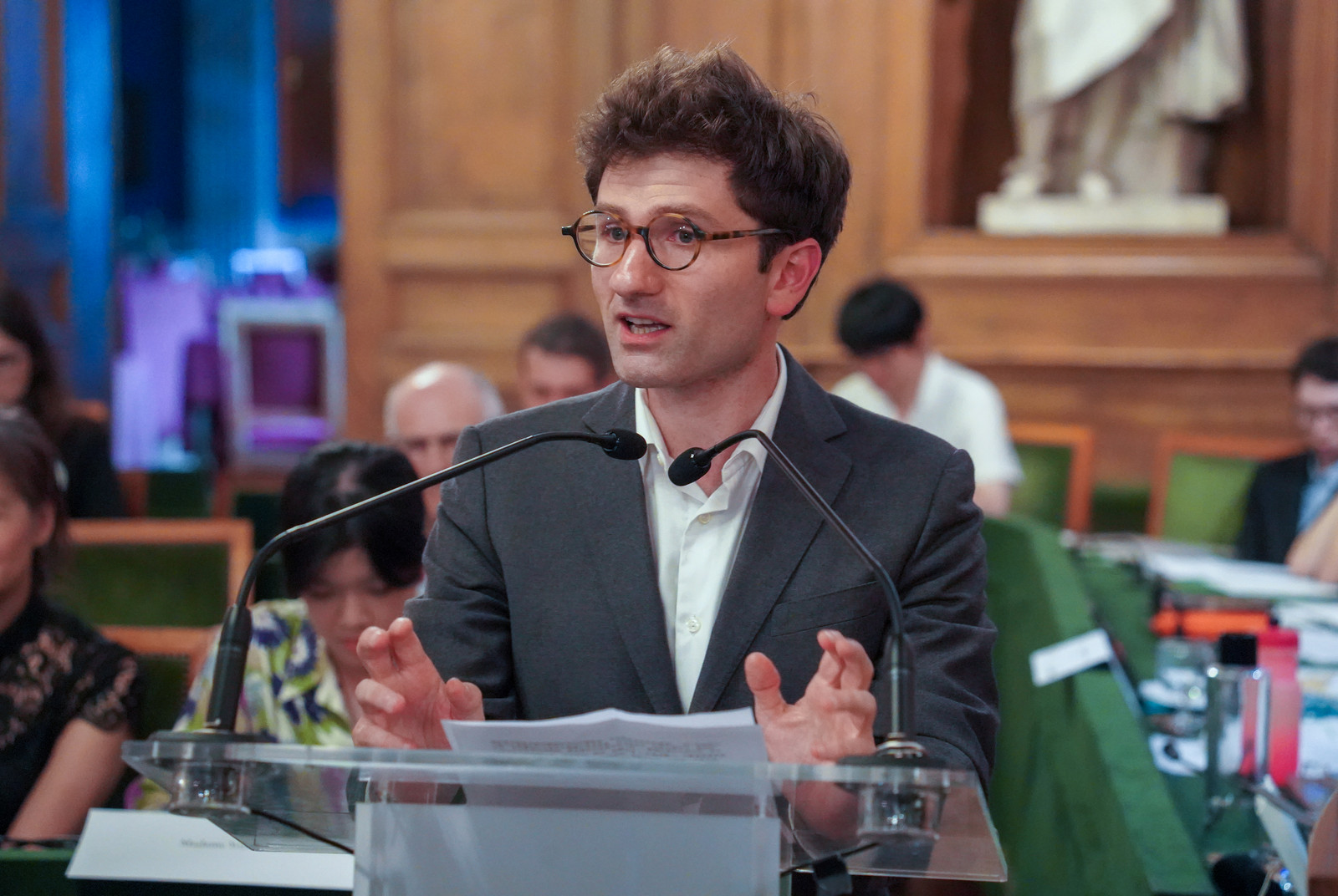
It has been 31 years since Frenchman Frédéric Laplanche first set foot on Taiwanese soil. This past August, Laplanche returned to Taiwan for the third official time in his career. This time paged with a new responsibility: serving as the director of the French Office in Taipei.
After earning a bachelor’s degree in political science from institute of political science in Paris, Laplanche’s first trip to Taiwan took place while earning his master's degree in Chinese language. A professor back in France encouraged the young Frédéric Laplanche to study abroad in Taiwan. In 1995, just one year before a democratic election process was formally introduced in Taiwan, Laplanche made landfall in pursuit to learn more about the rising democracy building on the small island off the Southeastern coast of China.
The Taiwan in1995 existed as a very different time than today. Laplanche reflects fondly on a time before Taipei 101 had broken ground, the French-designed brown line of the MRT had not yet existed, and before Frédéric Laplanche had met the woman whom he would soon call his wife.
[When asked about his first time in Taiwan, Laplanche reflects] “I think at the very beginning I hadn't thought of it, but it was a good idea. And the first time I came, even though it was for a very short time, just a few weeks, four or five weeks, I was quite convinced that it was the right thing to study… So many things happened. I met with a lot of people, including the person who would become my wife later.”
Laplanche’s connection to the island is no twist of fate. He likes to call himself “a son-in-law of Taiwan” due to not just his Taiwanese wife but, by his own telling, how fate brings him back to the island every decade or so.
His first official time back since 1995 came just nine short years later, following four years in Beijing as First Secretary, to serve as the deputy director for European economic and trade office from 2004-2008. The third official return consisted of serving the European Union as head of the European economic and trade office from 2011-2015. And now in 2026, his first-time representing France in Taiwan, as the director of French Office in Taipei.
Just six shy years of his second diplomatic stint in Taiwan, at the end of his tenure as Ambassador Extraordinary and Plenipotentiary in Kuala Lumpur, Laplanche released a book entitled Taiwan racontee par les Francais (Taiwan told by the French), translated by Laplanche himself into both French and Mandarin. Laplanche’s book embarks on a journey to find out what Taiwan was like between the years 1630 and 1930, all based off accounts from French soldiers, missionaries, and officials. Over the 300-year period, Taiwan was occupied by the Spanish, Dutch, Ming dynasty (1368-1644), Qing dynasty (1644-1912), and the Republic of China, never the French. However, French relations on the Island run consistent and historic, and Laplanche proves this in his book.
As the conversation of Taiwan’s politics and monopoly over the semiconductor industry grow in the media, Laplanche holds the goal of showing how France and Taiwan have always had relations, a relation he hopes to continue as the semiconductor industry only grows.
CommonWealth Magazine’s Deputy Managing Editor Kwangyin Liu, sat down with Laplanche for the Taiwanology podcast to discuss his connections to Taiwan, his vast career in Asian French relations, and what the future holds for France and Taiwan as the semi conductor industry continues to grow.
Listen to the episode: How France and Taiwan Became Interdependent, From Industrial Gases to Chip Design
Q. You've described Taiwan as an "ecosystem of trust" and talked about France and the EU seeking economic sovereignty through trusted partners rather than full autonomy. What does that actually look like in reality?
A. “Yeah, what I mean by ecosystem of trust, I give you a concrete example. If Apple trusts Foxconn to build their iPhones, it's because Apple trusts that Foxconn is not going to steal their intellectual property, is not going to build a similar mobile phone by the side, selling it...[competitor]. Selling it under another name. So, this is trust.
Trust is not only this, but it's trust in the quality of the products and services, it's trust in the availability of supply, that you can rely on this, and a chain is not going to be cut at some point. It's trust in the dialogue we can have with partners in the economic system. And it goes both ways.
I think what I take away from Semicon and all the meetings we've had and the French companies who came to participate in the in this Semicon is that we also want on the French side to be trusted and to be trusted a trustworthy partner for the Taiwanese industry. On the semiconductors industry, we are actually seeking sovereignty. That is something that is absolutely necessary at this point for Europe, for our security, and I'm talking about military security, but also economic security.”
Q. What does sovereignty mean in the context of economic and technology?
A. “Well, precisely, sovereignty does not mean that we should or have to do everything on our own. It does not mean that we're going to shut the door, close our borders, and do it all by ourselves.
It means that we need to have a solid network of partners we can trust, once again, partners we can trust, and who are going to be able in a dialogue with us to maintain this chain of supply.
And Taiwan is part of this. France is also part of this. It goes both ways as I said. The Taiwanese semiconductors industry also needs some of the productions of French companies.
If you don't have Air Liquide, who is producing and providing industrial gases to the Taiwanese semiconductors industry, then you're lacking something. If you don't have a company like Veolia, who is recycling industrial waste, providing ultrapure water and other chemical components, then you can't have your Taiwanese semiconductors industry working properly. If you don't have a company like Soitec, who produces silicon substrate for the semiconductors industry, then it doesn't work either.
So, I think the fact that we're able to exchange full trust is a guarantee for our sovereignty and the autonomy of our production and economies. That's the idea.”
Q. …Why do you think these new investments [from the French to Taiwan] happen all in the past few years? So why do you think this is picking up, the Taiwanese investment in France?
A. “Well, first, it's not very surprising in a way because France is the number one destination for foreign direct investment in Europe. And it has been so for several years, more than seven years in a row. That's a study by EY conducted everywhere every year on the attractiveness of different European countries.
So, France has been number one for seven years in a row. So that's not very surprising that Taiwanese potential investors would look at this particular place.
Why has France been so attractive? Why is it so attractive? I think first it's land availability, something that maybe is not always evident in Taiwan where you've been using quite a a large share of the territory. Land availability. You've got good public infrastructure like transport for example. You've got a good government system, stable, and you've got government support for investment as well. But you've got also very, very crucial elements at this point in time in terms of energy supply.
The French electricity is autonomous and sovereign, as we spoke about sovereignty.”
Q. This year we had an unprecedented nearly 20 international pavilions at Semicon. What was what was your impression of Semicon this year?
A. “It was my first time at Semicon first, so it was quite impressive, thriving, with a lot of people. And I was happy because we had a lot of French participation.
Interestingly, the French participation is also a description of what is taking place between France and Taiwan on semiconductors.
We have three elements there. The first is French companies who are providers to the Taiwanese semiconductors industry as I said, industrial gas, silicon substrate, that's one element.
The second is the research center, CEA, which is one of the world's top research centers producing quite a number of Nobel prizes in physics, is present. And they are in cooperation with a number of Taiwanese companies, including for example PSMC, to work together in bringing their scientific results into innovation, into industrial projects and products. So the second aspect of our cooperation is from science and innovation to technology and industry.
And third, we've got a number of startups who are coming to Taiwan because they need Taiwanese semiconductors producers in order to put their design into reality. For example, SiPearl is the now the actually only designer of a super calculator chip processor.”
Have you read?
- Broken Chain: How 1.8 Billion Data Points Show China's "Quarantine" of Taiwan Might be Underway
- How Taiwan’s Semicon Became the World’s Semiconductor Beauty Pageant
- From a 1989 Exchange Trip to Canada's Taiwan Envoy: Marie-Louise Hannan's Case for Canada in Taiwan
Uploaded by Ian Huang
Views
Subscribe to CWE Newsletter (every Thursday)
Stay abreast of what's happening in Taiwan with our weekly digest.
Keywords: