Recontextualizing 228: French Historian Says Taiwan’s Youth Paid for Japan’s War
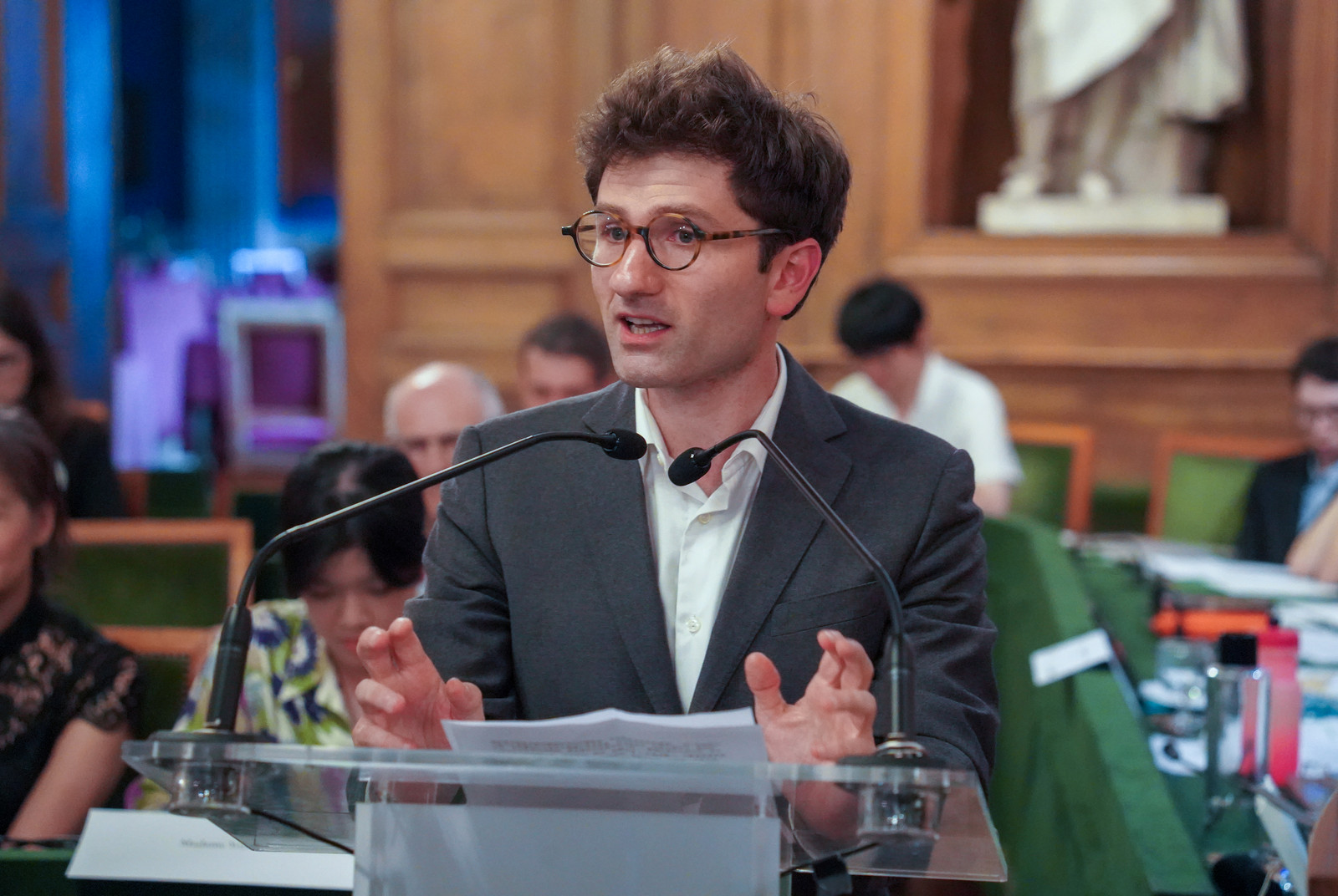
Source:David Shen
Nearly 80 years after the 228 Incident, French historian Victor Louzon offers a new interpretation of Taiwan’s most painful postwar tragedy: the violence of 1947 was shaped not only by Nationalist misrule, but by the collision of two very different World War II memories—Taiwan’s experience under Japanese rule and the Chinese Nationalists’ war against Japan.
Views
Recontextualizing 228: French Historian Says Taiwan’s Youth Paid for Japan’s War
By David Shenweb only
Nearly 80 years after the 228 Incident, Taiwan still disagrees about its historical meaning, even as it continues to shape the island’s political divides and debates over national identity.
In September, Victor Louzon, a 40-year-old associate professor of history at Sorbonne University in Paris, received the 29th Prix Culturel France-Taïwan for his work on 228. Taiwan’s Ministry of Culture and France’s Institut de France have jointly awarded this prize for 30 years to people who deepen cultural ties between Taiwan and Europe.
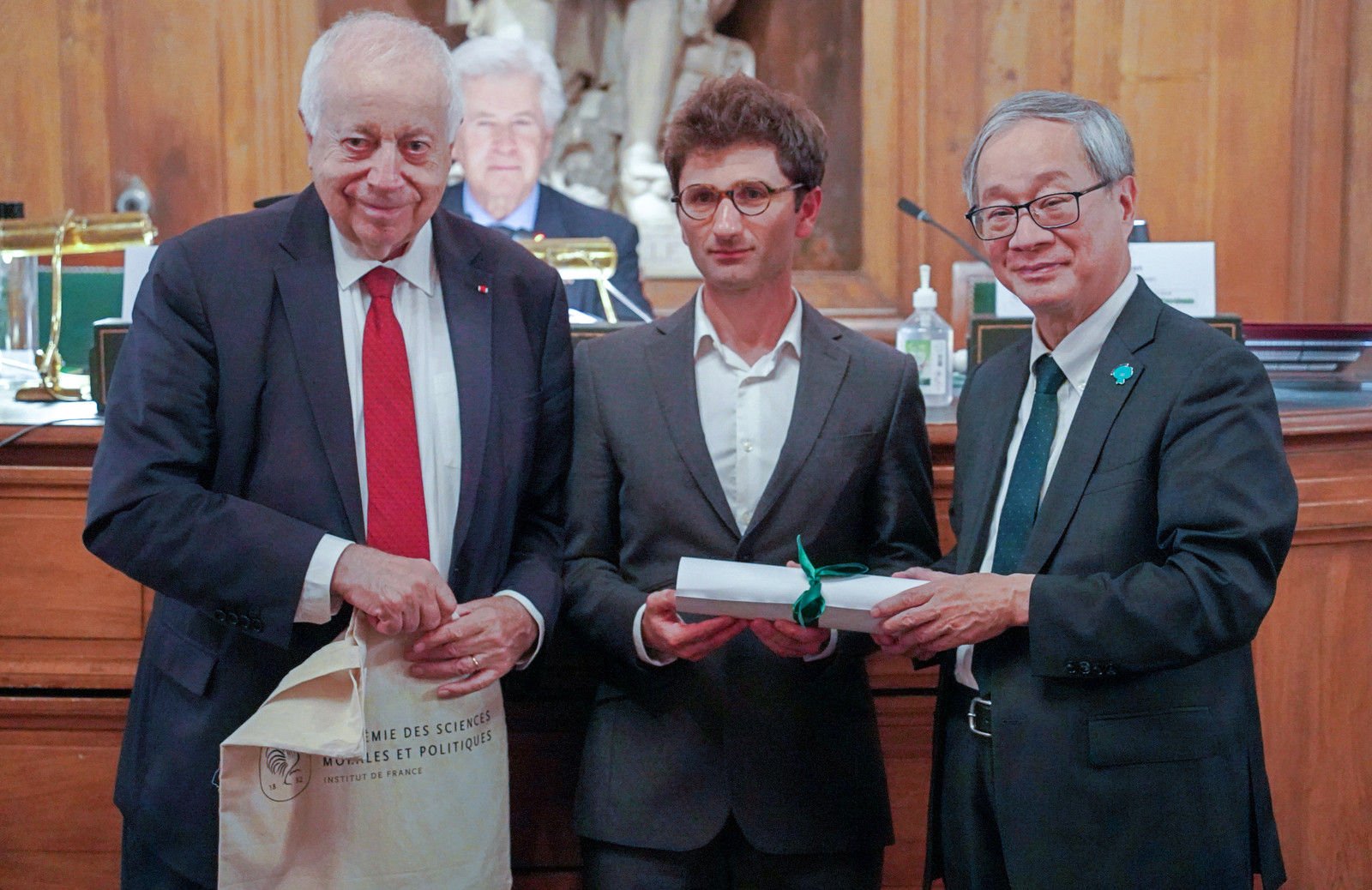 Victor Louzon (center), associate professor of history at Sorbonne University in Paris, received the 29th France-Taiwan Cultural Award in Paris in September.
Louzon’s 2023 book, L’Étreinte de la patrie: Décolonisation, sortie de guerre et violence à Taïwan, 1947 (The Embrace of the Homeland), is the second book-length Western study of 228 in 30 years and the first in French. It asks a question that earlier research has largely left open: why was 228 so unusually violent? His answer is that the Taiwanese public and the Chinese Nationalist government had fought on opposite sides in World War II. Their very different memories of that war shaped how each side thought and acted in 1947, and that clash led to the brutal outcome.
“Studying 228 from this angle is indeed rare in Taiwanese academia,” says Hou Kun-hung (侯坤宏), former director of the editing department at Academia Historica, Taiwan’s national historical archive. Chen Tsui-lien (陳翠蓮), a longtime 228 scholar who recently took the helm of Academia Historica, says Taiwan is home to groups with very different histories. Learning to respect one another’s historical memories and expanding the collective memory they share are especially important if Taiwan is to hold together as a political community.
CommonWealth Magazine spoke with Louzon in Paris. Edited excerpts follow.
Q: How did you come to study 228?
I started learning Chinese in my first year at Sciences Po. In graduate school, I studied history and joined a group of scholars working on how war memories shape political violence. I chose China as my field, and my first topic was land reform after the Communist takeover. But as an exchange student at Tsinghua University in Beijing, I quickly found that sensitive archives were too hard to access in China.
My adviser pointed out that Taiwan had also gone through intense political violence in 1947, and that Taiwan was a free, democratic society. So in 2012, a bit naively, I flew to Taiwan for the first time. I emailed professors including Chen Tsui-lien, Hou Kun-hung and Hsu Hsueh-chi (許雪姬), and they all welcomed me.
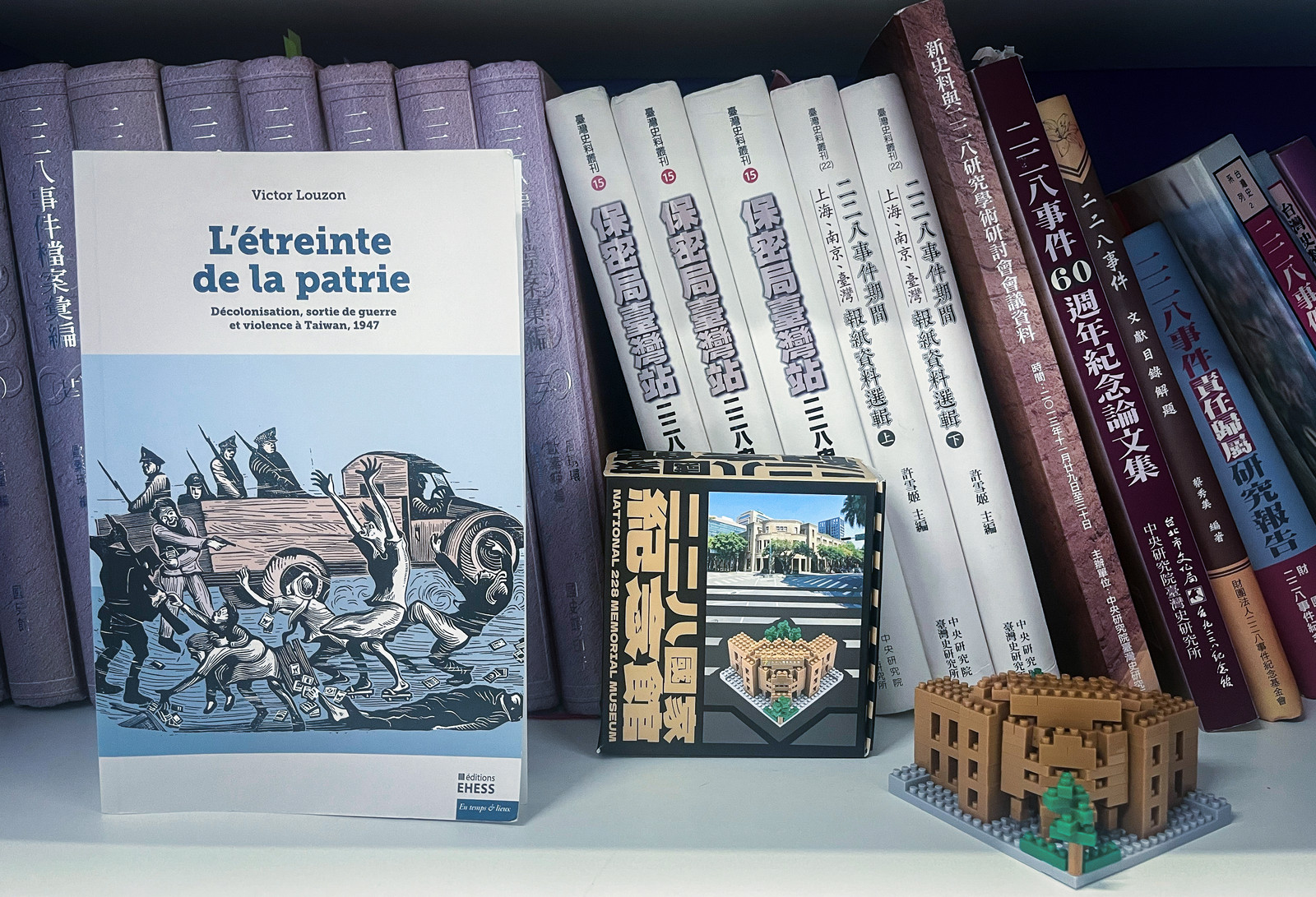 Victor Louzon’s Décolonisation, sortie de guerre et violence à. Taiwan, 1947 is the first French-language book devoted to the 228 Incident. (Courtesy of Victor Louzon)
Q: How does your approach differ from mainstream research?
Much of the existing research focused on misgovernment that drove people to revolt, and on conflict between Taiwanese and mainlanders who arrived after 1945. I wanted to ask why 228 was so violent, and in particular why the government’s crackdown far exceeded the scale of the protests. My view is that this violence was closely tied to memories of wartime military mobilization.
Q: How did Japan’s wartime mobilization shape the Taiwanese protesters?
The protests were mostly spontaneous and driven by ordinary people. They included Taiwanese who had served in the Japanese military, members of wartime civil defense and youth corps, and high school students who had received military training. All of them were products of Japan’s total militarization of Taiwanese society.
In Taoyuan, Wu Ying-chun (吳英俊), a 27-year-old who had served in the Japanese army, was asked to lead the “Taoyuan Youth Corps” and keep angry crowds under control. In Chiayi, schoolgirls broadcast from a seized radio station, calling on “Taiwanese who have served as soldiers to take up arms and defend their homes.”
That does not mean they missed Japan or were loyal to it.
Oral histories show these young people believed that, because of their military experience, they had a duty to keep order and protect their communities, and they took pride in that.
Many people see the victims of 228 only as passive victims. They overlook that they were also proactive members of the community, with agency and a sense of heroism.
Q: How did memories of the war against Japan shape the Nationalist government’s response?
Records left by Chen Yi (陳儀), then governor-general of Taiwan; Ko Yuan-fen (柯遠芬), chief of staff of the Taiwan Garrison Command; Peng Meng-chi (彭孟緝), commander of the Kaohsiung Fortress; and Lin Ting-li (林頂立), head of the Secrets Bureau's Taiwan branch, all show that they saw the organized Taiwanese as “thugs” mentally poisoned and enslaved by Japan.
After the war, the government debated whether to prosecute Taiwanese who had worked with Japan as traitors. In 1946, the Judicial Yuan ruled that the Taiwanese should not be treated as traitors. But after 228 broke out, calls to forcibly purge Japan’s “poisonous legacy” won out again.
This was a great purge of both the protests and Japan’s colonial legacy. It was revenge on Taiwan, yes, but it was also revenge on Japan. To some extent, these young Taiwanese became Japan’s scapegoats.
Q: Are there parallels elsewhere?
Alsace and Lorraine in eastern France passed between Germany and France through repeated wars. Before World War I, Germany ruled the region for 47 years, roughly as long as Japan ruled Taiwan. French officers at the time had doubts about the loyalty of residents they saw as “half-Germanized.” But France was relatively stable, and no political violence followed.
Q: Did you face obstacles doing research in Taiwan?
When I first arrived, I worried about being used, about becoming a “useful foreigner” who endorses a particular reading of history. But senior Taiwanese scholars never tried to steer my conclusions, and the archives were even more open than in France. Letting outsiders study a contested chapter of your history is, I think, a sign of a mature country’s confidence.
Q: In your acceptance speech, you said establishing Taiwan as a historical subject should not come at the cost of “methodological nationalism.” What did you mean?
I fully understand that rediscovering Taiwanese history is an important step in building Taiwan’s sense of self. But we should not go to the other extreme and cut Taiwan off entirely from China and other countries. That is an academic dead end. 228 is Taiwanese history, but it is also part of the history of postwar China and the collapse of the Japanese empire. The study of Taiwanese history should not be confined to the borders of the nation-state.
Have you read?
- The Puma Shen Wave – Building a Brand in a 198-Day Taipei Mayoral Campaign
- Exclusive: AmCham Veterans Recall the Fight to Preserve US-Taiwan Ties in 1979
- How a Retired Professor Rallied 400 Farmers to Grow Durians in Taiwan
Edited by Jack Chou
Views

Subscribe to CWE Newsletter (every Thursday)
Stay abreast of what's happening in Taiwan with our weekly digest.
Keywords: