How Much Does Taiwan Spend on Defense—and Where Does that Money Go?
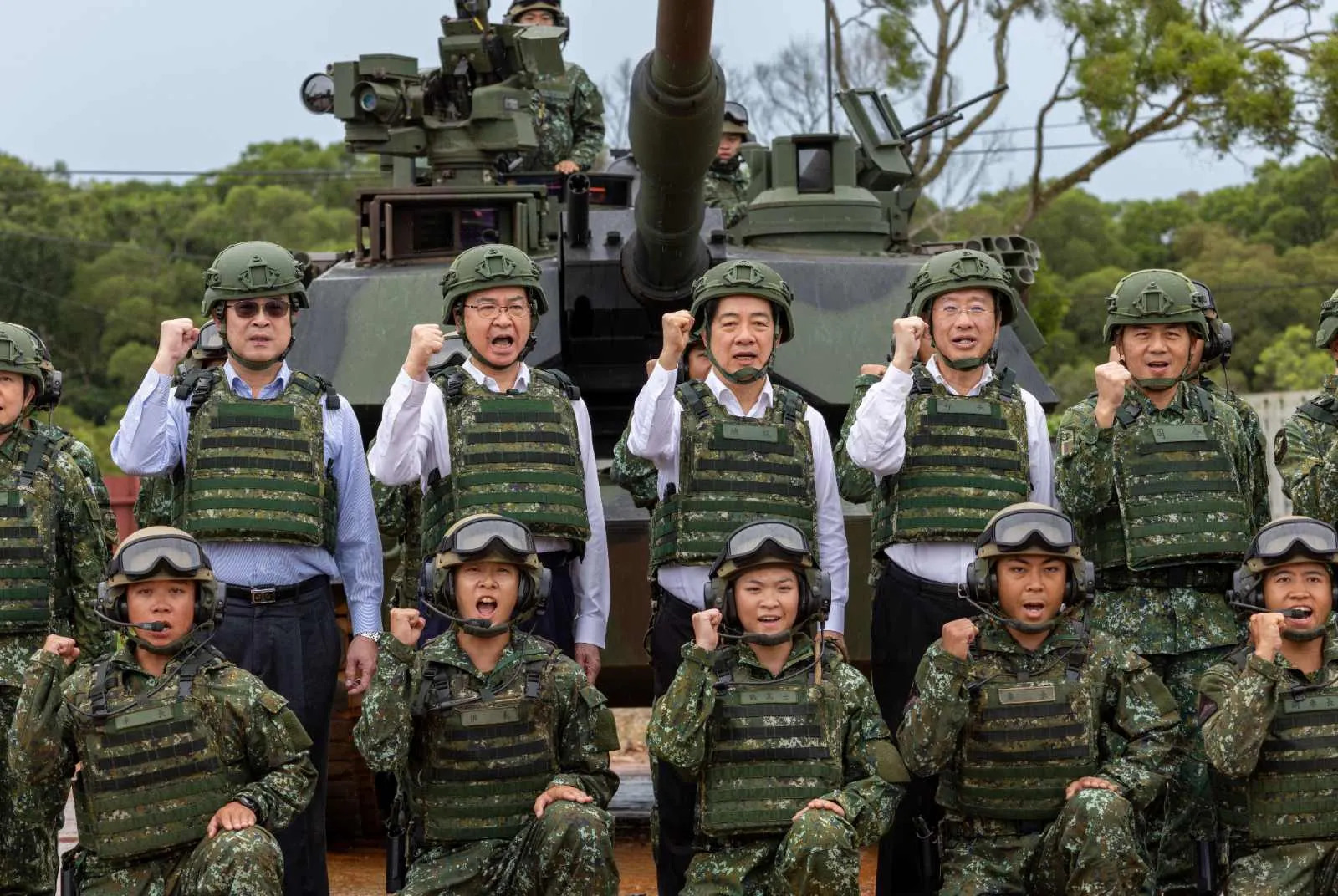
Source:Chien-Tong Wang
Taiwan has proposed a record US$35.3 billion defense budget for 2027. But understanding how much the island actually spends on its military requires separating annual appropriations, special budgets, pensions, and Coast Guard expenditures.
Views
How Much Does Taiwan Spend on Defense—and Where Does that Money Go?
By CommonWealth Magazineweb only
Taiwan's government has proposed approximately US$35.3 billion in defense-related spending for 2027, equivalent to 3.01% of projected gross domestic product (GDP).
The proposal represents an increase of roughly 18% over the government's original 2026 defense-spending plan. It comes as Taiwan faces sustained military pressure from China and seeks to strengthen its ability to deter or withstand an attack.
However, the headline figure does not represent money spent exclusively on military equipment, nor does it mean that every proposed expenditure has already been approved by lawmakers.
Taiwan's defense budget combines several categories of spending, and understanding those categories is essential to interpreting the numbers.
How much is Taiwan's defense budget in 2027?
Taiwan's Cabinet approved a proposed 2027 defense-related budget of approximately US$35.3 billion in August 2026.
That would be the largest defense-spending proposal in Taiwan's history in nominal terms.
The figure represents 3.01% of the government's projected GDP for 2027.
For comparison, the government originally proposed approximately US$31.2 billion in defense-related spending for 2026, equivalent to 3.32% of the GDP forecast used when that budget was prepared.
The apparent decline in the GDP share does not mean Taiwan is proposing to spend less money.
The 2027 budget is larger in nominal terms, but it is measured against a substantially higher GDP forecast.
Both figures must also be distinguished from actual expenditure. Cabinet proposals remain subject to legislative review, while approved budgets and actual disbursements can differ.
Where does Taiwan's defense money go?
The proposed 2027 defense budget covers military operations, personnel, equipment, special procurement programs, military-related pensions, and the Coast Guard.
The government's published figures can be divided into five broad categories.
| Category | Proposed 2027 spending |
|---|---|
| Ministry of National Defense budget | US$21.8 billion |
| Special defense budgets | US$6.9 billion |
| Nonprofit special funds | US$1.9 billion |
| Military-related pensions | US$3.3 billion |
| Coast Guard | US$1.5 billion |
| Total | Approximately US$35.3 billion |
Figures are approximate, converted using US$ 1 = NT$ 31.8 and rounded individually. Totals may differ slightly because of rounding.
The Ministry of National Defense budget supports the armed forces' regular activities, including personnel, operations, maintenance, and equipment acquisition.
Special budgets are used for major programs and procurement commitments that extend beyond ordinary annual expenditure.
Military-related pension spending covers obligations to retired personnel, while the Coast Guard contributes to maritime security and enforcement.
These categories explain why different reports may cite different figures for Taiwan's defense budget.
Why does Taiwan use a NATO-style definition of defense spending?
Taiwan is not a member of NATO, but its government has adopted a broader accounting approach modeled on NATO's defense-expenditure framework.
Under this method, certain expenditures outside the Ministry of National Defense's ordinary annual budget can be included in the overall defense-spending calculation.
These include qualifying pension and Coast Guard expenditures.
The distinction is important because international comparisons can be misleading when governments count different categories.
For 2026, Taiwan's original proposed defense-related spending amounted to approximately US$31.2 billion, or 3.32% of GDP.
Within that figure, core defense spending managed through the Ministry of National Defense and associated programs accounted for approximately 2.82% of GDP, according to analysis by Taiwan's Institute for National Defense and Security Research.
The two percentages are not contradictory.
They describe different accounting boundaries.
What does Taiwan spend on military equipment?
Taiwan's defense investments cover both conventional platforms and systems intended to make an attack more costly.
Major categories include aircraft, naval vessels, missiles, unmanned systems, communications, and command-and-control infrastructure.
The Ministry of National Defense has identified military readiness, maintenance, ammunition, and resilient communications as important spending priorities.
Taiwan is also developing domestic defense capabilities, including naval construction and unmanned systems.
The proposed 2027 budget increases military investment as Taiwan seeks to expand asymmetric capabilities.
Asymmetric defense generally refers to strategies designed to offset a stronger adversary's advantages through systems that are comparatively difficult to detect, intercept, or destroy.
For Taiwan, these can include mobile missile systems, drones, sea mines, and dispersed defensive infrastructure.
But the effectiveness of a defense budget cannot be measured by equipment purchases alone.
Training, maintenance, ammunition availability, logistics, and the ability to replace damaged systems are equally important.
How much of Taiwan's defense budget goes to American weapons?
The United States is Taiwan's most important foreign defense supplier.
American arms sales have included aircraft, missiles, air-defense systems, and other military equipment.
However, the value of an announced U.S. arms sale should not automatically be counted as spending in the year of the announcement.
A proposed sale, a formal approval, a signed contract, a scheduled payment, and a completed delivery represent different stages of procurement.
Payments can be distributed over several fiscal years, while deliveries may occur much later.
This distinction matters particularly when large weapons packages are announced.
In October 2026, questions remained over the timing of additional U.S. arms sales to Taiwan. Reported potential packages should not be treated as completed procurement or delivered equipment.
To assess how much Taiwan actually spends on American weapons in a given year, analysts must examine budget appropriations, contract schedules, and payment records rather than simply adding up public arms-sale announcements.
Why is Taiwan increasing defense spending?
Taiwan's government identifies the expanding capabilities of China's military as a principal security challenge.
Beijing claims Taiwan as part of its territory and has not ruled out using force to achieve unification. Taiwan's government rejects Beijing's sovereignty claim.
China regularly conducts military activities near Taiwan, including aircraft and naval deployments.
Taiwan's response has emphasized deterrence: increasing the military and political costs of a potential attack while improving the island's ability to sustain operations during a crisis.
President Lai Ching-te has also set a longer-term goal of raising defense spending toward 5% of GDP by 2030.
That figure is a policy target, not an already approved annual budget.
Domestic political debate remains important. Taiwan's legislature must review government spending proposals, and lawmakers differ over the appropriate scale, sequencing, and oversight of defense expenditure.
Is Taiwan spending enough on defense?
There is no universally accepted percentage of GDP that guarantees military security.
Defense spending must be evaluated against the threats a country faces, the capabilities it needs, and the effectiveness of its procurement and training.
A larger budget can help Taiwan acquire more equipment and improve readiness, but money alone cannot guarantee deterrence.
Several questions are more useful than the headline GDP ratio:
- Are procurement programs delivering usable capabilities on schedule?
- Does Taiwan have enough ammunition, spare parts, and trained personnel?
- Can communications and logistics continue functioning during an attack?
- Can damaged or expended equipment be replaced quickly?
- Are procurement priorities aligned with Taiwan's defense strategy?
These questions connect budget allocations to military outcomes.
They also explain why defense spending remains a subject of political debate even among those who support strengthening Taiwan's security.
FAQs
What is Taiwan's defense budget for 2027?
Taiwan's government proposed approximately US$35.3 billion in defense-related spending for 2027, equal to 3.01% of projected GDP. The proposal is subject to legislative review.
Why is the 2027 GDP percentage lower than in 2026?
The proposed dollar amount is higher, but the government uses a larger projected GDP denominator for 2027.
Does Taiwan spend 3% of GDP entirely on its military?
No. The broader calculation includes qualifying defense-related spending such as pensions and Coast Guard expenditures, not just the Ministry of National Defense's ordinary budget.
Is Taiwan a NATO member?
No. Taiwan uses a NATO-style defense-expenditure accounting approach for reporting purposes.
Does Taiwan buy all its weapons from the United States?
No. Taiwan imports important American defense systems but also develops and manufactures military equipment domestically.
Will Taiwan spend 5% of GDP on defense by 2030?
President Lai has identified 5% as a policy objective. Future budgets will depend on government proposals, economic conditions, and legislative decisions.
Have you read?
- Who Pays to Keep Taiwan’s Energy Prices Down? Inside CPC’s Mounting Losses
- Why Doesn’t Taiwan Have an Embassy in the United States?
- What Is Taiwan’s “Silicon Shield”—and Does It Still Protect Taiwan in 2026?
Uploaded by Ian Huang
Views

Subscribe to CWE Newsletter (every Thursday)
Stay abreast of what's happening in Taiwan with our weekly digest.
Keywords: