In Taiwan’s Emerging Solo Society, Companies Are Taking Over the Work Families Used to Do

Source:Chien-Tong Wang
Single-person households are now Taiwan’s most common living arrangement. From single-serving hot pot to vetted handymen, businesses are redesigning products around the customer of one — but the harder question is who steps in when things go wrong.
Views
In Taiwan’s Emerging Solo Society, Companies Are Taking Over the Work Families Used to Do
By Yi-chih Wangweb only
Taiwan’s households are shrinking fast. By the end of 2025, more than 3.99 million households were registered with a single member, about 40 percent of the total and now the largest category in the country.
Registration does not always mean living alone. Cheng Li-hsuan (鄭力軒), chair of the sociology department at National Chengchi University (NCCU), notes that people often register separately for property-tax breaks, school districts, or to keep a family address.
A new housing tax regime alone added nearly 420,000 single-person households over the past two years. But even using the ten-year average annual increase of 0.55 percentage points, single-person households would still account for more than 37 percent of the total.
Japanese commentator Kawai Masashi (河合雅司), author of The Chronology of the Future, argues that a country becomes a “solo society” once one-person households pass one-third of the total. By that measure, Taiwan is already there. “When the numbers rise every year, it’s a trend,” says Lien-ti Bei (別蓮蒂), a distinguished professor of business administration at NCCU. “It’s irreversible.”
Three forces behind the shift
The first is aging. In the first quarter of this year, 713,000 homes in Taiwan were occupied by a single person aged 65 or older, up 92 percent from a decade ago, according to the Ministry of the Interior.
The second is later marriage, no marriage and divorce. Sixty percent of Taiwanese aged 25 to 44 were unmarried at the end of last year. Academia Sinica research finds that 12.9 percent of people have never married by age 50, 2.7 times the rate of 20 years ago.
The third is technology. “The threshold for living alone is much lower than ten years ago,” says Liu Wei-kung (劉維公), an associate professor of sociology at Soochow University. People can now socialize, work and be entertained online. “Physically they live alone, but in practice they live on the internet.”
Taiwan’s consumer markets, housing, regulations and welfare system were all designed around a family of four. Bei argues that until people need long-term care, most of the inconveniences of living alone will be solved commercially. “The upside of business is that if there’s profit, someone will step in,” she says. “The downside is that it can’t take care of the poor.”
Small portions, no compromises
FamilyMart, one of Taiwan’s largest convenience-store chains, estimates that once empty nesters and households whose members eat on different schedules are included, the “fragmented household” market exceeds 70 percent.
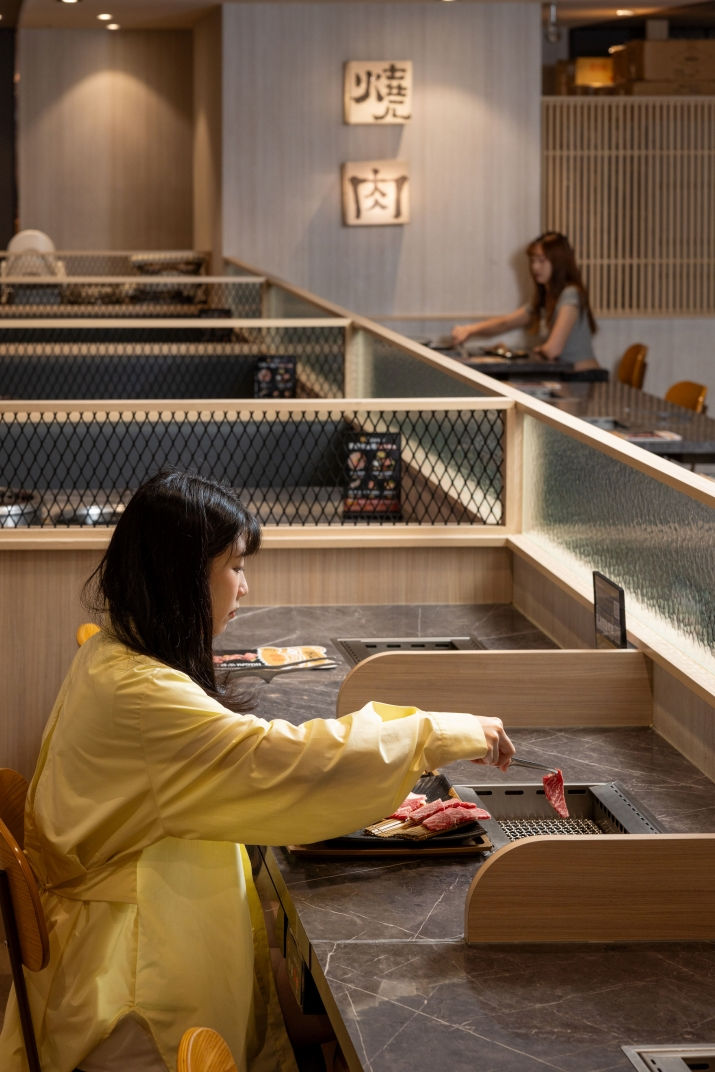 Ikigai’s seating, grills and ordering process are all designed specifically for solo diners. (Photo: Chien-Tong Wang)
“Being on your own is now the norm,” says Lee Chuan-ju (李釧如), head of strategic planning for FamilyMart. The chain now promotes “five meals a day,” covering breakfast through late-night snacks, effectively taking over the role of the family kitchen.
MUJI Taiwan found the same pattern in its hot pot broths. A 350-milliliter single-serving pack launched in 2022 sold so well that the company introduced a 750-milliliter version, which sold worse. Customers did not complain about price, says Huang Ching-yun (黃婧芸), head of public relations. “The portion was simply too big.” Smaller portions, she adds, often go with trading up in quality.
LG Electronics put a screen on wheels so it can follow its owner from breakfast table to study to bedroom. The StanbyME, nicknamed the “bestie machine” in Taiwan, passed 1,000 pre-orders and NT$20 million in sales within a month.
Solo diners want respect, not pity. At Ootoya, part of FamilyMart’s restaurant arm, single customers can sit at regular two-person tables and are never forced to share. General manager Hsin Tzu-ling (辛紫綾) says one bad experience can lose a loyal customer for good; just 10 percent of members generate nearly 40 percent of revenue. Ikigai, a single-person yakiniku chain, has been the top performer by sales per square meter at Dayeh Takashimaya department store for more than three years.
Independence does not mean isolation. Southeast Travel, which launched solo-friendly tours in 2023, found that nearly 80 percent of solo travelers were willing to share a room with a stranger of the same sex.
Selling certainty, not just products
The harder problem is fragmentation. Package collection, one-off cleaning, furniture assembly, plumbing repairs and hospital escorts are each small and irregular, making them hard to scale. Uni-President Group chairman Lo Chih-hsien (羅智先), whose group owns the hypermarket chain Uni-PROSPERiTY (formerly Carrefour Taiwan), has even encouraged managers to spend time living alone to understand these needs.
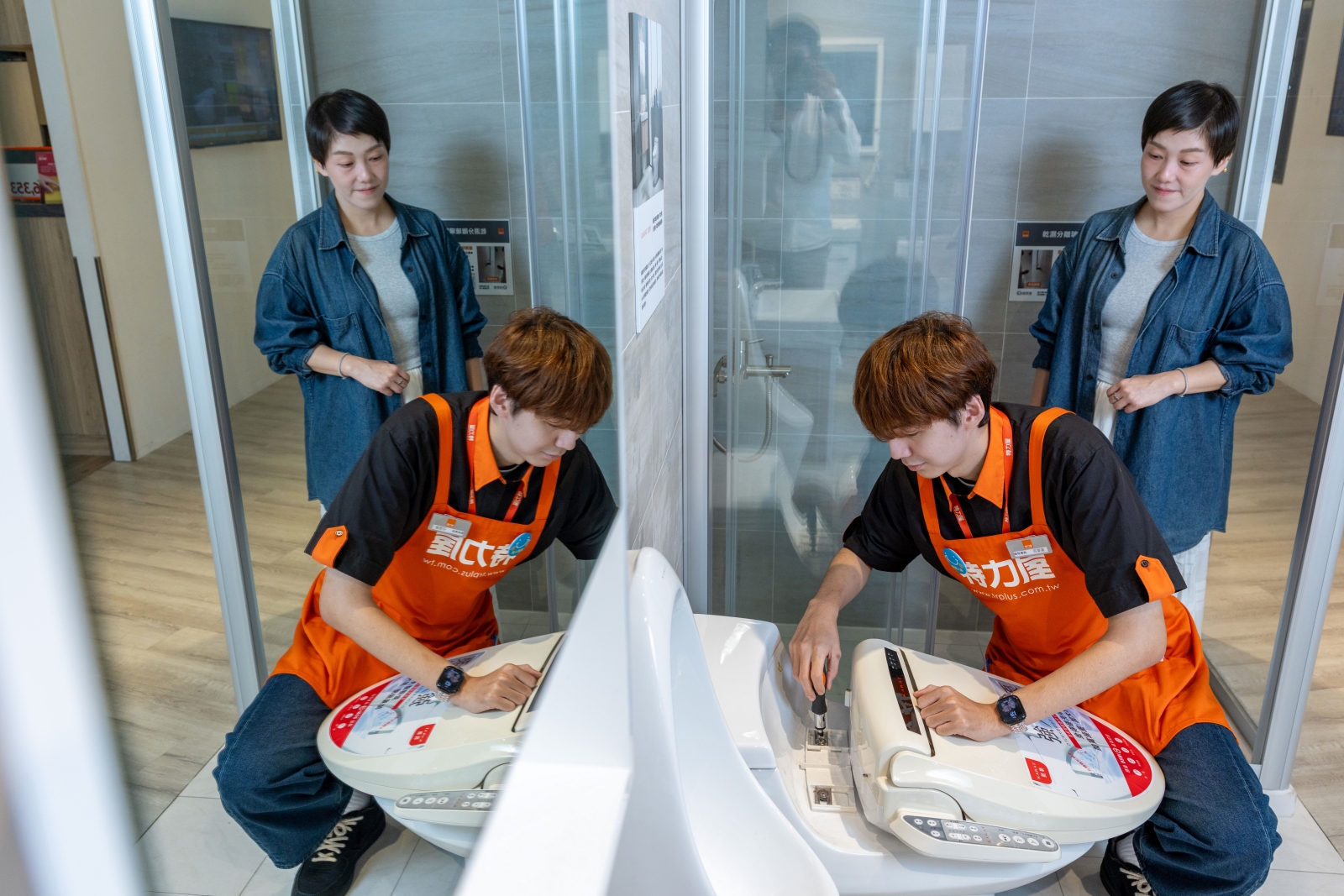 Test Rite’s butler service seeks to integrate its products with a network of contractors, with the goal of increasing customer retention and repeat business. (Photo: Chien-Tong Wang)
Home-improvement retailer Test Rite last year launched a “butler” service that manages contractors from quoting to completion and accountability. For solo residents, many of them women wary of letting strangers in, what Test Rite sells is the certainty that someone reliable will handle the job. “Managing 300 contractor teams is exhausting,” says president Ho Tang-hsiung (何湯雄), “but we have to do it to create a new business model.”
Safety nets beyond family
Commerce alone cannot fill the gap. Scylla, a 49-year-old retail executive who lives alone in Taipei after her divorce and has traveled solo to North Korea, Afghanistan and more than 20 times to Africa, relies on her building manager and neighbors. She has handed the manager her keys to fix a blocked pipe, and keeps an eye on an elderly woman living alone across the hall. “Neighbors aren’t family,” she says, “but I know that if something happens, I can call on them.”
FamilyMart chairman Yeh Rong-ting (葉榮廷) wants stores to become “the banyan tree at the end of the lane,” the traditional village gathering spot. Stores now stock reading glasses, magnifiers and blood-pressure monitors. In one recent case, a clerk overheard an elderly customer on a speakerphone call and stopped what appeared to be a scam transfer.
Cheng warns that living alone is not the problem in itself; the danger is that it amplifies existing risks, especially for older people hit by financial or health shocks. Liu argues the government should shift from acting as citizens’ “manager” to their “caregiver,” guaranteeing a minimum safety net for illness, disability, unemployment or accidents, however people choose to live.
The real test of a solo society, the author concludes, is not whether one person can live well — it is who will knock on the door when that person needs help.
Have you read?
- Harvard’s Steven Levitsky: Taiwan’s Biggest Democratic Risk Is “Constitutional Hardball”
- How Much Does Taiwan Spend on Defense—and Where Does that Money Go?
- Who Pays to Keep Taiwan’s Energy Prices Down? Inside CPC’s Mounting Losses
Uploaded by Ian Huang
Views

Subscribe to CWE Newsletter (every Thursday)
Stay abreast of what's happening in Taiwan with our weekly digest.
Keywords: