Iran War Reveals Taiwan’s Natural Gas Crisis
Source:Kai-Cheng Chuang
With just 11 days of natural gas reserves — the lowest in East Asia — and over a third of its gas supply routed through the Strait of Hormuz, Taiwan's energy vulnerability has never looked more exposed than since war broke out in Iran. As Taipei scrambles for stopgap measures, a striking irony emerges: the United States, the very power that launched the conflict, stands to become Taiwan's dominant energy supplier.
Views
Iran War Reveals Taiwan’s Natural Gas Crisis
By Kwangyin Liuweb only
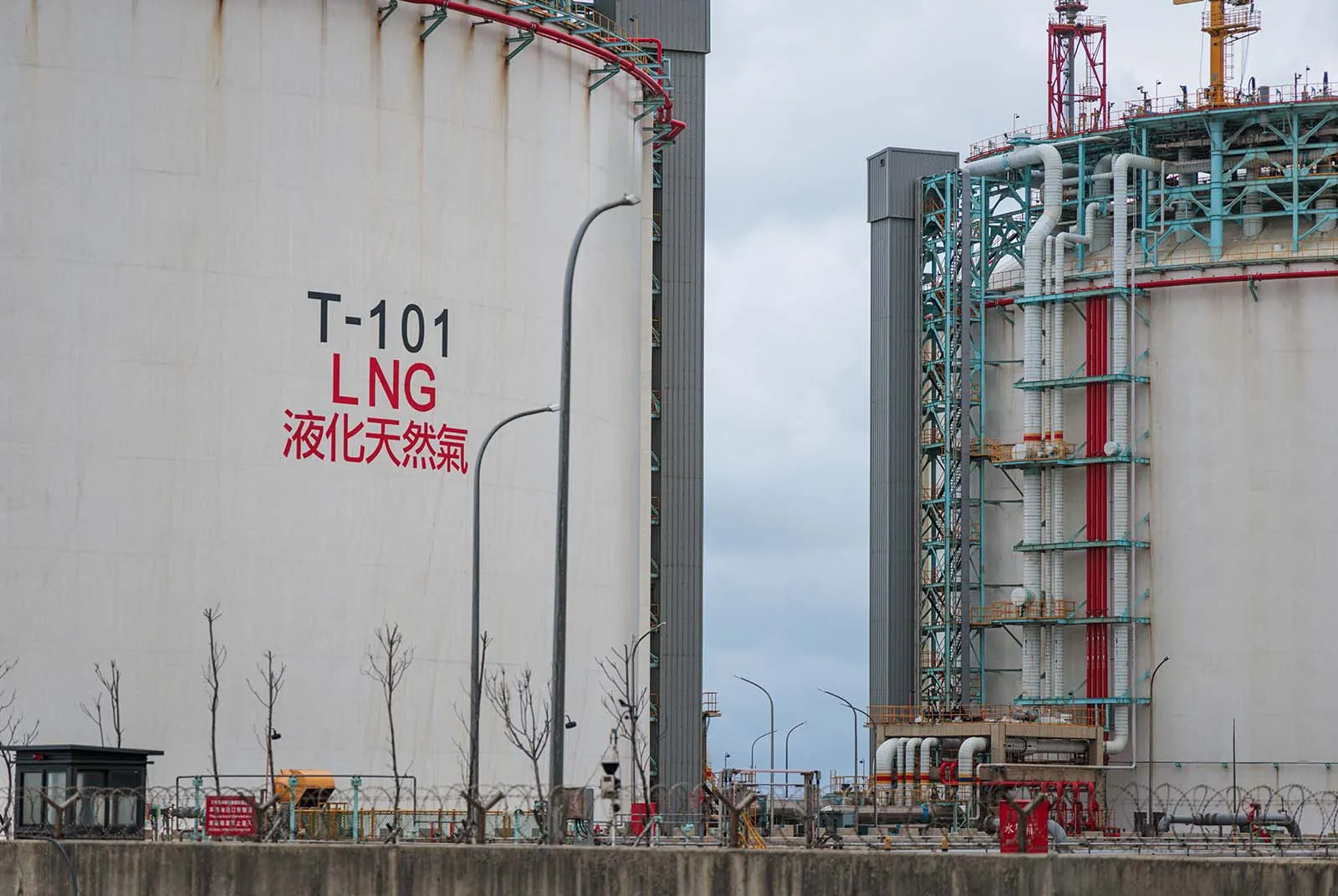
On the cold winter day CommonWealth reporters visited the Guantang LNG Terminal in the northern Taiwanese city of Taoyuan, a biting wind was blowing through the dual multistory gasholders erected near the port.
Ten percent of all the electricity generated in Taiwan comes from the kind of liquefied natural gas that’s stored in these two colossal containers.
The ongoing Iran war has highlighted the vulnerabilities in Taiwan's energy supply chain. Over a third of Taiwan's natural gas is transported through the Strait of Hormuz. Gas-fired power plants account for over 53% of electricity production in Taiwan, directly affecting 17% of Taiwan’s power supply.
The weak point becomes obvious when Taiwan is compared with Japan and Korea, both of which also rely on Middle Eastern natural gas. Taiwan has the smallest natural gas reserve, only sufficient for 11 days; Japan has around three weeks’ worth, while Korea has about a month’s supply.
There are plans to remedy the situation.
CPC Corporation, Taipower, and Formosa Plastics are all building gasholders to expand storage capacity, the goal being to triple Taiwan’s natural gas reserves.
By chance, CPC held a briefing on the second phase of construction on Guantang LNG Terminal’s third import terminal the day after war erupted in Iran. It announced a commitment to building six new gasholders, equal to ten more days of natural gas reserves. But even if work began this very instant, it would still be three years before completion—and this does not account for delays which could arise due to protests.
Minister of Economic Affairs Ming-Hsin Kung (龔明鑫) promises that arrangements have been made to ensure an uninterrupted supply of natural gas until the end of April, saying, “Under no circumstances will power rationing be enacted due to natural gas shortage.”
Other alternatives are also being considered.
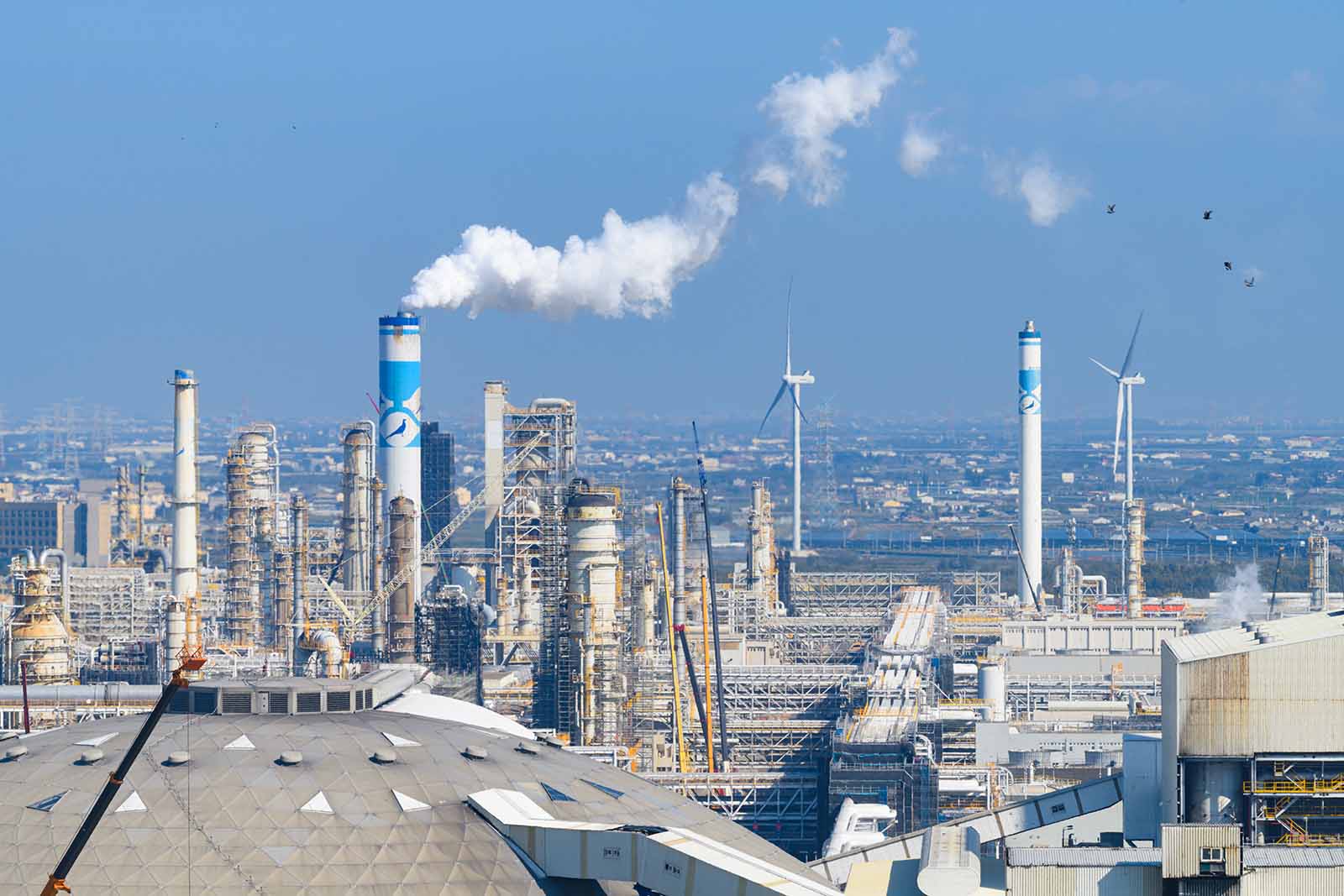 (Source: CommonWealth)
Coal, Oil, Even No. 3 Nuclear Plant May Step Up to Prevent Shortage
The first alternative is to purchase natural gas from the United States or other suppliers.
Chung-Hsien Chen (陳崇憲), Deputy Director-General at the Energy Administration, stresses that the supply of natural gas will be no problem at all in the month of April, and plans are being made to maintain this through May and June.
In February, CPC inked a 25-year deal with Cheniere Energy, the largest exporter of LNG in the U.S. The first shipment will arrive in June.
Industry experts point out that in Donald Trump’s second term, state-owned enterprises carry the burden of reducing Taiwan’s trade surplus with the U.S. This is why, in addition to the long-term contracts, CPC may increase its purchase of America’s existing natural gas supplies. “Buying ready supplies is a last resort, since spot prices tend to be higher,” says Chen.
Another alternative is to find new sellers. A Japanese industry insider reveals that CPC is in talks with major Japanese power suppliers to redirect LNG shipments bought by Japan to Taiwan. Japan has more natural gas reserves and also a lower reliance on it for power generation.
But if the war doesn’t end in April, or if complications arise in purchasing ready supplies, will Taiwan face a power shortage?
The next option would be to reactivate Taiwan’s coal, oil, and even nuclear power plants.
Coal generators currently undergoing repairs or on standby include three in the Taichung Power Plant and four in Kaohsiung’s Hsinta Power Plant. Add on top of that two oil generators in Keelung’s Hsieh-ho Power Plant, and they will cover nearly 10% of peak power consumption.
And if that’s not enough, restarting the two generators in Maanshan Nuclear Power Plant will satisfy another 6% of power consumption.
At the end of the day, coal, oil, and nuclear power can fill the gap left by natural gas.
However, the high cost of natural gas means that Taipower will be under even greater pressure to raise power prices after April.
War’s Biggest Winner is the US
Notably, the U.S. both initiated military action against Iran and stands to benefit the most from the conflict.
Despite the fact Taiwan buys 70% of its crude oil and over 30% of its natural gas from the Middle East, America’s role in Taiwan’s energy supply system is expanding rapidly.
Over the last decade, Taiwan’s reliance on crude oil from the U.S. grew from zero to nearly 30%. In 2025, Taiwan bought as much crude oil from the U.S. as it did from Saudi Arabia. The United States may soon become Taiwan’s biggest energy supplier.
Around 10% of Taiwan’s natural gas also comes from the U.S. If the potential supply of natural gas from Alaska is considered, American natural gas may soon make up 30% of Taiwan’s supply.
“Americans want everyone to buy energy from them,” says a senior manager at a petrochemical company. The cost of oil produced by fracking averages around $40 to $60 per barrel. If oil prices surpass $100 per barrel, American oil will rule the market.
In the coming years, the United States’ irreversible track toward energy market dominance will have a profound impact on how Taiwan sources its energy imports.
Have you read?
- Watching the Dragon: How Taiwan Decodes China's Internal Fragility
- Will Europe Choose Taiwan as Trust in China Fades?
- Taiwan’s Growing Climate Voice at Brazil’s COP30
Translated by Jack Chou
Edited by TC Lin
Uploaded by Ian Huang
Views

Subscribe to CWE Newsletter (every Thursday)
Stay abreast of what's happening in Taiwan with our weekly digest.
Keywords: