She Sold Her Bubble Tea Shop in the US. Now She Raises Beef for Michelin Kitchens
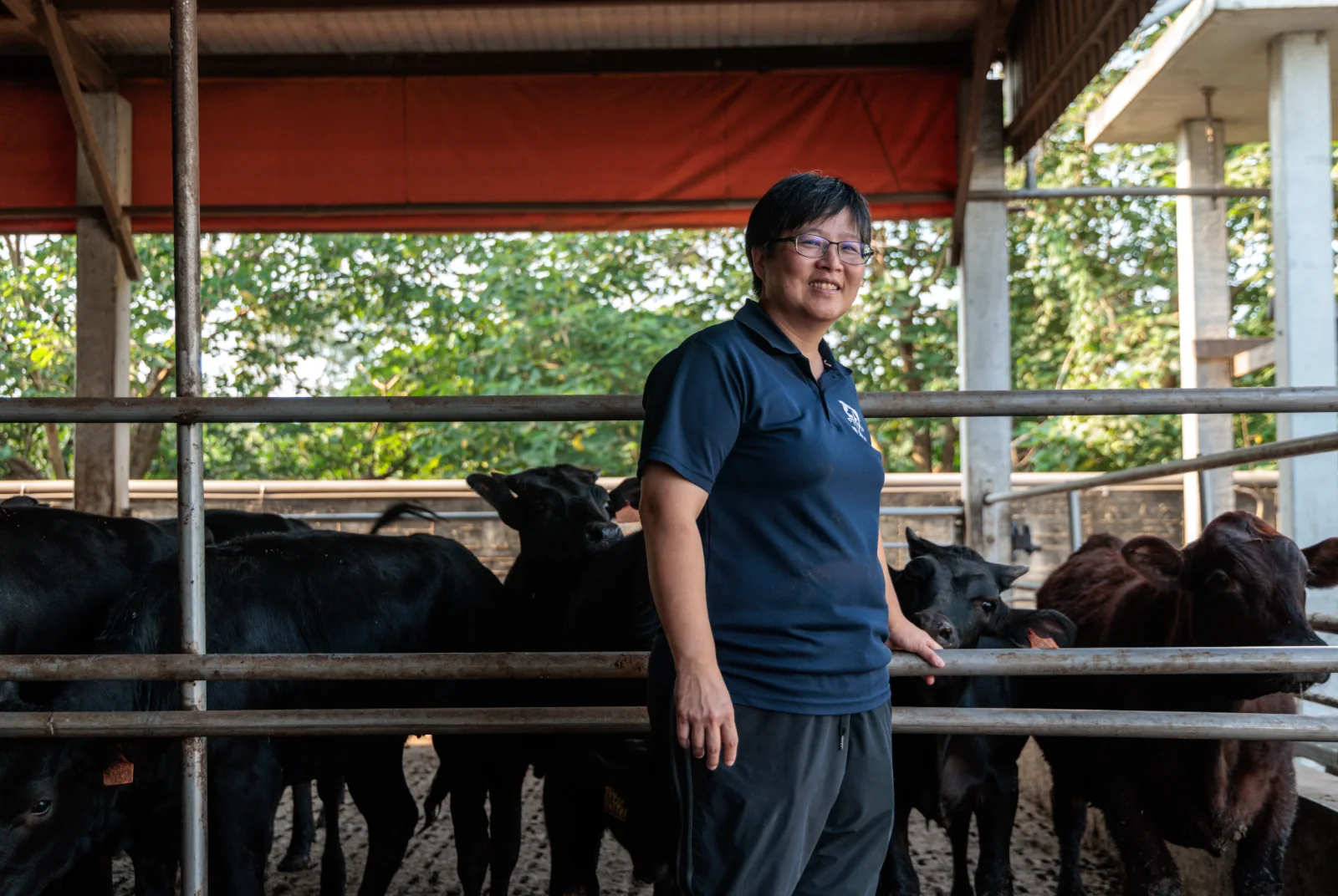
Source:Kai-Cheng Chuang
After building a successful bubble tea business in the U.S., Nicole Chen returned to Taiwan to take over her family’s livestock operations. Today, she runs the country’s largest Angus cattle ranch, supplying Michelin-recognized restaurants while betting on breeding, technology and premium local beef to transform a traditionally male-dominated industry.
Views
She Sold Her Bubble Tea Shop in the US. Now She Raises Beef for Michelin Kitchens
By Johann Tsaiweb only
A livestock farm in Yunlin County in southern Taiwan supplies Michelin-recognized restaurants such as Silks House, Mountain and Sea House and Hosu with locally grown beef. While 60 percent of Taiwanese beef stems from dairy cattle, the Yunlin farm, called Farm Around You, keeps around 2000 Angus cattle, a breed whose meat is famous for its marbling, making it Taiwan’s largest Angus ranch.
This year, farm owner Nicole Chen (陳柏吟) was awarded a spot in the Ministry of Agriculture’s Hundred Young Farmers Program, which provides intensive guidance to outstanding young people in agriculture to help them scale their businesses.
Upon graduation from the University of Southern California with a master’s degree, Chen stayed in the United States and went into the food and beverage industry, selling popular Taiwanese street food such as bubble tea and bite-size fried chicken. “We had a daily revenue of US$10,000,” she recalls.
Yet, when none of her four siblings were ready to take over the family’s feedstock plant and hog farm, Chen’s father was starting to think about selling the business. He kept asking Chen again and again for two years. So, in 2013 she decided to sell of her bubble tea store and return to Taiwan. “The next chapter of my life will be even better,” she thought.
At the time Chen had no idea how to run a livestock farm. For three months she learned the ropes, kneeling in the pigsty to learn inseminating pigs and taking care of pregnant sows and newborn piglets. She often spent the night at the side of a sow who was about to give birth. And she still had to put up with seniors who made her life difficult. “When people get under your skin, you learn,” she says.
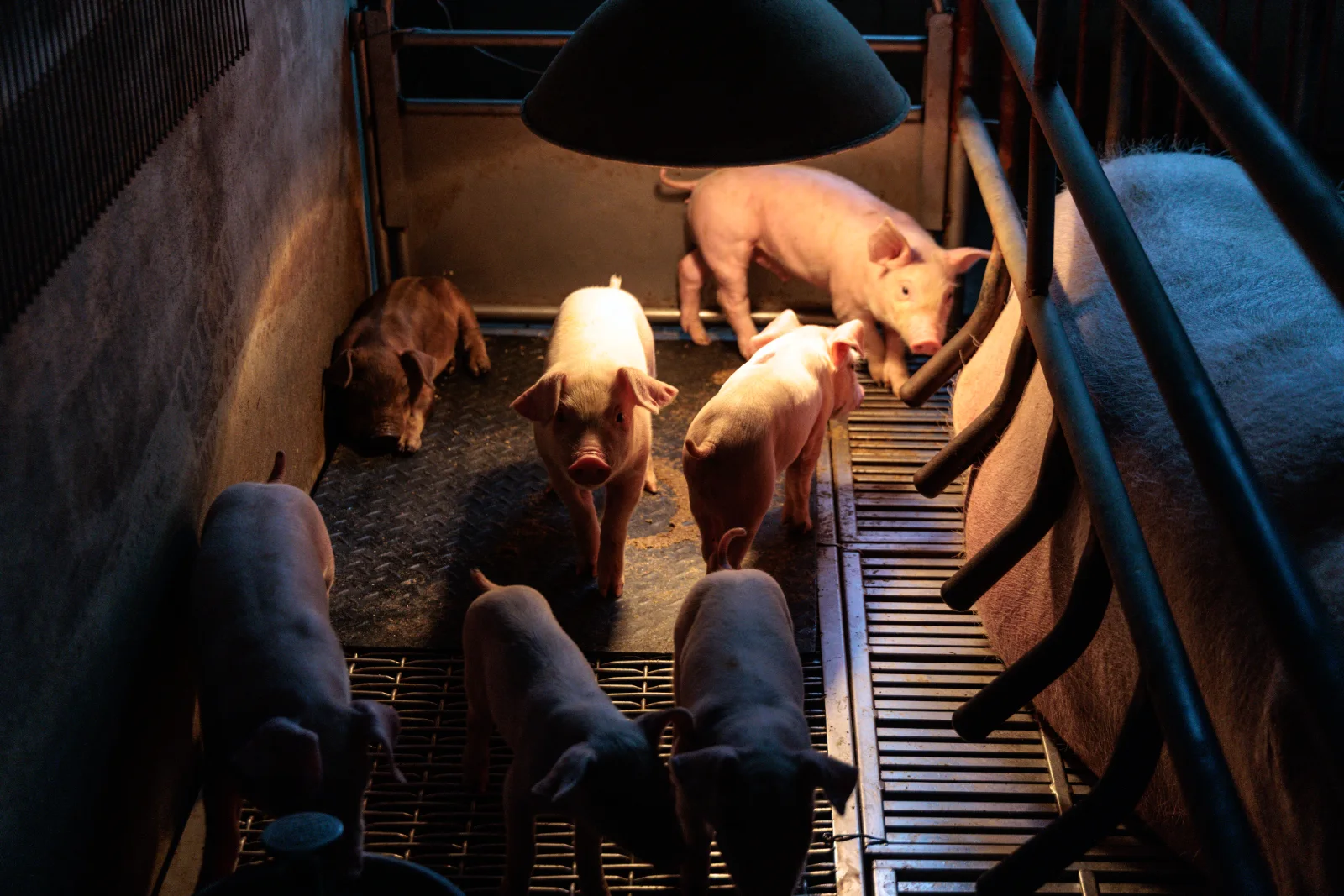 Farm Around You uses wet aging not only for its beef but also for its pork, eliminating the usual porky taste while bringing out a clean, natural sweetness. (Photo: Kai-cheng Chuang)
The hardest part was determining whether a sow was pregnant. A sow that is believed to be pregnant gets to eat 2.5 kg of feed per day. If she eventually turns out not to be pregnant the loss from feed costs can add up to NT$7,000. In the past probably one out of ten farm workers was able to test for pregnancy.
Chen helped Hukui Biotechnology Co., Ltd., a company backed by United Microelectronics co-founder Hsuan Ming-chih (宣明智), to collect tens of thousands of images for developing a hand-held AI pregnancy tester to improve pregnancy confirmation.
At the time of her return to Taiwan, the family farm kept around 1000 pigs. Today the herd stands at more than 40,000. The farm was scaled by taking out loans to buy up farms that were transitioning away from livestock farming. All 28 hog farms use the same SOP, equipment, and feedstuffs, so that farm workers can smoothly adjust when assigned to another farm. Last year, Farm Around You generated about NT$300 million in revenue.
Once the pig business produced stable returns, Chen began to raise cattle for a rather simple reason: “My dad loves to eat steak but the steak you get outside does not taste good.”
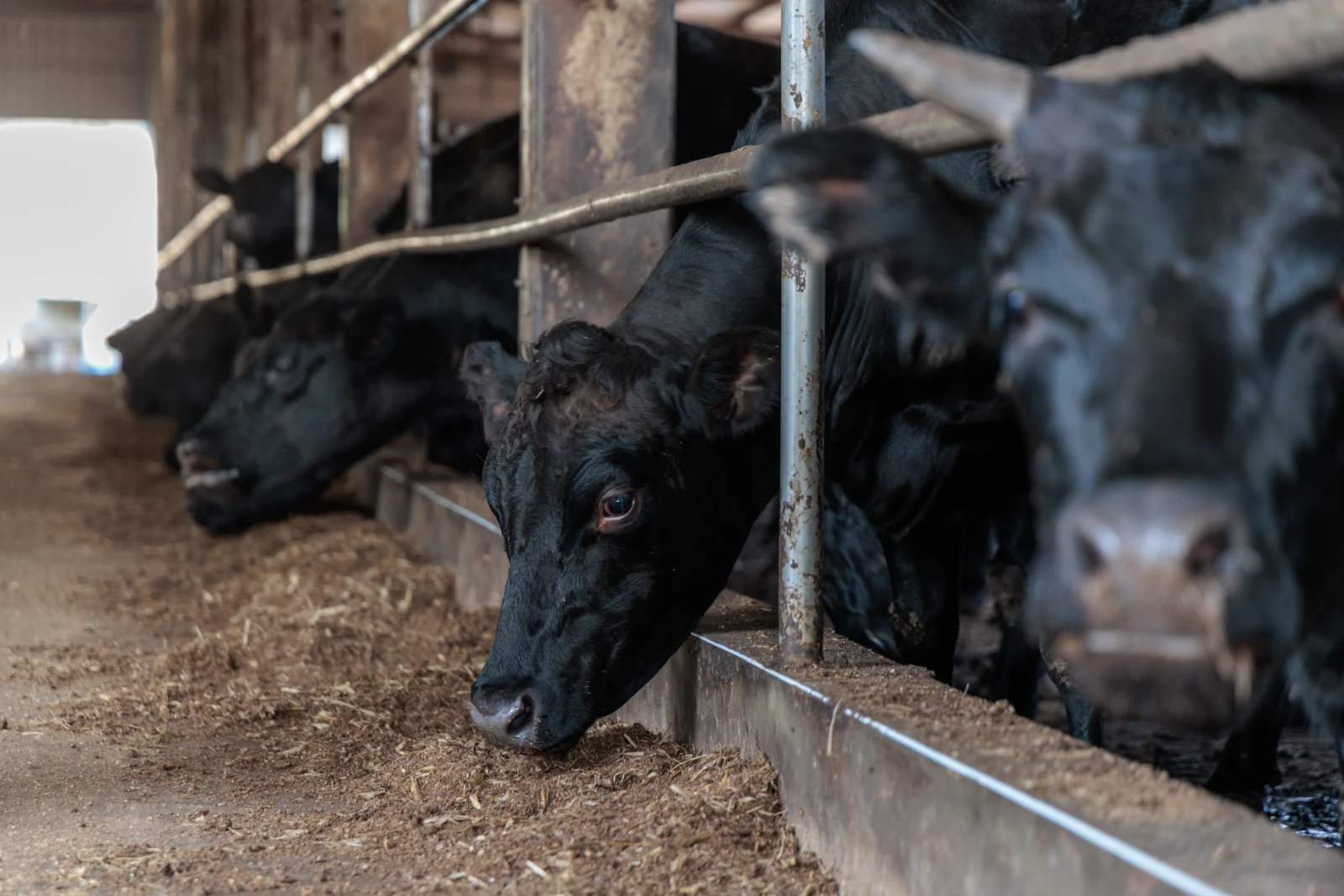 Farm Around You raises its Angus cattle for at least six months longer than conventional beef cattle. Their feed includes surplus sweet potatoes and carrots, distillers’ grains and other agricultural by-products, as well as flaxseed, which provides omega-3 fatty acids and helps produce firmer, leaner meat.
The Agricultural Technology Research Institute helped Chen with the selection of Angus cattle. The breed originally stems from high latitude areas that do not have a hot and humid climate like Taiwan. In 2018 Chen had more than 200 Angus cattle flown in from Australia. Some of them died while still in quarantine. Subsequently, she upgraded the cattle sheds, adding cooling, which helped raise the calves’ survival rate.
Chen then started cross-breeding Angus cattle with Australian Wagyu. Normally male dairy cattle are slaughtered at the age of two. But Chen’s cattle needs to be raised between two and half to three years to ensure evenly marbled meat. They also get special treats added to their feed such as fermented lemon peel, vegetables, and linseed.
Breeding is what allowed Chen to set her business apart from other livestock farms. Many farmers buy male calves from dairy farms and raise them for meat. Chen, however, breeds her own calves and keeps the heifers to expand the herd, although this means additional cost.
Hsu Tzong-shyan (許宗賢), a researcher with the Agricultural Technology Research Institute, points out “cattle are always eating, always cost money.” Returns are slow, but Chen has stuck with it.
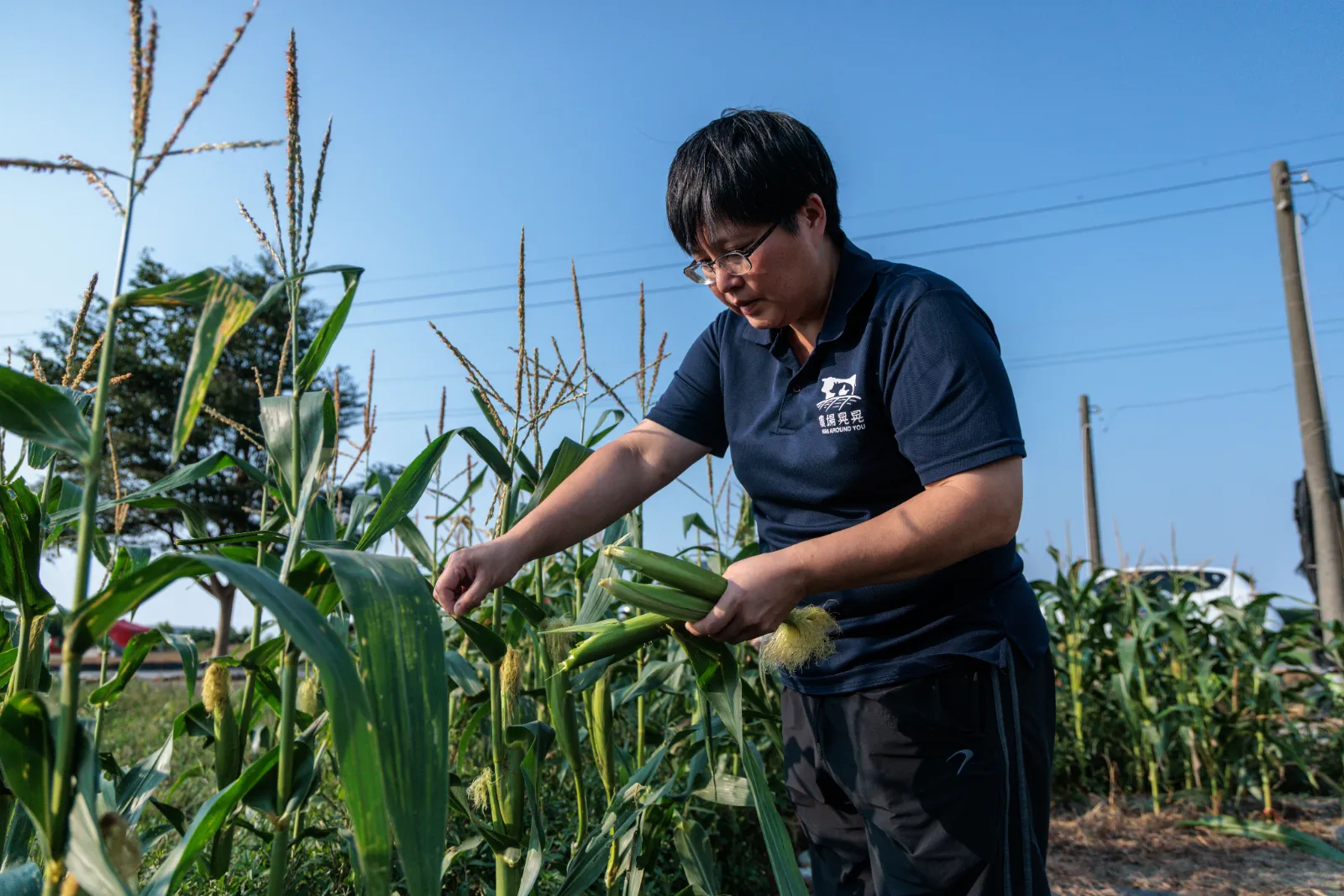 Baby corn fertilized with pig manure grows especially large.
Ian Lee (李易晏), chef at Michelin-recognized restaurant Hosu in Taipei, says Chen’s beef is more flavorful than American Angus beef and is less greasy than Wagyu beef. “It has a very good balance.”
Chen once said she wouldn’t mind if the beef she grows would not sell, as she would have her steak-loving father eat it. “You won’t mess with something that you want your family to eat,” notes Lee.
She has also taken over the care of second-generation Yuanxing cattle, a line bred by former President Lee Teng-hui (李登輝). They have since produced a new generation.
Although Chen’s beef cattle breeding is not profitable yet, she wants to increase her herd by 1000 animals every year, targeting a total of at least 5000.
Livestock farming has always been a male domain, but while the second generation is often not willing to take over, Chen decided to stay, telling herself, “If I am going to do it, then I’m doing it right.”
Have you read?
- The Massage Industry Rises in Taiwan - And Even Gets a Gold Medalist.
- Luye's Organic Farmer Behind Taiwan's Native Shan Yun Tea
- Grab CEO Anthony Tan's Unlikely Path: Rejecting a Car Empire to Build Southeast Asia's Super-App
Translated by Susanne Ganz
Uploaded by Ian Huang
Views

Subscribe to CWE Newsletter (every Thursday)
Stay abreast of what's happening in Taiwan with our weekly digest.
Keywords: